What should you look for when buying?
For a lunchtime snack, start by comparing the portion you plan to eat. Then you can assess the sugar, ingredients and allergens without assuming that one figure tells you everything about the bar.
| What to check |
How to compare |
Who it matters to |
| Calories per portion |
Compare the calories per bar and its individual weight. If the pack only gives figures per 100 g, calculate them for the amount you’ll eat. |
For a short break, I want to plan a single portion and know how much energy it contains. Around 36% of consumers would put calories per portion first. |
| Sugar and sweeteners |
Check the sugar figure and read the ingredients list for things such as maltitol or maltitol syrup. |
If I’m keeping an eye on sugar, I also want to know what a bar is sweetened with. For around 29% of consumers, this would be their main reason for choosing a product. |
| Ingredients profile |
As well as calories, look at the bar’s weight, ingredients and declared protein and fibre values. |
If I want a bar to be more than a small sweet treat, I want to know what’s in it, even if the portion is larger. This would be the main consideration for around 21% of consumers. |
| Allergens and dietary requirements |
Check the current packaging for ingredients, highlighted allergens, precautionary ‘may contain’ information and any labelling you need. |
If I have an allergy or follow a specific diet, the bar needs to meet my requirements; comparing calories comes afterwards. Around 14% of consumers would choose mainly on this basis. |
Cereal bars for your desk at Joybuy
This selection includes CORNY bars in 20 g portions, a 50 g Haferkraft variety and an Alnatura cereal bar with 25 g per bar. Pack sizes can help you plan a snack, but you’ll also need to check the nutritional information for each variety to compare calories.
 Image unavailable
CORNY Free Chocolate cereal bars 6 × 20 g
The 20 g bars give you a set portion for a short break at your desk.
Before choosing, compare the nutritional information per bar and check the ingredients for this variety.
View at Joybuy
 Image unavailable
CORNY Free White Chocolate cereal bars 6 × 20 g
This White Chocolate variety could be a good choice if you’re planning a 20 g bar for a break at your desk.
Check the energy, sugar and ingredients for this specific variety rather than relying on information about other CORNY Free bars.
View at Joybuy
 Image unavailable
CORNY Haferkraft Zero Peanut Butter Oat 12 × 50 g
The 50 g bar is suited to a larger snack portion planned for your desk.
When comparing it with the 20 g varieties, look at the calories per whole bar rather than just the figures per 100 g. Check the ingredients label too if needed.
View at Joybuy
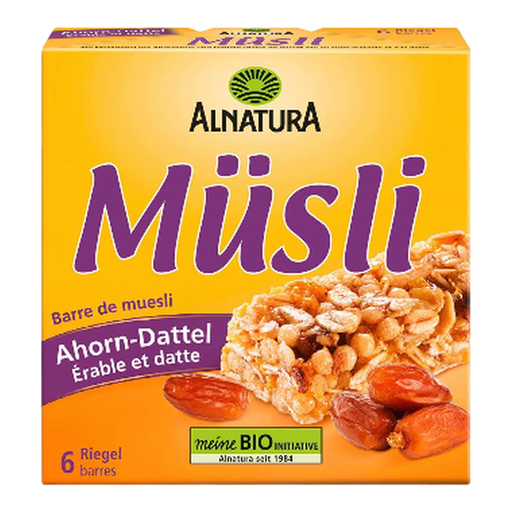 Image unavailable
Alnatura Organic Maple & Date cereal bars 6 × 25 g
The 25 g portion is an option if you’re looking for a maple and date cereal bar for a short break.
Compare the calories per bar with the other portion sizes and read the ingredients if sugar and sweeteners matter to your choice.
View at Joybuy
Frequently asked questions
How do I compare the calories in cereal bars for my lunch break?
Compare the calories per bar for the amount you actually plan to eat. EDEKA lists its classic GUT&GÜNSTIG chocolate cereal bar as containing 442 kcal per 100 g, with each bar weighing 25 g; that works out at around 111 kcal per bar. REWE directly lists its ja! bar with no added sugar as containing 85 kcal per 25 g. These figures apply to these specific varieties, not every bar from these brands.
Is a cereal bar with no added sugar unsweetened?
No. ‘No added sugar’ doesn’t automatically mean ‘no sweeteners’. Maltitol syrup is listed as an ingredient in the ja! chocolate cereal bar described by REWE. As well as checking the sugar content, look at the ingredients used to sweeten the bar.
Which allergens may be found in cereal bars?
It depends on the specific variety. Products described by REWE and EDEKA may contain milk, peanuts, almonds or cereals containing gluten, for example. If you have an allergy, check the highlighted allergens and any precautionary ‘may contain’ information on the current packaging before eating the bar.
Is a nut bar automatically a lower-calorie choice?
No. Nut-based ingredients alone don’t tell you how many calories are in a portion. EDEKA lists its Bio Knusperriegel Nussmix as containing 527 kcal and 18.8 g of protein per 100 g. If the amount of energy matters to you, you’ll also need to know the weight of an individual bar.
Is the nutritional information in an online shop enough to help me choose?
It can help you narrow down your options, but you should also check the current packaging for ingredients and allergens. EDEKA notes in its product information that details may differ from those on the packaging.


