
Lieferung heute & morgen

Qualitätsgarantie

Willkommens-Angebote freischalten: KOSTENLOSE Lieferung | Bis zu 80 % RABATT | Kostenlose 30-Tage-JoyPlus-Testphase
App herunterladen
Cereal bars and cereals need to be practical above all in everyday life: they should fit in a school bag, be within easy reach in the office or provide a portioned snack after training. The choice ranges from breakfast cereals and wholegrain muesli to protein bars and chocolate bars. However, the packaging is not always a reliable indication of the actual ingredients.
The phrase “no added sugar” means that no additional table sugar or comparable sugar has been added. However, the product may still contain naturally occurring sugar or be sweetened with sweeteners such as maltitol, sorbitol or sucralose. The nutrition table per 100 grams and per portion is therefore what really matters.
For example, according to the product details, the CORNY Corn-Nut-Protein bar contains 4.5 grams of sugar per 100 grams. However, the bar contains maltitol as a sweetener. Excessive consumption of sweeteners may have a laxative effect. The information on the packaging should therefore be taken into account.
A muesli with names such as “berries”, “brownie” or “crunchy” does not necessarily consist mainly of wholegrain or fruit. Check which ingredient appears first in the ingredients list and how high the stated wholegrain or fruit content is.
According to the product description, Dr. Oetker Vitalis Crunchy Raspberry Muesli contains 56% wholegrain oats and 2.4% freeze-dried raspberry pieces. The image of lots of fruit on the packaging should therefore not be taken as an indication of a high fruit content.
A protein bar may have a higher protein content while also containing relatively high levels of fat, energy or sweeteners. That is why you should not focus solely on the amount of protein. Portion size, sugar, saturated fatty acids, fibre and allergens are also relevant when making your choice.
The ingredients list is particularly important for children, allergy sufferers and people following specific diets. Common ingredients in cereal bars and cereals include gluten, milk, soya, peanuts and nuts.
Start by comparing products per 100 grams. This makes it easier to assess breakfast cereals alongside bars. The individual portion is also important: according to the product details, a 25-gram CORNY chocolate bar contains 114 kilocalories, while a 40-gram portion of a larger bar should be assessed differently.
The following values can serve as a guide when making a practical everyday choice:
This information is not a substitute for personalised nutritional advice. It simply helps you compare products using consistent criteria.
Ingredients are listed in descending order by weight. If sugar, syrup or fat appear near the beginning, the product is more likely to be a sweet snack than a simple grain-based breakfast. Terms such as glucose syrup, fructose syrup, honey and maltodextrin should be considered together when assessing a product.
“Sugar-free cereal bars” should also not be confused with “no added sugar”. Check which legally permitted claim appears on the packaging and which sweeteners are included.
For snacks on the go, individually wrapped bars are practical. Families and frequent users can plan their supplies more effectively with multipacks, but should pay attention to the best-before date and storage conditions. Cereals stay crisp only when stored somewhere dry and cool and properly sealed after opening.
With “cereals for children”, the size and consistency of the pieces are also relevant. Confectionery with larger pieces may be unsuitable for toddlers. The age and safety information on the packaging is decisive.
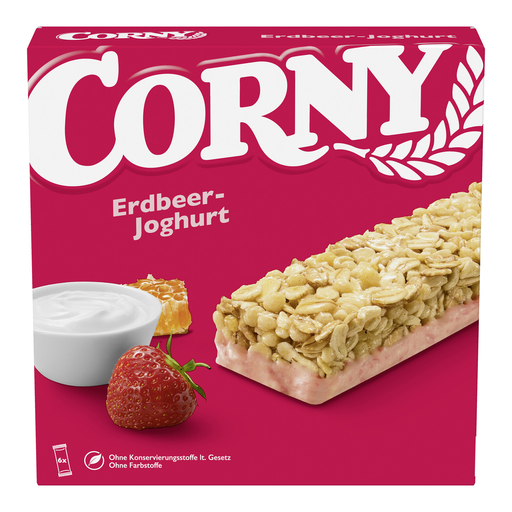
Why this product suits this profile: The six individually portioned bars, each weighing 25 grams, are suitable for school, the office or short breaks. According to the product details, they contain 22% wholegrain cereal flakes.
The stated wholegrain content makes the cereal base easier to assess. At the same time, the nutrition table shows 22.9 g of sugar per 100 g, confirming that this is a sweet snack.
Individually portioned bars and convenient stock planning; ingredients include oats, barley and wheat. Gluten and milk are listed as allergens.
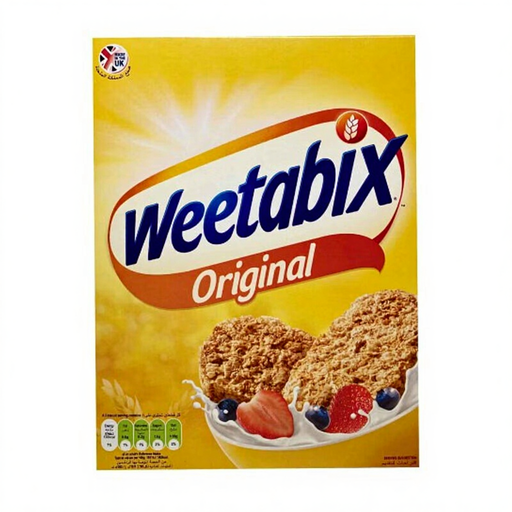
Why this product suits this profile: The ingredients list states 95% wholegrain wheat. Per 100 grams, it provides 10 grams of fibre, 12 grams of protein and 4.2 grams of sugar.
The high stated wholegrain content can be verified directly in the ingredients list. The relatively short ingredients list also makes it easier to check for allergens and additives.
100% wholegrain according to the product description; 430-gram pack for breakfast portions that are easy to plan. Contains gluten from wheat and barley.
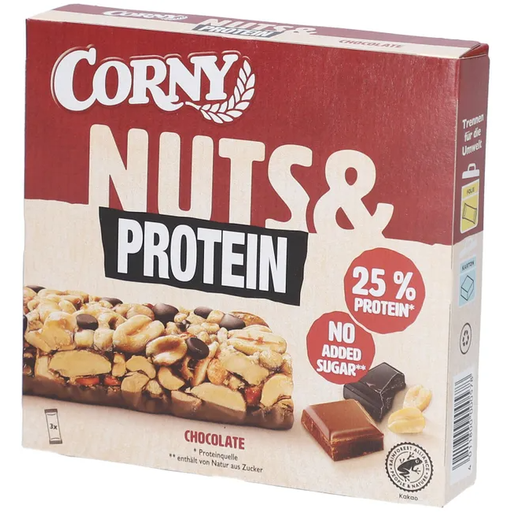
Why this product suits this profile: The 35-gram bar is aimed at people looking for a portioned, protein-rich snack for the office, while travelling or after exercise.
Alongside the protein content, the product also provides 28 g of fat, 4.5 g of sugar and 1.1 g of salt per 100 g. This allows the marketing claim to be assessed in the context of the product as a whole.
According to the product details, 27 g of protein and 4.5 g of sugar per 100 g; multipack of three individually portioned 35-gram bars. Contains peanuts, soya and milk.
We have put together a complete, regularly updated list of products that fully meet these strict selection criteria and the safety regulations applicable in the EU.
That depends on the ingredients, portion size and your personal requirements. Many cereal bars contain syrup, sugar or chocolate and are intended more as a snack between meals. For a more complete breakfast, cereals can be combined with dairy products or fruit.
“No added sugar” describes how a product is made without added sugar, while “sugar-free” is subject to legally defined limits. Neither claim automatically means that a product is low in calories or suitable for every diet. Check the nutrition table and ingredients list.
The best-before date is shown on the packaging. Unopened products should be stored somewhere cool and dry. After opening, cereals should be kept in a well-sealed container so that moisture does not affect their crispness. With bars, heat and direct sunlight should also be avoided.