Day-trippers keeping an eye on portions
If you’re packing a bar as an individual snack, you can compare the kcal per bar with your planned portion. Claims such as ‘Zero’ or ‘no added sugar’ don’t replace checking the nutritional information.


For a day out, a cereal bar in a suitable individual portion can be a sensible choice if you’re keeping an eye on the kcal in each snack. Also compare the energy per 100 g, along with sugar, ingredients and allergens: a small portion or a ‘no added sugar’ claim doesn’t automatically make a bar low in calories. Under European Commission EU rules, solid foods can only be described as ‘low calorie’ if they contain no more than 40 kcal per 100 g.
If you’re packing a bar as an individual snack, you can compare the kcal per bar with your planned portion. Claims such as ‘Zero’ or ‘no added sugar’ don’t replace checking the nutritional information.
If several people will be eating the bars, it’s important to check the ingredients and allergen information for each specific variety. A familiar brand name alone tells you nothing about the ingredients in the version you’ve chosen.
If you’re planning several days out, you can compare the number of bars and the weight of each one. A multipack makes it easier to plan individual portions, but it doesn’t tell you whether the recipe is lower in calories.
If you want to limit the kcal in an individual snack for a day out, start with the portion size, then check the figures per 100 g. If several people will be sharing the snacks, ingredients and allergens are also important considerations.
| What matters | What to check when buying | Who it matters to |
|---|---|---|
| Kcal per snack portion | Compare the weight and kcal per bar, as well as the kcal per 100 g. | For a day out, I want to know how many kcal are in an individual bar, without assuming that a small portion means a low-calorie recipe. Portion size is likely to be the main buying consideration for around 36% of consumers. |
| Sugar and recipe | Check the sugar, fat and energy per 100 g alongside the ingredients list. | When I see a claim such as ‘no added sugar’, I also want to assess the sweeteners and the rest of the ingredients. The recipe is likely to be the first consideration for around 29% of consumers. |
| Allergens for the group | Check the ingredients, highlighted allergens and ‘may contain’ information for the specific variety. | If several people are going to eat the same snack, I need to check whether the ingredients are suitable for everyone. This check is likely to take priority for around 21% of consumers. |
| Stocking up and portioning | Compare the number of bars and the weight of each one with the number of days out you’re planning. | For several days out, I want to pack enough individually portioned snacks without assuming that pack size tells me anything about the nutritional values. Planning ahead is likely to be the main consideration for around 14% of consumers. |
REWE lists its ja! chocolate variety with no added sugar at 340 kcal per 100 g; Amazon.de’s product listing for Corny Haferkraft Zero Apple gives 346 kcal per 100 g. Both figures are above the European Commission’s EU limit for describing solid foods as ‘low calorie’.
Check the kcal per bar and per 100 g separately from the sugar claim. The figure per bar helps you plan snacks, while the figure per 100 g helps you compare bars of different sizes.
EDEKA24 lists Corny Nuts & Protein Chocolate at 460 kcal and 27 g of protein per 100 g. The protein content alone doesn’t tell you how many kcal are in a snack.
Check the energy and portion size for the specific variety. Assess sugar and protein as separate figures.
Ingredients vary between varieties. The European Commission explains that relevant allergens must be highlighted in the ingredients list.
Check the current ingredients list and ‘may contain’ information on the specific pack before choosing a bar for several people.
ALDI SÜD sells Golden Bridge Peanut Cereal Bars in packs of 8 × 25 g. ALDI SÜD gives the product’s energy as 473 kcal per 100 g and notes that nutritional information may vary between suppliers.
Alongside the number of bars, check the nutritional information on the specific pack. This lets you assess the planned individual portion without confusing pack size with the recipe.
It’s worth comparing individual varieties across these ranges; a brand name doesn’t mean the bars have uniform portion sizes or nutritional values.
The range includes classic cereal bars, as well as Haferkraft Zero and protein varieties.
REWE sells ja! chocolate cereal bars with no added sugar in packs of 8 × 25 g.
ALDI SÜD sells Golden Bridge cereal bars in several varieties, including peanut, in packs of 8 × 25 g.
EDEKA24 sells an EDEKA Bio Crunchy Nut Mix Bar.
These cereal bars could work for individually planned snacks on days out. The pack details help you plan portions; to choose based on kcal or manage allergies, you’ll also need to check the nutritional information and ingredients for each variety.
 Image unavailable
A 20-g bar can count as one portion when planning a snack for a day out. The pack contains six bars; to compare energy, check the kcal per bar and per 100 g.
 Image unavailable
The 20-g bar size can help when packing individual snacks. This pack contains six bars; assess the ‘no added sugar’ claim separately from the energy and ingredients.
 Image unavailable
If you’re planning snacks for several days out, you can factor the twelve 50-g bars into your portion planning. As these bars are a different size, compare the kcal per 100 g as well when weighing them against 20-g or 25-g bars.
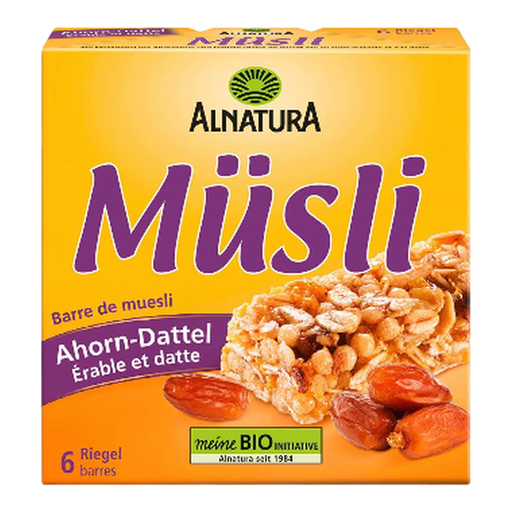 Image unavailable
The pack of six 25-g bars can be planned as individual snack portions. ‘Organic’ and the flavour don’t tell you how many kcal the bars contain; you’ll need to check the nutritional information for this variety.
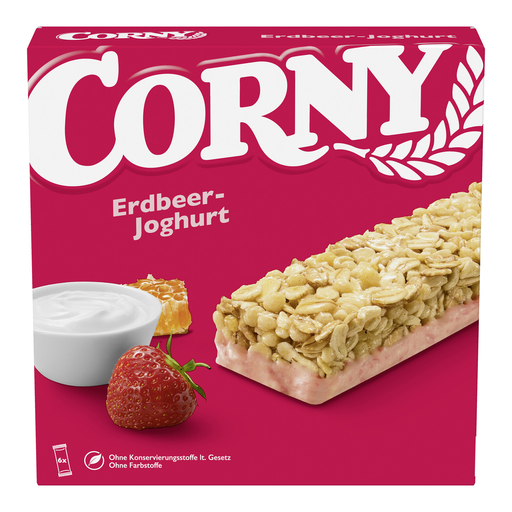 Image unavailable
A 25-g bar is a clearly defined portion to take with you, and the pack contains six bars. When comparing it with other Corny varieties, check the nutritional information and ingredients for this specific strawberry and yoghurt bar.
No. Under European Commission EU rules, solid foods can only be described as ‘low calorie’ if they contain no more than 40 kcal per 100 g. REWE gives its ja! chocolate cereal bar with no added sugar as 340 kcal per 100 g; Amazon.de’s product listing for Corny Haferkraft Zero Apple gives 346 kcal per 100 g.
Both figures answer different questions: kcal per bar relates to the individual portion you’re planning, while kcal per 100 g lets you compare cereal bars of different sizes. Under the EU labelling rules explained by Your Europe, nutritional values are given per 100 g; portion information may also be included.
Before buying, check the ingredients list, highlighted allergens and ‘may contain’ information for each specific variety. The European Commission explains that relevant allergens must be highlighted in the ingredients list; when packing your snacks, use the label on the pack you’ve chosen as your guide.
Check the specific pack. ALDI SÜD notes that Golden Bridge Peanut Cereal Bars may come from different suppliers, so the nutritional information can vary.