Calorie-conscious training snackers
If you’re looking for a snack to enjoy around your training, compare the nutritional values per bar with those per 100 g. A small portion isn’t automatically the right fuel for a long run.


A small cereal bar can work well as a snack; for long, intense runs, however, keeping the calorie count low shouldn’t be your main priority. For this type of exercise, the German Nutrition Society (DGE) stresses the importance of getting enough carbohydrates and recommends drinks containing carbohydrates and sodium for activities lasting more than 1.5 hours. So check the carbohydrates per bar, plan your drinks and make sure you’ve tested how well it agrees with you during training. Claims such as ‘no added sugar’ or ‘protein’ don’t answer these questions.
If you’re looking for a snack to enjoy around your training, compare the nutritional values per bar with those per 100 g. A small portion isn’t automatically the right fuel for a long run.
For longer, intense sessions, getting enough carbohydrates becomes a priority. The DGE also highlights the importance of planning your drinks. Try bars and drinks together in training conditions.
If you’re specifically looking for a protein bar or a vegan recipe, consider this separately from the energy and carbohydrates per portion. The label alone won’t tell you whether a bar is right for your planned run.
First decide whether the bar is for a snack break or to fuel a long run. Then compare the values per bar, and remember to consider drinks and how well the bar agrees with you when planning your running fuel.
| Criterion | What to check | Who it matters to |
|---|---|---|
| Portion and calories | Compare kcal and carbohydrates per bar, as well as kcal per 100 g. | For a manageable snack break, I want to know how much I’ll be eating if I have a whole bar. Around 29% of shoppers put portion control first. |
| Carbohydrates and drinks | Check the carbohydrates per bar, and try bars and drinks together during training. | For a long session, I need fuel that fits my carbohydrate and hydration plan. This need takes priority for around 36% of shoppers. |
| Ingredients and tolerance | Read the ingredients, allergen information and details of polyols on the specific pack. | If a vegan recipe or particular ingredients are important to me, I don’t want to try an unfamiliar bar for the first time on race day. Around 21% of shoppers prioritise these questions about ingredients and tolerance. |
| Protein | Compare protein, carbohydrates and kcal per bar. | For a snack, I’m specifically looking for a bar with protein, but I won’t assume that means it’s suitable during a long run. Around 14% of shoppers put this kind of snack first. |
This claim doesn’t tell you the total energy content. REWE lists 68 kcal per 20-g bar and 339 kcal per 100 g for Corny Free Schoko.
Compare both the portion you’d actually eat and the values per 100 g.
According to the DGE, carbohydrates are important during longer, intense exercise. It also recommends drinks containing carbohydrates and sodium for activities lasting more than 1.5 hours. Choosing a single bar doesn’t address your hydration needs.
Plan your bars and drinks together, and try the combination during long training sessions.
Some bars contain sugar alcohols. The consumer advice centre warns that sugar substitutes can have a laxative effect if consumed in large quantities.
Check the ingredients and quantity on the pack, and try the specific product during training before race day.
These labels alone tell you neither how many carbohydrates are in each bar nor whether the portion size is right. For a vegan bar, it’s also important to check the details for the specific product.
First decide when you’ll use it, then check the nutritional values, ingredients and labelling on the pack.
Corny offers various cereal bar and protein bar ranges. Compare them separately, looking at portion size and nutritional values.
The peanut cereal bar listed by ALDI SÜD is an example of a classic snack bar. Assess its nutritional values separately from the pack size.
For fruit bars and oat bars in this range, it’s worth first deciding which product category and recipe you’re looking for.
This selection includes smaller bars for snack breaks and larger oat bars, which you may want to consider for their carbohydrate content during longer sessions. The key things to check are still the details for the specific variety and how well it agrees with you when you use it as planned.
 Image unavailable
The 20-g bars are a handy option for a clearly portioned snack break. ‘No added sugar’ doesn’t mean you can skip checking the kcal and carbohydrates per bar. Before running, also check the sweeteners and how well it agrees with you.
 Image unavailable
The 50-g portion is an option if you’re looking for an oat bar as a snack. If you want a vegan option, check the label on the specific pack. Consider the carbohydrates and any sweeteners separately from the word ‘Zero’.
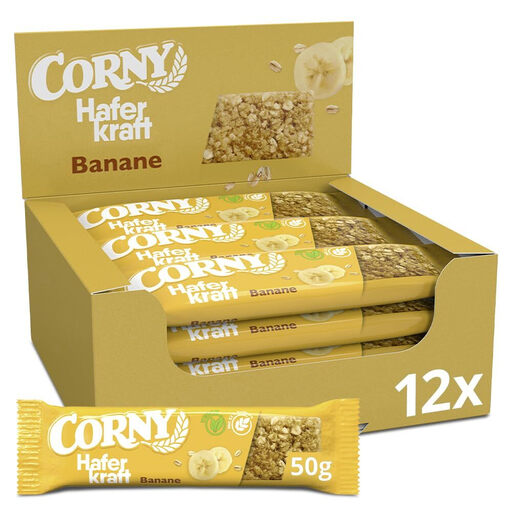 Image unavailable
If you’re planning to have a bar during a longer session, you can compare this 50-g portion with smaller snack bars. Check the carbohydrates per bar and try the combination of bar and drinks during a run to see if it works for you.
 Image unavailable
The 60-g oat bar is worth considering if you want to compare a larger portion with smaller snack options. Check the nutritional values and ingredients on the specific pack. Also consider the packaging if you plan to carry the bar with you while running.
No. ‘No added sugar’ doesn’t describe the calorie content. REWE lists 339 kcal per 100 g and 68 kcal per 20-g bar for Corny Free Schoko. When choosing, compare both the values per 100 g and the portion you’ll actually eat.
Don’t plan on a small bar as your only fuel without considering your overall fuelling plan. For longer, intense exercise, the DGE stresses the importance of getting enough carbohydrates and recommends drinks containing carbohydrates and sodium for activities lasting more than 1.5 hours. Check the carbohydrates per bar, and try bars and drinks together during training.
The consumer advice centre warns that sugar substitutes can have a laxative effect if consumed in large quantities. Read the ingredients and details of polyols on the specific pack, and test the variety and intended quantity during training rather than trying it for the first time on race day.
A protein bar is suitable for this purpose only if its carbohydrate content and how well it agrees with you fit your tried-and-tested fuelling plan. REWE lists 13.5 g of protein and 15.8 g of carbohydrates per 45-g bar for Corny Protein Soft Peanut Caramel. The protein content alone doesn’t answer the question of carbohydrate and fluid intake while running.