People who train regularly
If you want to keep snacks ready for several weeks of running, compare the number of bars, total pack weight and weight per bar. A larger pack is only practical if the portions inside suit your training routine.


A multi-pack of cereal bars can make a useful training stock-up for marathon preparation, provided the individual portions, carbohydrate content per bar and ingredients suit your planned runs. For long sessions, pack size alone isn’t enough to guide your choice: try the specific variety and your fuelling plan, including your drinks, under training conditions.
If you want to keep snacks ready for several weeks of running, compare the number of bars, total pack weight and weight per bar. A larger pack is only practical if the portions inside suit your training routine.
If you’re planning to take a bar on longer training sessions, check the carbohydrate content of each bar you’ll carry. The German Nutrition Society describes carbohydrates as an important part of endurance-sport nutrition; your needs depend, among other things, on the duration and intensity of your activity.
If you need to avoid certain ingredients or check whether a particular variety suits you, read the full ingredients list and allergen information. According to the German Food Federation, allergenic ingredients are identified in the ingredients list; voluntary ‘may contain’ warnings are a separate matter.
When choosing multi-packs of cereal bars for marathon training, first consider how many individual portions you can use, then check the carbohydrates per bar and finally the ingredients in the specific variety.
| Criterion | What to check when buying | Who it matters to |
|---|---|---|
| Training stock | Compare the number of bars, total pack weight and weight per individual portion. | If I’m stocking up on snacks for several weeks of running, I want to know how many suitable portions I can take with me. For around 42% of shoppers, planning their supplies is the main priority. |
| Carbohydrates per bar | Compare the nutritional information per 100 g with the actual weight of the bar; compare figures per portion directly where these are provided. | For longer sessions, I want to know how many carbohydrates are in the portion I’m taking, rather than judging by the type of bar. Planning portions is the top priority for around 33% of shoppers. |
| Ingredients and tolerance | Check the ingredients list, highlighted allergens and, where applicable, polyols for each variety. | I want to make sure a new variety suits my ingredient requirements and agrees with me before planning to take it on a long run. Around 25% of shoppers prioritise this. |
The label doesn’t tell you how many carbohydrates are in an individual portion. REWE lists 14.1 g of carbohydrates and 8.4 g of polyols per 20 g CORNY free Schoko bar.
Compare the nutritional information per portion and check the ingredients. If you’re considering a variety containing sugar alcohols for longer runs, try it during a training session first.
Bars with similar names may have different recipes. If you have an allergy, the information for the specific variety is what matters.
Before buying, read the ingredients list, highlighted allergens and any ‘may contain’ warnings on the pack.
A multi-pack of bars doesn’t tell you how many portions are right for you or provide a complete fuelling plan for a long run. The German Nutrition Society says carbohydrate needs in endurance sports depend on the level of exertion.
Try the variety, portion and timing during comparable training sessions, and plan your drinks separately.
CORNY offers different types of bars and pack sizes, including classic cereal bars and CORNY free. The product range name is no substitute for comparing the specific variety.
You can compare GOLDEN BRIDGE multi-packs of cereal bars by the number of bars and weight per bar.
EDEKA Bio is another brand to consider when comparing crunchy bars. Don’t assume a crunchy bar is like a classic cereal bar just because of the brand.
This selection includes multi-packs of oat cereal bars, another cereal bar and a wholegrain biscuit bar. For your training supplies, the individual portions and the information on the specific pack are what matter.
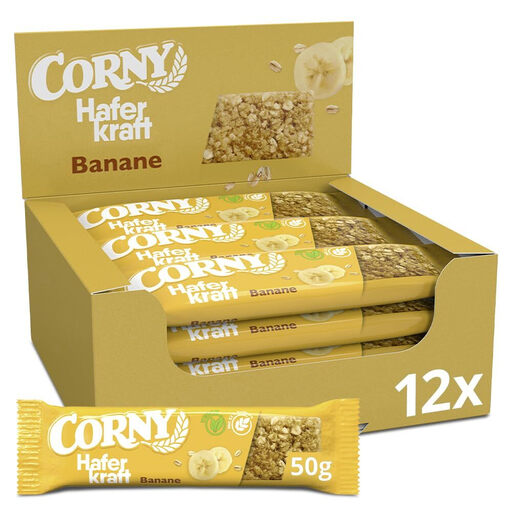 No image available
A handy supply of individual training snacks: the pack contains 12 bars of 50 g each. If you’re planning your carbohydrate intake per running portion, compare the nutritional information with the weight of each bar; if you have allergies, check the details on the specific pack.
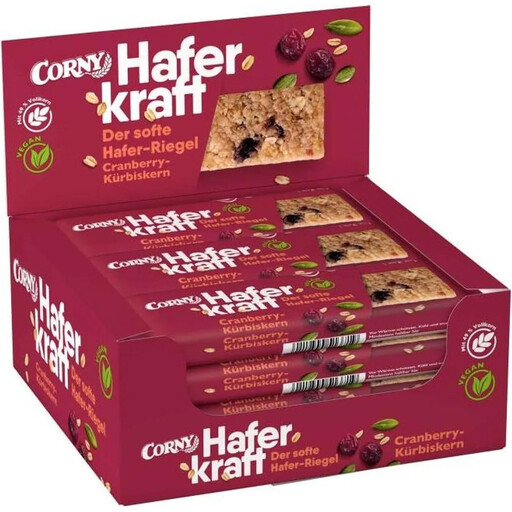 No image available
A training stock-up for anyone planning to take oat cereal bars with them: the pack contains 12 bars of 50 g each. Compare the nutritional information for a portion of this size and check the allergen information for this variety.
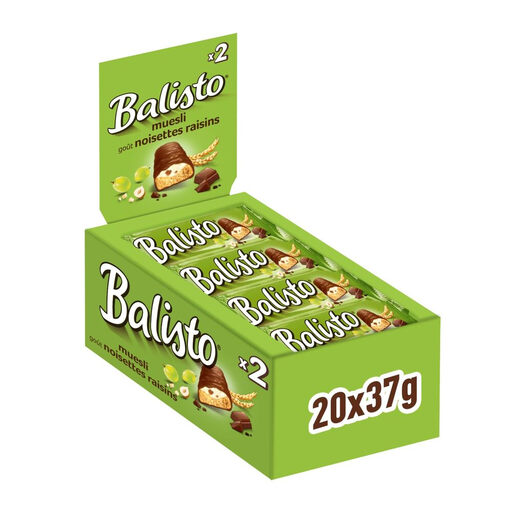 No image available
A supply of 20 individually wrapped bars of 37 g each. This is a wholegrain biscuit bar; if you’re considering it as a training snack alongside cereal bars, compare the nutritional information and ingredients for each portion you eat.
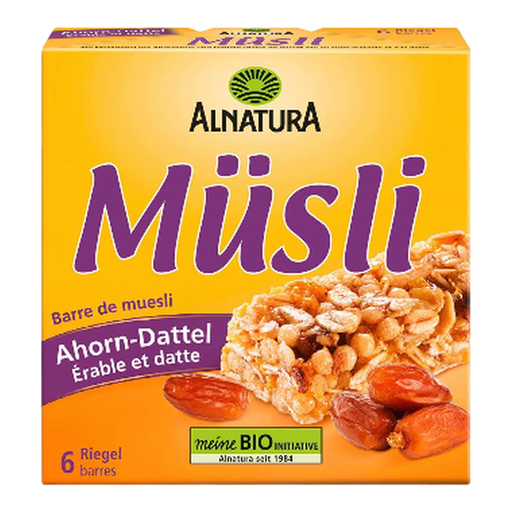 No image available
A smaller stock-up, with six bars of 25 g each. If you’re planning a running portion, check the nutritional information for this individual weight, along with the ingredients and allergen information on the pack.
 No image available
A supply of 12 bars of 50 g each, if the recipe for the Peanut Butter variety suits your needs. Check the carbohydrates and ingredients per bar. Peanuts and maltitol are worth noting in this variety, as is your individual tolerance before taking it on longer runs.
No, a multi-pack of cereal bars isn’t a substitute for a fuelling and hydration plan that you’ve tested for yourself. The German Nutrition Society says carbohydrate needs in endurance sports depend, among other things, on the duration and intensity of your activity, so try specific portions during suitable training sessions.
Compare the number of bars, total pack weight and weight per individual portion, rather than looking at the number of bars alone. For your planned use, it’s also important to check the nutritional information for the portion you’ll actually eat.
No, the label alone doesn’t tell you enough about the carbohydrates per portion or whether the bar will agree with you. REWE lists 14.1 g of carbohydrates and 8.4 g of polyols per 20 g CORNY free Schoko bar; check the specific variety and try it during training first.
If you have an allergy, check the information for the specific variety rather than relying on the brand or type of bar alone. Read the ingredients list and highlighted allergens, and look out for any ‘may contain’ warnings. The German Food Federation distinguishes these voluntary warnings from the labelling of allergenic ingredients.
No, calling something a protein bar doesn’t automatically make it a better snack for a long run. Since the German Nutrition Society says carbohydrates play an important role in endurance sports, compare the carbohydrates per bar, ingredients and portion size with your planned use.