Parents checking allergens before nursery
They compare the ingredients, highlighted allergens and possible ‘may contain’ warnings with their child’s requirements and the nursery’s rules.


For an occasional nursery snack, a multipack with a clearly stated portion size can be handy, provided the individual bars can be packed separately. Before choosing a variety, though, check the nursery’s rules and the ingredients and allergen information on the current packaging. A suitable portion size alone does not make a bar right for every child.
They compare the ingredients, highlighted allergens and possible ‘may contain’ warnings with their child’s requirements and the nursery’s rules.
They compare the number of bars and the weight of each one to pack snacks for lunchboxes and trips without having to split a larger portion.
They want to weigh up the convenience of a bar against its ingredients and sugar content, rather than assuming it is suitable as a daily nursery snack just because of its name.
Before comparing pack sizes, check which ingredients and snacks the nursery allows. You can then assess the portion size and how sweet the particular variety is.
| What matters when buying | What to check | Who it matters to |
|---|---|---|
| Allergens and nursery rules | Check the current ingredients list and allergen information against the nursery’s requirements. | If certain ingredients are off-limits for my child, the specific variety needs to meet those requirements. For around 40% of consumers, this check is the main consideration when choosing. |
| Individual portions | Check the number of bars, the weight of each bar and whether every portion is individually wrapped. | For several nursery days, I want to be able to pack the bars individually without splitting portions. Around 30% of consumers say this matters most to them. |
| Ingredients and sweetness | Compare the ingredients list and the sugar content per 100 g and per bar. | I want a bar to be an occasional addition to the lunchbox and to be able to judge how sweet it is. This is the top priority for around 30% of consumers. |
Even cereal bars with similar names can have different ingredients and allergen information. The variety name is no substitute for checking the labelling on the specific pack.
Check the ingredients and highlighted allergens again whenever you switch variety or pack.
An individually wrapped bar is easier to pack, but that says nothing about whether its ingredients meet the nursery’s rules.
Check the nursery’s requirements first, then compare the portion size and pack format.
ALDI SÜD notes that different suppliers may be used for the GOLDEN BRIDGE peanut variety, and advises checking the product in store for exact nutritional information.
When you buy, use the information on the pack you have actually chosen.
The German Nutrition Society suggests savoury snacks as one way to avoid developing a strong preference for sweet foods at snack times.
Compare the bar’s ingredients and include other types of snack in your plans for regular nursery days.
REWE lists CORNY chocolate cereal bars in packs including a 7 × 25 g option.
EDEKA sells a chocolate cereal bar in an 8 × 25 g pack and describes the bars as individually wrapped.
ALDI SÜD lists several varieties of its own-brand cereal bars in 8 × 25 g packs, including chocolate-banana and peanut.
REWE’s organic own-brand range includes oat and chocolate bars; fruit bars are a different type of product in the range.
This selection includes cereal bars and a cereal sandwich bar in multipacks. For nursery, check the stated bar size, the current ingredients labelling and whether each portion can be packed individually.
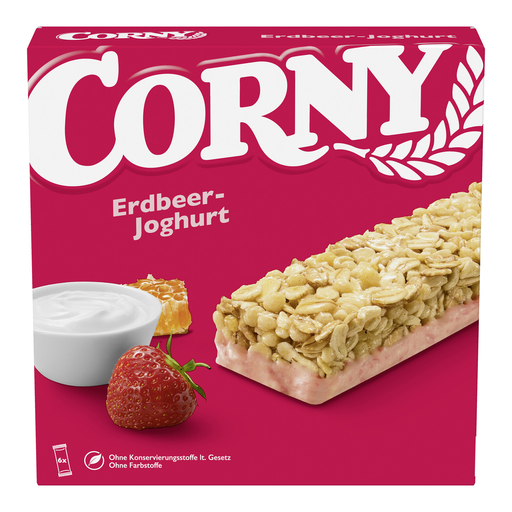 No image available
The six 25 g bars have a clearly stated portion size, making lunchbox planning straightforward.
Before packing one for nursery, check the ingredients and allergen information on the current pack against the nursery’s requirements.
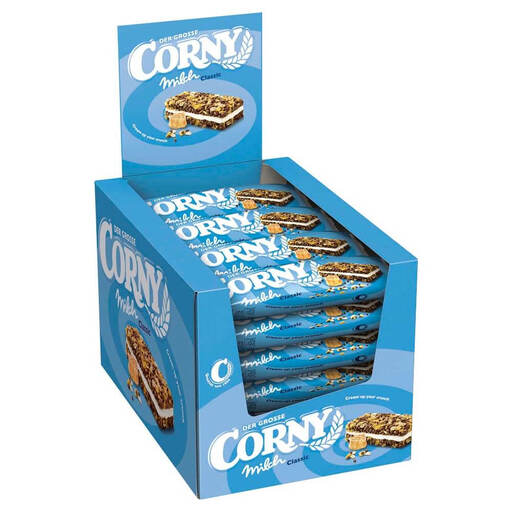 No image available
This pack of 24 could suit you if you’re stocking up on bars. At 40 g each, these bars are larger than the 20 g and 25 g options shown here.
For nursery, check the ingredients and allergen information on the current pack.
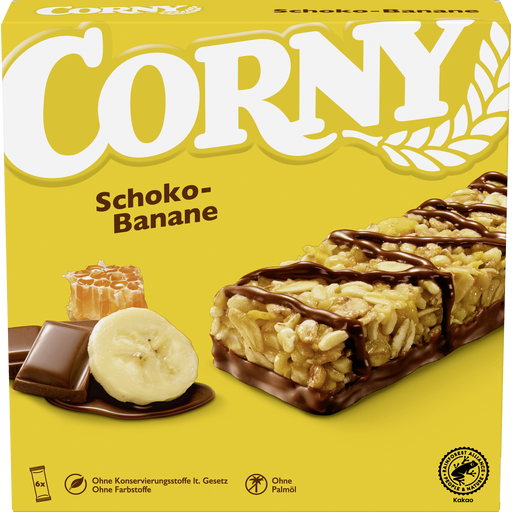 No image available
Six bars at 25 g each are worth considering when planning individual portions for nursery.
If there are restrictions on peanuts or nuts, be sure to check the allergen labelling on the current pack.
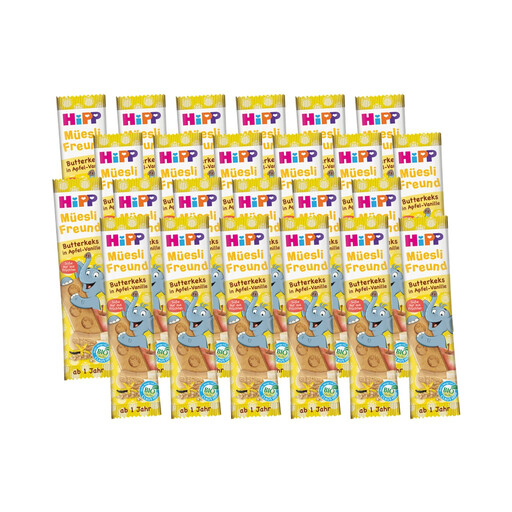 No image available
This pack of 24, with each bar weighing 20 g, is an option to consider when comparing smaller portions.
Before buying, check whether the bars are individually wrapped. When packing one for nursery, follow the ingredients labelling and other information on the pack.
 No image available
This pack of six 20 g bars has a smaller stated bar size than the 25 g and 40 g options shown here.
Check whether each bar is individually wrapped. The product name is no substitute for checking the full nutritional information and allergens.
Whether you can send the bar in depends on the nursery’s rules and the requirements for the individual child. Check the pack for labelling of gluten-containing cereals; allergen labelling alone does not mean that cereal bars are generally allowed or banned in nurseries.
A ‘may contain traces’ warning is different from labelling for allergenic ingredients that have been deliberately used. If a child has relevant requirements, this warning should also be considered when checking the rules for the child and the nursery.
Look at the number of bars, the weight of each one and whether individual wrapping is confirmed. The CORNY chocolate pack listed by REWE at 7 × 25 g and the GUT&GÜNSTIG chocolate pack described by EDEKA at 8 × 25 g show how portion sizes can be compared; ingredients and allergens still vary by product.
A cereal bar does not have to be the everyday snack. The German Nutrition Society suggests savoury alternatives for snack times to help avoid developing a strong preference for sweet foods. So, when choosing a bar, it is also worth checking the ingredients and sugar information.