To find a cereal bar with a comparatively low fat content, start by comparing the fat per 100 g in similar varieties: ‘no added sugar’ alone tells you nothing about fat. Then check the ingredients and allergens on the pack, as well as the portion size. If your child needs to avoid gluten, a bar containing gluten is not suitable; whether a bar is appropriate to take in as a snack also depends on your nursery’s rules.
Who this choice matters to
Parents who want to compare fat content
If you’re choosing between similar cereal bars, the stated fat content per 100 g gives you a consistent basis for comparison. Product information from EDEKA and ALDI SÜD shows that this figure can vary between varieties.
Families who need to check allergens
The key question is whether the ingredients and allergen information for the specific variety meet your child’s needs. EDEKA lists cereals containing gluten, milk and peanuts among the ingredients in one chocolate cereal bar.
Parents looking for a snack to take into nursery
Before choosing a portion, check which snacks and packaging the nursery allows children to bring in. The German Nutrition Society considers snacks between meals part of the food provision in nurseries, but this does not establish a general rule for bars brought from home.
What to look for when buying
First, check whether allergens or nursery rules limit your choice. Then compare the fat content, recipe and portion size of the remaining varieties.
| Criterion |
What to check |
Who it matters most to |
| Gluten and other allergens |
Read the allergen information on the pack you’re buying and check it against your child’s needs and the nursery’s rules. |
If my child needs to avoid certain allergens, I can’t rely on the variety name alone. For around 29% of consumers, checking allergens and nursery rules comes first. |
| Fat content |
Compare fat per 100 g across similar cereal bars; if the bars are different sizes, the amount per bar is also relevant. |
I want to compare fat content using the same measure before choosing. Around 29% of consumers prioritise this comparison. |
| Sugar, sweeteners and ingredients |
Check the nutrition information and ingredients list separately: ‘no added sugar’ is no substitute for comparing fat or checking for sweeteners. |
A lower fat content doesn’t tell me whether the recipe is right for our nursery snack; around 24% of consumers prioritise checking the ingredients. |
| Portion and nursery routine |
Check the weight of the bar and ask the nursery which snacks and packaging children are allowed to bring in. |
I need a portion that I can send in with my child in line with our nursery’s rules. Practical arrangements are the priority for around 18% of consumers. |
Common comparison mistakes
-
Assuming ‘no added sugar’ means low in fat
A claim about added sugar says nothing about fat content. EDEKA lists 9.1 g of fat per 100 g for the GUT&GÜNSTIG chocolate cereal bar with no added sugar; this variety also contains sweeteners.
Compare fat and sugar per 100 g separately, and check the ingredients list too.
-
Judging allergens by the brand name alone
Varieties in the same category can contain different allergenic ingredients. For the GUT&GÜNSTIG chocolate cereal bar, EDEKA lists cereals containing gluten, milk and peanuts, among other ingredients.
Check the ingredients, highlighted allergens and precautionary allergen information for the specific variety you’re buying. Your child’s individual needs should also guide your choice.
-
Using fat content alone to judge a bar
A lower fat content doesn’t answer questions about the other ingredients, the right portion size or the nursery’s rules.
Use fat per 100 g to compare bars, not as the only factor when choosing a snack.
-
Relying on online information without checking
EDEKA notes that online information may differ from what’s shown on the packaging. ALDI SÜD says nutrition information for one CORNY bar may vary between suppliers.
Check the fat content, ingredients and allergens on the pack you actually plan to send in with your child.
Brands to consider
CORNY
The chocolate-banana and Milch Classic cereal bars listed by ALDI SÜD show why the variety name matters when comparing fat content.
- ALDI SÜD lists 14.7 g of fat per 100 g for chocolate-banana and 19.1 g per 100 g for Milch Classic.
- These figures apply to the varieties listed, not all CORNY bars. ALDI SÜD also notes that the chocolate-banana variety may differ between suppliers.
GUT&GÜNSTIG
Two chocolate cereal bars listed by EDEKA let you compare specific varieties within the supermarket’s own-label range.
- EDEKA lists 9.1 g of fat per 100 g for the no-added-sugar variety and 13.9 g per 100 g for the chocolate variety.
- The no-added-sugar variety contains sweeteners. Check the ingredients and allergens on the pack you buy for both varieties.
GOLDEN BRIDGE
ALDI Nord sells cereal bars in a range of varieties under the GOLDEN BRIDGE brand, including some with no added sugar.
- The variety information can help you choose a bar to compare.
- To make a decision about fat content and allergens, rely on the nutrition information and labelling on the specific pack.
Cereal bars at Joybuy
These CORNY varieties may be worth comparing if you’re looking at cereal bars containing gluten, taking their recipe and portion size into account. Check the packaging and your nursery’s rules to decide whether a variety is suitable for your child and as a snack brought in from home.
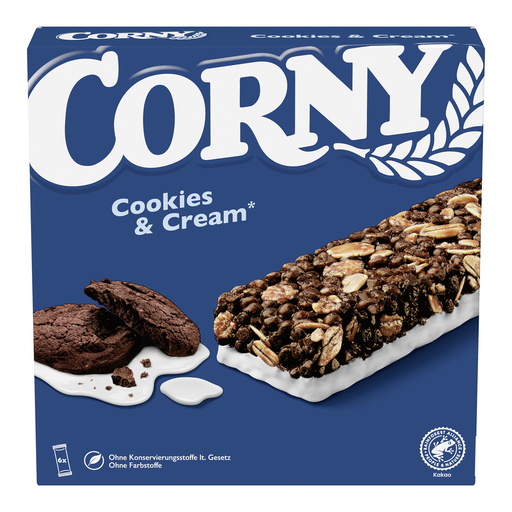 Image unavailable
CORNY Cookies & Cream cereal bar sandwich, 6 × 23 g
You can use the bar’s size to see whether it fits the portion you have in mind for nursery. The pack contains 6 bars, each weighing 23 g. Before sending one in, check the information about gluten, milk and possible traces of other allergens, as well as the nursery’s rules.
View at Joybuy
 Image unavailable
CORNY Haferkraft Zero Peanut Butter oat cereal bar, 12 × 50 g
For this variety, the main thing to check is whether a 50 g portion is right for the snack you have in mind. The pack contains 12 bars. When choosing, pay particular attention to the information about gluten, peanuts and maltitol on the pack you buy.
View at Joybuy
 Image unavailable
CORNY Free White Chocolate No Added Sugar cereal bar, 6 × 20 g
If you’re considering this variety because of its recipe, compare its fat content regardless of the ‘No Added Sugar’ name. The pack contains 6 bars, each weighing 20 g. Check the information about gluten, milk, peanuts and maltitol against your child’s needs.
View at Joybuy
 Image unavailable
CORNY Free Chocolate No Added Sugar cereal bar, 6 × 20 g
When choosing between CORNY Free varieties, treat chocolate and white chocolate as different recipes. This chocolate variety comes in a pack of 6 bars, each weighing 20 g. Check the fat content, gluten-containing ingredients, milk and maltitol on the specific pack.
View at Joybuy
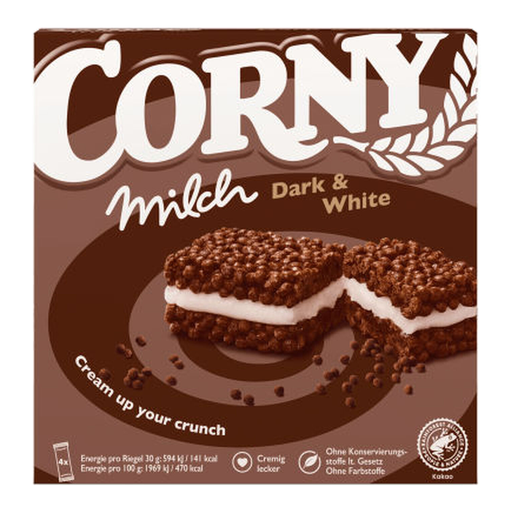 Image unavailable
CORNY Milk Dark & White cereal bar sandwich, 4 × 30 g
If you’re considering this variety for nursery, compare the 30 g portion and fat content with the alternatives you have in mind. The pack contains 4 bars; check for gluten, milk and possible traces of other allergens. If needed, also check whether the bars are individually wrapped.
View at Joybuy
Frequently asked questions
Is a cereal bar with no added sugar automatically lower in fat?
No. ‘No added sugar’ doesn’t tell you anything specific about the fat content. EDEKA lists 9.1 g of fat per 100 g for the GUT&GÜNSTIG chocolate cereal bar with no added sugar. Compare this figure separately from the sugar and ingredients in a similar variety.
Can my child take a cereal bar containing gluten into nursery?
That depends on your child’s needs and the rules at their nursery. If your child needs to avoid gluten, a bar containing gluten is not suitable. You should also ask the nursery which snacks children are allowed to bring in.
Is the online allergen list enough to make a choice?
Before making your final choice, read the information on the pack you’re buying. EDEKA notes that online product information may differ from what’s shown on the packaging.
Can a cereal bar replace a nursery snack?
A single bar is not automatically the right snack between meals. The German Nutrition Society considers breakfast and snacks between meals part of the food provision in nurseries. So check that a bar brought in from home fits with the nursery’s rules and the other food provided.


