People with short breaks at work
When there’s little time between meetings, the size and format of a bar really matter. You want a portion that you can pop in your bag or keep at your desk, ready to eat.


For a quick break at your desk, a multipack with convenient individually portioned bars is a practical choice. Compare the nutritional information for the bar you’ll actually eat, and check the ingredients for the specific variety: classic cereal bars, protein bars and no-added-sugar options differ in these respects. If you’re planning to have a bar instead of lunch, make sure you include other foods too.
When there’s little time between meetings, the size and format of a bar really matter. You want a portion that you can pop in your bag or keep at your desk, ready to eat.
If you’re choosing between varieties, compare the sugar, protein, fibre and energy per portion. Claims on the front of the pack are no substitute for the nutritional information.
If you need to avoid ingredients such as gluten-containing cereals, peanuts or milk, check the ingredients and allergen information on the specific pack. The brand name alone isn’t enough to make this assessment.
First decide whether you’re looking for a classic cereal bar, a protein bar or a no-added-sugar option. Then check the size, nutritional information and ingredients of the variety you’ve chosen.
A good choice if: You’re looking for a ready-to-eat bar in a multipack for short breaks.
Things to weigh up: The pack size and flavour don’t tell you about the sugar, fat or allergens in the specific variety.
A good choice if: The stated protein content is an important factor in your comparison.
Things to weigh up: The protein content alone doesn’t tell you about the other nutritional values or ingredients.
A good choice if: You want to compare the stated sugar content of different bars.
Things to weigh up: “No added sugar” doesn’t rule out sweeteners or sugar substitutes, as Lebensmittelklarheit explains.
| What to consider | What to check when buying | Who it matters to |
|---|---|---|
| Individual portions | Number of bars, weight per bar and individual wrapping in the pack you’ve chosen. | When I only have a short break, I want to be able to take a bar with me without any preparation. Around 33% of consumers prioritise convenient portions like these. |
| Nutritional information per bar | Energy, sugar, protein and fibre per portion; for some varieties, also polyols. | I want to know the nutritional values of the portion I’ll actually eat, rather than comparing figures per 100 g alone. For around 27% of consumers, comparing portions comes first. |
| Ingredients and allergens | The ingredients list and allergen information for the specific variety, even if you’re buying it again. | If I need to avoid certain ingredients, I need information for that exact pack. Checking the ingredients is the main concern for around 20% of consumers. |
| Pack size | Compare the number of bars and total weight; if you’re stocking up, also check the current unit price. | For several breaks at work, I want to know how many suitable portions a pack contains. Around 20% of consumers prioritise having a supply they can plan ahead. |
Lebensmittelklarheit points out that sweeteners or sugar substitutes may still be used despite this claim. REWE lists its ja! Müsli-Riegel Schoko ohne Zuckerzusatz as containing 0.4 g of sugar and 8 g of polyols per 25 g bar.
As well as checking the sugar content, read the ingredients list, look for information about polyols and check for any consumption advice.
Cereal bars come in different weights, so a figure per 100 g doesn’t tell you directly what’s in the portion you’ll have during your break.
First check the weight of one bar, then compare the nutritional information for that portion size.
Products from the same brand can contain different ingredients. The Federal Office of Consumer Protection and Food Safety explains that the relevant substances that cause allergies or intolerances must be identified in the ingredients list.
If you have an allergy or intolerance, check the ingredients and allergen information on every specific pack again.
A bar can be convenient for a quick snack. For meals at work, the German Nutrition Society also suggests other foods such as fruit, vegetables, dairy products and filled sandwiches.
If you’re planning to have one for lunch, think about what other foods you’d like to take with you or eat on site.
CORNY’s classic cereal bars and protein bars are different product ranges that you can compare.
An ALDI SÜD own brand with a listed peanut cereal bar in a pack of 8 × 25 g.
A REWE own brand with a listed chocolate cereal bar with no added sugar, in a pack of 8 × 25 g.
EDEKA24 stocks organic crunchy bars as another option, including varieties with mixed nuts and sesame.
These multipacks of CORNY bars are worth considering for short breaks at your desk. The bars vary in weight, so check the ingredients and nutritional information for each variety when choosing.
 No image available
A multipack for anyone planning to have 50 g bars during individual breaks at work. If you need to avoid certain ingredients or want to compare sugar content, check the labelling for this variety and use the figures per 100 g to work out the values for a 50 g portion.
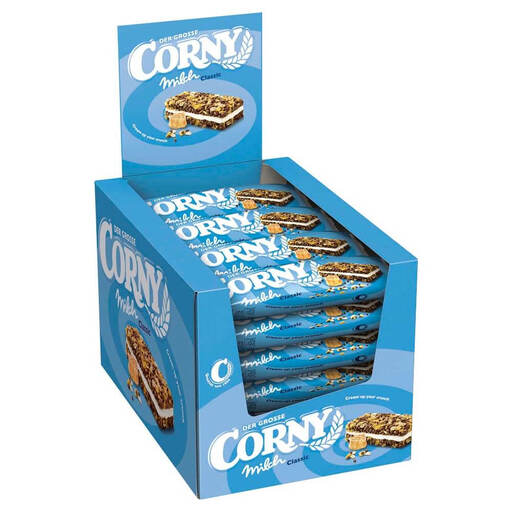 No image available
The pack of 24 bars is handy if you’re planning a larger supply for the office. To compare, check the nutritional information per 40 g bar, as well as the ingredients and allergen information for this variety.
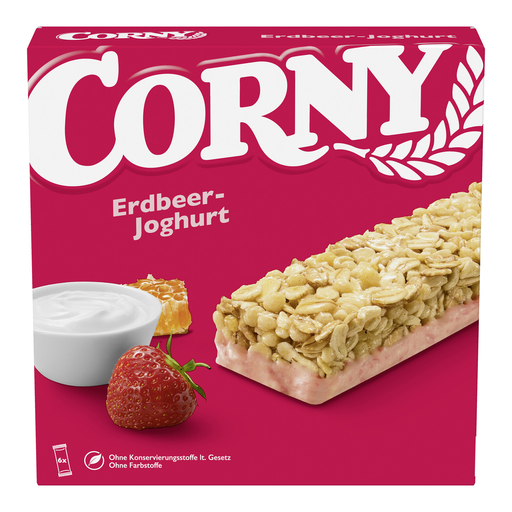 No image available
The 25 g bars are a smaller portion for short breaks. Compare the nutritional information per bar and, if you have specific ingredient requirements, read the labelling for the strawberry and yoghurt variety.
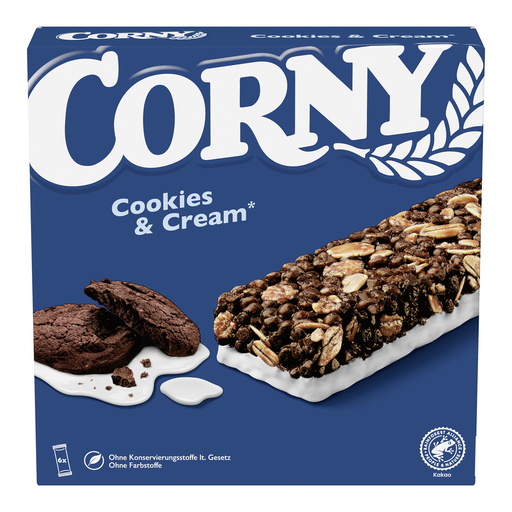 No image available
At 23 g per bar, this pack is an option if you’re looking for small portions. Use the bar’s weight to work out what the figures per 100 g mean for your break, and check the ingredients and allergen information for this variety.
 No image available
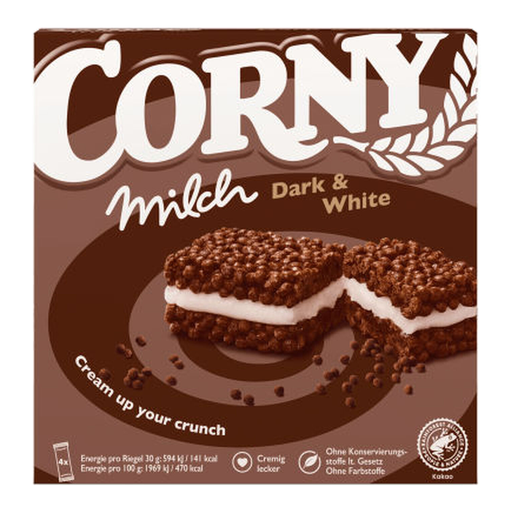
Four 30 g bars are a good option if you only want a small supply for breaks at work. Before taking them along separately, check whether the bars are individually wrapped, and read the ingredients and allergen information.
A cereal bar can be handy as a quick snack, but if you’re planning to have one for lunch regularly, you should include other foods too. The German Nutrition Society suggests options for eating at work such as fruit, vegetables, dairy products and filled sandwiches.
It doesn’t mean the bar is unsweetened or contains no sugar. Lebensmittelklarheit explains that sweeteners and sugar substitutes may be used, so check the ingredients list and, where relevant, the nutritional information for polyols.
Check the ingredients list and allergen information on the specific pack. The Federal Office of Consumer Protection and Food Safety says that the relevant substances that cause allergies or intolerances must be listed there. Check the information again even if you’re buying the product again.
The information for some products may vary depending on the supplier. ALDI SÜD specifically notes this for its GOLDEN BRIDGE peanut cereal bar and advises checking the pack in store for the exact nutritional values.