Shoppers who want to check portion size
If you’re planning a bar for a quick break at your desk, check its weight and the kcal per bar. Information per 100 g alone doesn’t show how much energy you’ll get from the portion you eat.


Choose a cereal bar for your office break based on the energy content of the bar you’ll actually eat, and compare the nutritional values per 100 g too. A low sugar value alone doesn’t mean fewer calories; portion size, ingredients and allergens can also affect your choice.
If you’re planning a bar for a quick break at your desk, check its weight and the kcal per bar. Information per 100 g alone doesn’t show how much energy you’ll get from the portion you eat.
If you want to limit sweet office snacks, compare the ‘of which sugars’ value and the ingredients list. The consumer advice centre warns that claims such as ‘less sweet’ don’t reveal the actual sugar content.
If you have an allergy or a relevant intolerance, the labelling on the specific pack is what matters. Information about cereals, milk, nuts, peanuts and soya may be particularly important when choosing a bar.
For your office break, first check how much you actually want to eat. Then compare sugar and ingredients. If you have an allergy, the labelling on the specific pack takes priority.
| Criteria | What to check | Who it matters to |
|---|---|---|
| Calories per serving | kcal per 100 g and grams per bar; relate the values to the amount you’ll actually eat. | If I only want a small bar for a short break, its energy content needs to suit the portion I’ve planned. For around 42% of shoppers, portion control is the main consideration. |
| Sugar and sweetening ingredients | Check ‘of which sugars’ per 100 g and per bar, as well as the ingredients list. | When choosing a sweet snack, I want to check the sugar value rather than rely on wording on the front of the pack. Around 33% of shoppers pay particular attention to this. |
| Allergens | Read the ingredients and allergen information for the specific variety; check for possible traces too, where relevant. | If certain ingredients aren’t suitable for me, I need to be able to assess every bar individually before buying a stock of them. This is the top priority for around 25% of shoppers. |
The label is no substitute for checking the nutritional values. ALDI SÜD lists 369 kcal and less than 1.5 g of sugar per 100 g for GOLDEN BRIDGE Schoko light. The low sugar value doesn’t also tell you the energy content.
Compare kcal and sugar per 100 g, then work out the values for the amount you want to eat.
According to the consumer advice centre, terms such as ‘less sweet’ or ‘naturally sweet’ don’t reveal the actual sugar content.
Check ‘of which sugars’ in the nutrition table, and look for syrups, honey, fruit juice or dried fruit in the ingredients list too.
A label such as ‘vegan’ doesn’t mean a bar is free from gluten-containing cereals or nuts.
Before buying, check the ingredients and allergen information on the specific pack.
The product ranges mentioned include different types of bars. Whether a variety suits your office break depends on its specific portion size and labelling, not the brand name.
The brand offers cereal bars in a range of varieties, including chocolate options.
ALDI SÜD’s own brand offers different types of bars, including its Schoko light cereal bar.
The ALDI SÜD range includes protein bars, a different product category from cereal bars.
The ALDI SÜD range includes, among other products, oat wholegrain and Pure Bite bars.
This selection includes individually portioned cereal bars, as well as an oat bar and a Nutrition Bar as alternative options for an office break. For each variety, check the nutritional information on the specific pack before choosing your portion size.
 No image available
The 20 g bars are a handy option for a small office break you can plan as an individual portion. Check the sugar and energy content, as well as the ingredients and allergen information on the specific pack.
 No image available
The 20 g format is easy to plan as an individual portion for a break at your desk. The nutritional values and ingredients and allergen information on the pack will show whether this variety suits your needs.
 No image available
This oat bar is an alternative for shoppers who want to plan a 50 g individual portion. When comparing it with smaller bars, focus on the nutritional values for the portion you’ll actually eat.
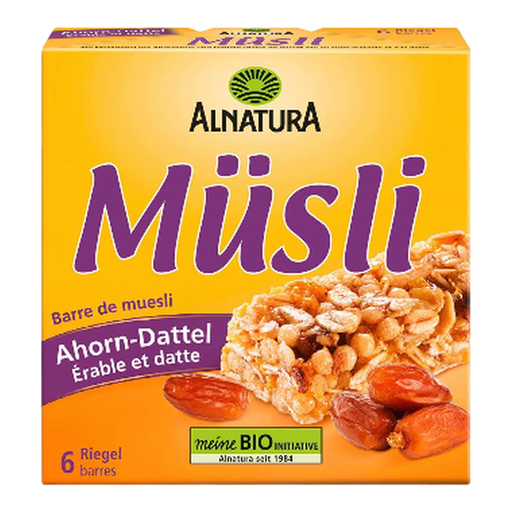 No image available
The 25 g bars are an option for a carefully portioned office break. If you want to compare sugar, check the ‘of which sugars’ value rather than guessing the amount from maple and date in the variety name.
 No image available
This Nutrition Bar isn’t a classic cereal bar, but it could suit you if you’re looking for a different type of bar in a 50 g individual portion for your break. Check the sugar, energy and ingredients on the specific pack; the variety name alone isn’t enough.
Compare kcal per 100 g, then use the bar’s weight to work out the values for the amount you’ll actually eat. Next, check the sugar, ingredients and, if relevant, allergens for the specific variety. Terms such as ‘light’ are no substitute for this information.
No. The label alone doesn’t tell you the sugar or energy content of the finished bar. Compare the nutritional information per 100 g and per bar, and read the ingredients list.
Before buying, check the ingredients and allergen information for each specific variety. The Lebensmittelklarheit website explains how common allergens are labelled. For bars, information about gluten-containing cereals, milk, nuts, peanuts and soya may be particularly relevant to your choice.