Office teams sharing a snack tin
When several people help themselves from the same tin, individually wrapped portions and a clearly stated pack size make it easier to plan when to top it up. You can compare pack formats and varieties separately.


For a shared office biscuit tin, individually wrapped multipacks with a clearly stated number of bars are a sensible place to start. Choose the portion size based on how often you need to top it up, and check the ingredients and allergen information for each variety. You can’t tell whether a product meets a particular dietary requirement from the brand name alone.
When several people help themselves from the same tin, individually wrapped portions and a clearly stated pack size make it easier to plan when to top it up. You can compare pack formats and varieties separately.
If you provide snacks for others, make sure the ingredients and ‘may contain’ information for each variety is easy to find. For products containing peanuts or milk in particular, the general description ‘cereal bar’ isn’t enough to make an informed choice.
If some people are specifically looking for vegan products or varieties with no added sugar, check the labelling for the particular product. This information doesn’t replace the ingredients list or nutritional information.
First, work out how many portions you need and what size they should be. Then you can decide which ingredient information and varieties matter for the shared tin.
| Criterion | What to check when buying | Who it matters to |
|---|---|---|
| Individual portions and topping up | Check the number of bars, the weight per bar and whether they’re individually wrapped. Documented pack formats include 6 × 25 g and 8 × 25 g. | If I top up the tin regularly, I want to know how many bars can be taken out individually. Around 40% of consumers put portion size and planning for top-ups first when making this choice. |
| Ingredients and allergens | Read the ingredients list and ‘may contain’ information for each variety, and keep the details accessible when transferring bars to the tin. | If I provide bars for different colleagues, I need to spot potential ingredient conflicts before adding them to the tin. For around 30% of consumers, this check is the main priority. |
| Varieties and dietary preferences | Check that the particular variety has the qualities you’re looking for, and compare pack sizes by weight and number of bars. | If my team wants a choice of flavours or a particular claim on the label, I want to choose suitable varieties without losing sight of how much I’ll need for top-ups. This is the main concern for around 30% of consumers. |
Ingredients and ‘may contain’ information can vary even between varieties from the same brand. An EDEKA-listed peanut bar, for example, also contains milk and cereals containing gluten.
Check each variety individually and keep the relevant packaging information available for the team.
For the tin, it makes a difference whether the pack weight is made up of a few larger bars or more smaller ones.
As well as the total weight, compare the number of bars and the weight per bar. This helps you plan how many individual portions will be available.
The two claims don’t mean the same thing. ALDI Nord points out that its GOLDEN BRIDGE varieties labelled accordingly contain naturally occurring sugars.
Read the nutritional information and ingredients list for the particular variety, rather than assuming the claim on the front of the pack tells you its total sugar content.
The range listed by REWE includes classic multipacks as well as other types of bar. For an office tin, the specific variety tells you more than the brand name alone.
EDEKA’s range of cereal bars includes individually wrapped portions in a pack of 8 × 25 g.
ALDI SÜD stocks a chocolate and banana variety in a pack of 8 × 25 g. ALDI Nord also describes cereal bars in an eight-piece pack.
This Joybuy selection includes multipacks of six, 12 or 24 bars. As well as the number of bars, portion size and the information on each individual pack are important when choosing for a shared tin.
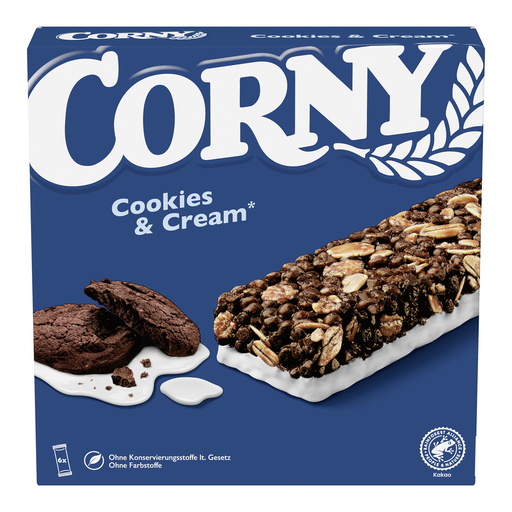 No image available
The six-bar pack is worth considering if you want to fill the tin with smaller portions. Before sharing, check the individual wrapping and the ingredients and allergen information on the pack.
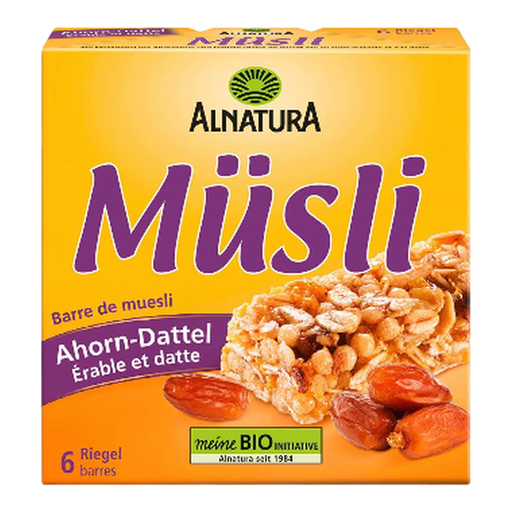 No image available
The pack of six 25 g bars suits a tin that’s topped up in smaller quantities. If particular dietary preferences are a priority, check the labelling and ingredients of the specific pack.
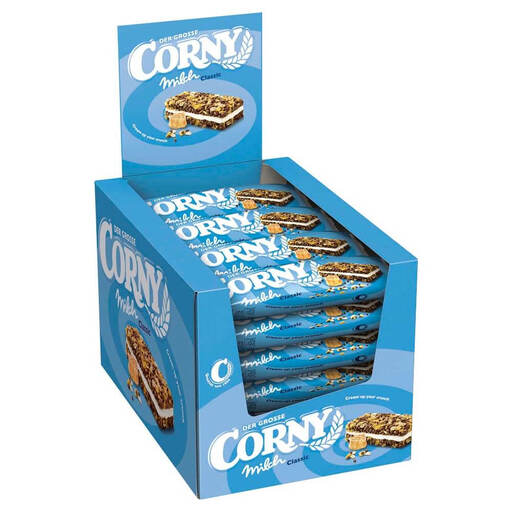 No image available
The pack of 24 is worth considering if you’re planning to top up the tin several times from one pack. At 40 g each, these bars are larger than the classic 25 g examples. Remember to check the ingredients and allergen information too.
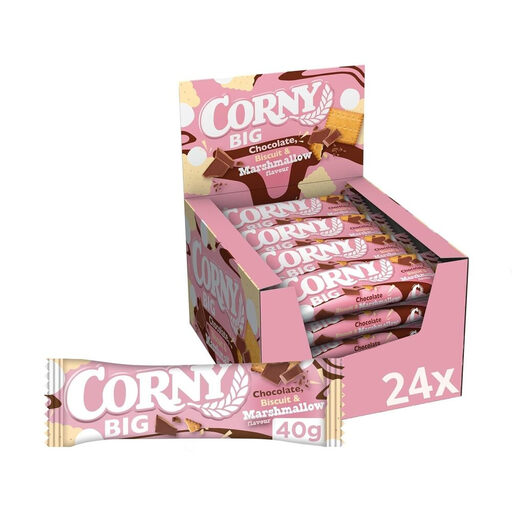 No image available
This pack of 24 is another option if you’re planning several top-ups. Each bar weighs 40 g, so check that this portion size and the ingredients suit your team.
 No image available
This pack of 12 is an option if you specifically want larger 50 g portions. Check the ingredients and allergen information on the individual pack; the name ‘Zero’ alone doesn’t tell you the full nutritional content.
Read the ingredients and ‘may contain’ information for the specific variety before putting it in the shared tin. Germany’s Federal Office of Consumer Protection and Food Safety highlights the importance of labelling 14 substances that are particularly likely to cause allergies or intolerances. A variety name is no substitute for this information.
Keep the outer packaging or the relevant product information accessible for as long as bars from that pack remain in the tin. This lets colleagues check the ingredients, allergen information and best-before date for each variety.
Start by counting the bars: a pack of 6 × 25 g contains six portions, while a pack of 8 × 25 g contains eight. Decide how many bars you want in the tin, then plan to buy more based on how often it actually needs topping up.
No. ‘No added sugar’ doesn’t automatically mean ‘sugar-free’. ALDI Nord notes that the relevant GOLDEN BRIDGE varieties contain naturally occurring sugars. For the specific variety, always check the ingredients list and nutritional information.