Consumers comparing fat content
You’re looking for a handy cereal bar to enjoy at your desk and want to compare the fat content of similar varieties using the nutrition information, rather than relying on a claim on the front of the pack.


For an office snack, don’t choose a cereal bar as lower in fat just because it says “light” on the pack. Compare the fat content per 100 g of similar bars, then check the weight of each bar. Check the sugar content and ingredients separately: a lower fat content tells you nothing about the sugar content or whether the bar is suitable if you avoid gluten.
You’re looking for a handy cereal bar to enjoy at your desk and want to compare the fat content of similar varieties using the nutrition information, rather than relying on a claim on the front of the pack.
You take a bar to the office, so the weight of each bar and the number of bars in the pack matter just as much as the per-100 g figures.
If you need to avoid gluten or certain allergens, check the ingredients and allergen information on the specific pack. You can’t tell whether a product is suitable just from the term “cereal bar”.
For an office snack, start by comparing the nutrition information per 100 g for similar cereal bars. Then check the bar’s weight, sugar content and ingredients to see whether that particular variety meets your needs.
| Criteria | What to check | Who it matters to |
|---|---|---|
| Fat content | Compare fat and saturated fat per 100 g for cereal bars that are as similar as possible. “Light” doesn’t mean you can skip checking the figures. | If I’m looking for a bar with a fat content that suits me for my office break, I want to compare similar varieties on a like-for-like basis. For around 40% of consumers, fat content is the main consideration. |
| Individual portion | Check the weight of each bar and the number of bars in the pack. Also consider the nutrition information for the portion you’ll take with you. | I want to pack exactly one bar and know how big that portion is. For around 30% of consumers, having a portion they can plan around comes first. |
| Sugar content | Check the “of which sugars” figure per 100 g, then take the bar’s weight into account. Don’t assume the sugar content from the fat content. | For my regular office break, I want the sugar content to suit my needs as well as the fat content. Around 20% of consumers focus on this first. |
| Ingredients and allergens | Check the ingredients list and highlighted allergens on the specific pack. Don’t rely on a general claim about the product category. | If I need to avoid gluten or a particular allergen, the information on the variety I choose determines whether it’s suitable for me. For around 10% of consumers, this is the main thing to check. |
A product name alone doesn’t tell you which comparable bar its fat content has been measured against. It also tells you nothing by itself about sugar, portion size or ingredients.
Check the nutrition information and the specific claim on the pack before classifying a variety as lower in fat.
A single bar often weighs less than 100 g. The GOLDEN BRIDGE Schoko light described by ALDI SÜD has a stated bar weight of 25 g.
Check how many grams your chosen portion weighs, then work out the fat and sugar content for that exact amount.
ALDI SÜD notes that different suppliers may provide different nutrition information for GOLDEN BRIDGE Schoko light.
Compare the online information with the nutrition table and ingredients list on the pack you’re actually buying.
Ingredients vary from one cereal bar to another. Lebensmittelklarheit explains that allergen information must name the specific type of cereal containing gluten.
If you need to avoid gluten strictly, check the ingredients and allergen information for each variety, as well as any gluten-free labelling.
CORNY is available in several cereal bar ranges in Germany, including Milch, Free and Haferkraft varieties.
ALDI SÜD’s own brand includes the Schoko light cereal bar.
EDEKA24 lists a Bio Knusperriegel Nussmix in its cereal and fruit bar category.
These CORNY bars are worth considering as individually portioned snacks for an office break. Compare fat and sugar using the information on each pack; none of the product names listed here, on its own, proves a defined comparison showing that the bar is “lower in fat”.
 No image available
The six bars, each weighing 20 g, are easy to plan as individual portions for an office break.
Compare fat and sugar using the information on the pack. The product name alone doesn’t prove a reduced fat content; if you have ingredient requirements, check the allergen information too.
 No image available
The pack is labelled as containing twelve oat bars at 50 g each. The weight of each bar matters when you’re planning an individual portion for the office.
Check the fat, sugar and ingredients on the specific pack. “Zero” doesn’t prove a reduced fat content.
 No image available
This cocoa oat bar could work as a snack at work if its actual portion size suits your plans.
The title says 4 × 35 g, while another product detail refers to a 50 g bar. Before buying, check the variety and bar weight on the pack; only then can you work out the nutrition information for one portion.
 No image available
With six bars at 20 g each, the portion size for an individual office break is clear.
Assess fat and sugar separately using the nutrition information. The product name doesn’t prove a specific fat comparison; also check the ingredients and allergen information.
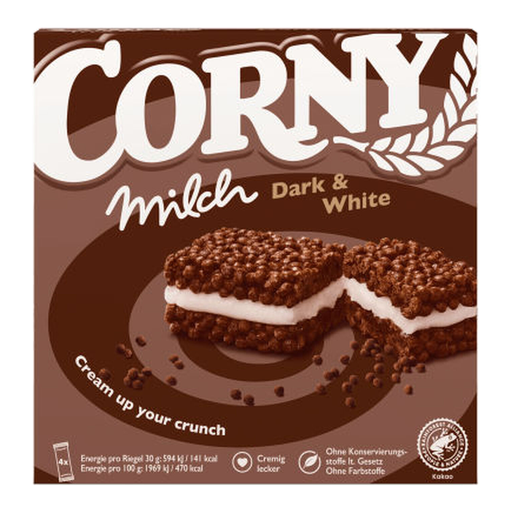 No image available
The four bars at 30 g each offer a clearly stated individual portion for an office break.
When comparing it with other cereal bars, look at the portion and sugar content as well as the fat content per 100 g. If you need to avoid allergens, check the ingredients on the specific pack.
No, the wording alone isn’t enough. Compare the nutrition information and check what a specific reduced-fat claim refers to. The Verbraucherzentrale also recommends checking the nutrition table for light products.
Use both figures to answer different questions: per 100 g lets you compare similar cereal bars on a like-for-like basis, while the bar’s weight tells you how much you’ll have during your office break. The European Commission explains that nutrition information per 100 g is the basis for nutrition labelling.
No, you need to check fat and sugar separately. Even if both figures are given for a particular variety, you can’t assume they apply to other cereal bars with a similar name.
No, you need to check the ingredients and labelling for each variety. Lebensmittelklarheit points out that, when a cereal containing gluten is used, the specific type of cereal must be named. So if you strictly avoid gluten, a general statement about cereal bars isn’t enough.