
Lieferung heute & morgen

Qualitätsgarantie

Willkommens-Angebote freischalten: KOSTENLOSE Lieferung | Bis zu 80 % RABATT | Kostenlose 30-Tage-JoyPlus-Testphase
App herunterladen
Cereal bars are practical for school bags, the office, long train journeys or outdoor activities. However, when buying cereal bars online, taste is not the only deciding factor. Terms such as “wholegrain”, “no added sugar” or “organic” can create a favourable impression, even though products may differ significantly in their ingredients, allergens, portion sizes and nutritional values.
As a Joybuy Product Recommendation Officer, I filter out the key details and assess them according to typical usage situations. This helps you avoid unnecessary purchases you may regret.
A cereal bar with no added sugar may still contain naturally occurring sugars. In addition, traditional types of sugar are often replaced with glucose syrup, glucose-fructose syrup, rice syrup or sweeteners. That is why it is important to check the complete ingredients list and the nutritional value listed under “of which sugars”.
For example, according to the product information, Corny Haferkraft Zero Peanut Butter contains 1.2 g of sugar per 100 g and maltitol syrup. Corny Haferkraft Zero Cocoa lists 0.1 g of sugar per 100 g, while the bar also contains polyols. According to the labelling, excessive consumption of maltitol may have a laxative effect.
For a cereal bar, you should check how much oats, wheat or other wholegrain ingredients it actually contains. For example, Balisto Muesli Whole Grain Biscuit Bars contain 12% whole oat flakes, 8.1% wholemeal wheat flour and 3.2% whole barley flour. Corny Haferkraft Cocoa, on the other hand, lists 53% wholegrain oat flakes.
Both products belong to the cereal bar category, but they differ considerably in recipe, texture and nutritional profile. The description on the front of the pack therefore does not replace checking the stated quantities.
Many oat cereal bars contain gluten, milk or nuts. Even a bar marketed as vegan may contain traces of other allergens. According to the product information, the Eat Natural Red Fruits & Almonds Cereal Bar is vegan and gluten-free, but contains almonds and may contain traces of peanuts, soya, milk, hazelnuts and cashews.
If you have allergies or intolerances, always check the information on the current packaging. Recipes and labelling can change.
In the EU, ingredients are generally listed in descending order by weight. If oat flakes, date paste or nuts appear near the beginning of the list, it is easier to assess the recipe. For fruit bars, it is also important to check whether the fruit is included as pieces, purée, juice concentrate or syrup.
According to the product information, the Eat Natural Red Fruits & Almonds Cereal Bar consists of 74% fruit and nuts. The ingredients list includes date paste, apple purée, cranberries, raspberries, strawberries and almonds, among others.
Comparing products per 100 g makes it easier to assess different pack sizes. For everyday use, the portion size is also important. A 25 g bar containing 109 kcal should be assessed differently from a 50 g bar containing 193 kcal, even if both are offered as snack bars for eating on the go.
Pay particular attention to:
These figures are not medical advice; they are intended solely to support an objective product comparison.
A multipack can be more economical for families, offices or regular use. Individual wrapping protects the bar while you are out and makes portion control easier. For an occasional snack, a small pack containing four to six bars may be more practical, as it means you need to store less stock.
Most products should be stored in a cool, dry place and protected from heat. Chocolate coatings and soft bars are more sensitive to warmth than uncoated varieties.
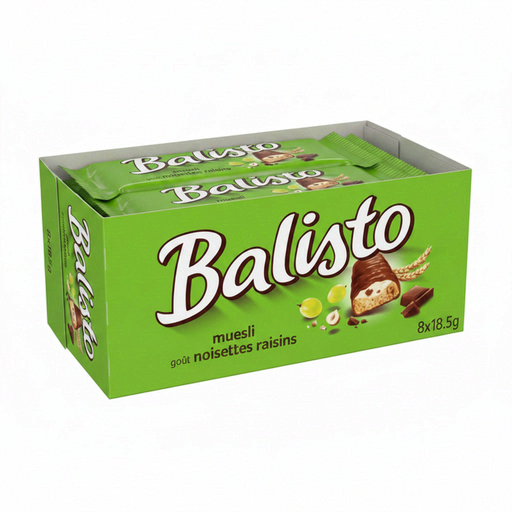
Why this product suits the profile: Eight individually portioned bars with oat flakes, raisins, a hint of hazelnut and a cocoa coating are suitable for families or individual everyday snacks.
The portion size of 18.5 g is clearly stated. Gluten, soya, milk and hazelnuts are also listed as allergens.
Small individual portions and a pack of eight bars; according to the product information, the cocoa has Rainforest Alliance certification.
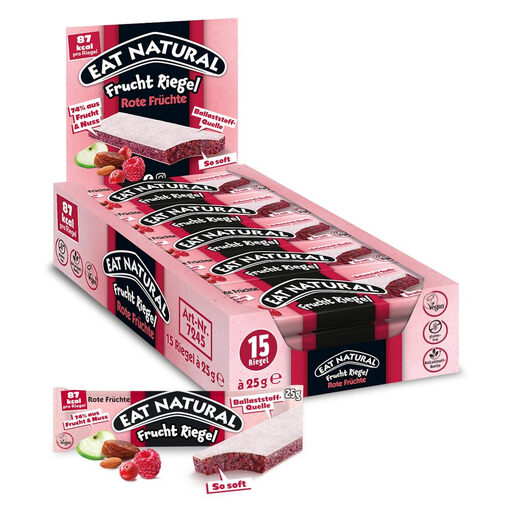
Why this product suits the profile: The 15 individually wrapped, vegan and gluten-free fruit bars offer a fruit-forward alternative for the office, travel or breaks.
The product information expressly states that it is gluten-free and made to a vegan recipe. However, it contains almonds and lists possible traces of other allergens.
74% fruit and nuts according to the product information; 15 bars weighing 25 g each, with a total weight of 375 g.

Why this product suits the profile: The multipack of 12 50 g bars is aimed at regular users who prefer a vegan oat base and a peanut flavour.
“No added sugar” is accompanied by the specific declaration of 1.2 g of sugar per 100 g and a reference to maltitol.
49% wholegrain oat flakes according to the ingredients information; 12 individually portioned bars with a total weight of 600 g.
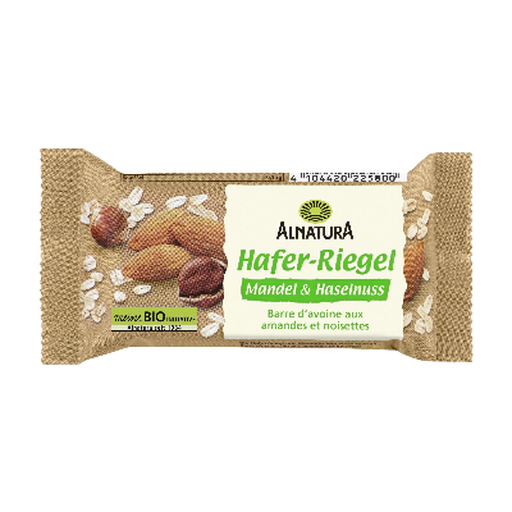
Why this product suits the profile: A single vegan organic cereal bar with oat flakes, almonds and hazelnuts is suitable for walks, breaks and longer trips.
The ingredients list states 46% wholegrain oat flakes, along with 6% roasted almonds and 6% hazelnuts. Allergy information should still be taken into account.
Certified organic ingredients according to the product information; vegan, with 60 g providing a larger individual portion.
We have put together a complete, regularly updated list of products that fully meet these strict selection criteria and the safety regulations applicable in the EU.
For children at school, small individually wrapped bars are often easier to portion. With a chocolate cereal bar, you should also check whether the chocolate is used as a coating or forms part of the bar mixture. On hot days, uncoated oat cereal bars may be more practical.
If you buy regularly, compare the price per 100 g rather than just the pack price. A multipack containing twelve 50 g bars can provide enough stock for several people, while a pack of four 35 g bars takes up less storage space. Organic cereal bars, vegan cereal bars and gluten-free varieties should be selected based on their relevant labelling and ingredients list, not simply on the basis of marketing colours or terms.
Yes, provided the packaging, size and texture suit the intended use. Individually wrapped bars can be transported hygienically in a bag, rucksack or lunchbox. Chocolate coatings may soften in warm conditions; for outdoor activities, uncoated varieties are often easier to manage.
The specific best-before date is shown on the packaging. Unopened bars should be stored in a cool, dry place and protected from direct heat, in line with the manufacturer's instructions. Once opened, an individual bar should be eaten soon afterwards, particularly if it has a soft texture or fruit filling.
No. “No added sugar” does not automatically mean that the product contains no sugar. Ingredients such as dates, fruit concentrates or cereals can naturally contribute sugar. Sweeteners such as maltitol may also be used. For an objective comparison, the ingredients list and nutritional values per portion are the key factors.