If you’re looking for a cereal bar with less fat for a picnic, start by comparing the fat values per 100 g, then check the amount per bar rather than relying on the word “light” alone. Sugar, energy and ingredients may also affect your choice. If you’re sharing with a group, it’s especially important to check the allergen information for the specific variety.
Which comparisons matter to you?
People keeping an eye on fat content
If fat is your main consideration, compare cereal bars per 100 g. This avoids differences in bar size distorting the comparison. The Verbraucherzentrale also advises checking the nutritional information on light products.
Groups with different ingredient requirements
When sharing snacks in the park, check the ingredients in each individual variety. Pay particular attention to highlighted allergens and, where relevant, precautionary allergen statements before passing a bar around.
People who want an easy-to-carry snack
Individually portioned bars are easy to hand out at a picnic. If that matters to you, check the packaging and bar weight, but don’t judge fat and sugar values by portion size alone.
What should you look for when buying?
To find a bar with less fat, start by comparing similar cereal bars per 100 g. Then consider the portion, other nutritional values and ingredients to decide which bar is right for your picnic.
| Criteria |
What to check when buying |
Who it matters to |
| Fat content |
Compare fat and saturated fat per 100 g, then check the values per bar. |
I mainly want to choose a cereal bar with less fat for my picnic, rather than being swayed by the word “light”. For around 40% of consumers, comparing fat content comes first. |
| Sugar and energy |
Check sugar and energy using the same measurement and for the portion you’ve chosen. |
As well as fat, I want to take the bar’s sugar and energy content into account. This is the top priority for around 30% of consumers. |
| Ingredients and allergens |
Read the ingredients list and highlighted allergens for each variety; check precautionary allergen statements where relevant. |
If I’m sharing bars with a group, the ingredients in each variety need to meet the needs of the people eating them. This comes first for around 20% of consumers. |
| Portioning |
Check the bar weight, pack size and individual wrapping for carrying and sharing. |
Above all, I want bars that are easy to carry and divide up. This is the top priority for around 10% of consumers. |
Common comparison mistakes
-
Assuming “light” means a better nutritional profile overall
A highlighted nutritional claim doesn’t tell you everything about a cereal bar. The Verbraucherzentrale recommends reading the nutrition table carefully, even for light products.
Compare fat, saturated fat, sugar and energy separately, then decide which value matters most for your choice.
-
Comparing bars of different sizes by the piece alone
A lower value per bar may simply be because the portion is smaller. It doesn’t mean the value per 100 g is lower.
Use the per-100-g figures to compare varieties and the per-bar information to check how much you’ll actually take with you.
-
Overlooking allergens in individual varieties when sharing
Ingredients can vary even within the same brand. Lebensmittelverband Deutschland explains that relevant allergenic ingredients must be highlighted in the ingredients list.
Before buying or sharing, check the information on the specific pack, including any precautionary allergen statements.
Useful brands to compare
CORNY
Cereal bars in a range of varieties and product lines, including Schoko light, Free and Haferkraft.
- ALDI SÜD lists the fat content of CORNY Schoko light as 9,4 g per 100 g.
- Recipes vary: the name Free or Zero alone doesn’t tell you the fat content of a particular variety.
Golden Bridge
ALDI SÜD’s own-label range includes different types of bars, including chocolate light cereal bars.
- The chocolate light variety gives you another specific product to compare nutritional values.
- Check its declared fat content on the pack rather than trying to infer it from the name.
ja!
REWE’s own-label range includes chocolate cereal bars in a pack of eight, each weighing 25 g.
- REWE lists the fat content of this variety per 100 g and per bar: 12,6 g and 3,2 g respectively.
- These figures apply to the ja! Müsli-Riegel Schokolade, not to other varieties from the brand.
GUT&GÜNSTIG
EDEKA’s own-label range includes individually wrapped chocolate cereal bars.
- Individual wrapping is handy for carrying and sharing in the park.
- EDEKA lists the chocolate cereal bar as containing 13,9 g of fat and 26,9 g of sugar per 100 g. Check the allergen information on the pack too.
Seitenbacher
The Bergsteiger Riegel sold by REWE is a nut bar, not an interchangeable alternative to a chocolate cereal bar.
- REWE lists the Bergsteiger Riegel as containing 19 g of protein per 100 g.
- The same bar contains 25 g of fat per 100 g; its ingredients include almonds, hazelnuts and milk products.
CORNY cereal bars at Joybuy
These CORNY Haferkraft and Free varieties offer different flavours and portion sizes to choose from for your picnic. Check the fat content and other nutritional information on each pack; names such as Zero or No Added Sugar are no substitute for comparing the figures.
 No image available
CORNY Haferkraft Zero Peanut Butter Oat cereal bars, 12 × 50 g
If you’re looking for an oat bar with a peanut flavour for your picnic, compare its nutritional values per 100 g with those of other varieties.
Pack details in the product name: 12 bars of 50 g each. Check the ingredients and allergen information on the pack before sharing.
View at Joybuy
 No image available
CORNY Haferkraft Zero Cocoa cereal bar
If you’re considering a cocoa variety for the park, compare fat and sugar using the nutritional information per 100 g.
The pack quantity and bar weight details differ. Check the actual portion size on the pack before comparing values per bar.
View at Joybuy
 No image available
CORNY Free Chocolate No Added Sugar cereal bars, 6 × 20 g
If you want to take small chocolate cereal bars on your picnic, check the fat content per 100 g as well as the portion size.
Pack details in the product name: six bars of 20 g each. The name No Added Sugar doesn’t mean the bar contains less fat.
View at Joybuy
 No image available
CORNY Free White Chocolate No Added Sugar cereal bar
If you’re looking for a white chocolate variety, judge its fat content by the nutritional information, not the product name.
The listed weights of the individual bars don’t match. Check the bar weight and total quantity on the pack before planning portions.
View at Joybuy
 No image available
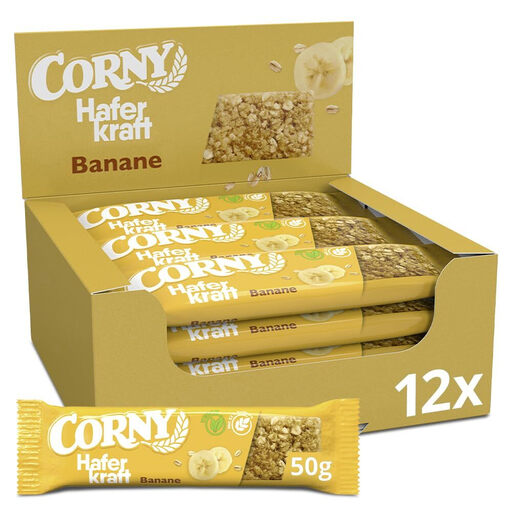
CORNY Haferkraft Banana Oat cereal bars, 12 × 50 g
If you prefer a banana and oat variety for your picnic, compare its fat and sugar content with those of other cereal bars per 100 g.
Pack details in the product name: 12 bars of 50 g each. The bar weight is also useful when planning individual portions.
View at Joybuy
Frequently asked questions
Does “reduced fat” automatically mean “low fat” for cereal bars?
No. A lower fat value than that of a comparison product doesn’t automatically mean the bar is low in fat overall. The Verbraucherzentrale recommends checking the nutrition table even when such claims are made. Compare similar bars per 100 g and look at sugar and energy separately.
Should I compare cereal bars per 100 g or per bar?
Use both figures to answer different questions. Per 100 g, you can compare varieties with different portion sizes; per bar, you can see how much is in your picnic portion. For example, REWE lists the ja! Müsli-Riegel Schokolade as containing 12,6 g of fat per 100 g and 3,2 g per 25-g bar.
What should I check for allergens when sharing bars?
Before passing a bar around, read the ingredients list and any precautionary allergen statements on the specific pack. Lebensmittelverband Deutschland explains that relevant allergenic ingredients must be highlighted in the ingredients list. You can’t simply apply the information for one variety to another.


