
Lieferung heute & morgen

Qualitätsgarantie

Willkommens-Angebote freischalten: KOSTENLOSE Lieferung | Bis zu 80 % RABATT | Kostenlose 30-Tage-JoyPlus-Testphase
App herunterladen
Cereal bars are handy for school bags, the office, commuting or days out. Even so, it is worth taking a closer look at the ingredients list, nutritional values and pack size. The term “cereal bar” alone says little about the proportion of cereals, sugar content or suitability for particular diets.
Many cereal bars look particularly rich in grains because of rolled oats, crispy cereal pieces or cornflakes. However, the ingredients list is what really matters. A stated proportion such as 22% wholegrain cereal flakes or 52% wholegrain oat flakes is more informative than general claims on the packaging.
For varieties containing strawberry, cranberry or forest berries, check the specific fruit content. In the Corny Strawberry & Yoghurt Cereal Bar, for example, 1.3% consists of strawberry ingredients: 1% strawberry juice concentrate and 0.3% strawberry powder. The flavour also comes from other ingredients and flavourings.
A cereal bar with no added sugar may still contain naturally occurring sugars. Some recipes are also sweetened with sweeteners such as maltitol. The Corny Free Chocolate No Added Sugar Cereal Bar, for example, contains 2.4 g of sugar per 100 g. The term refers to the absence of added sugar, not to the absence of all sweet-tasting ingredients.
Three details are particularly important when choosing a product:
Nutritional values should generally be compared per 100 g, as individual bars come in different sizes. The portion size also matters: a 25-g bar is more suitable as a small snack, while a 40- or 50-g bar provides a more substantial serving.
Pay particular attention to:
Individually wrapped cereal bars are practical for taking out and about, lunchboxes and offices. They protect the bar from direct contact and make portioning easier. Store the products in accordance with the manufacturer’s instructions: in a dry, cool place, protected from heat. With chocolate coatings, heat can affect the texture and appearance.
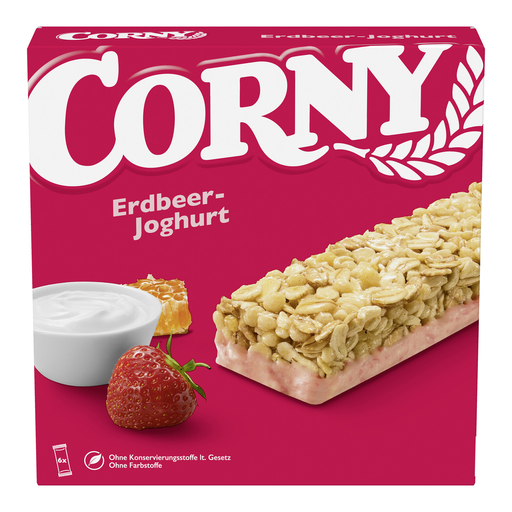
Why this product suits the profile: The pack contains six individually wrapped bars, each weighing 25 g. Strawberry and yoghurt flavours are ideal for short breaks and school bags.
The declared wholegrain flake content is 22%. At the same time, the product lists 22.9 g of sugar per 100 g, allowing the sweet recipe to be assessed realistically.
150 g total weight, 450 kcal per 100 g and no artificial colourings according to the product information.
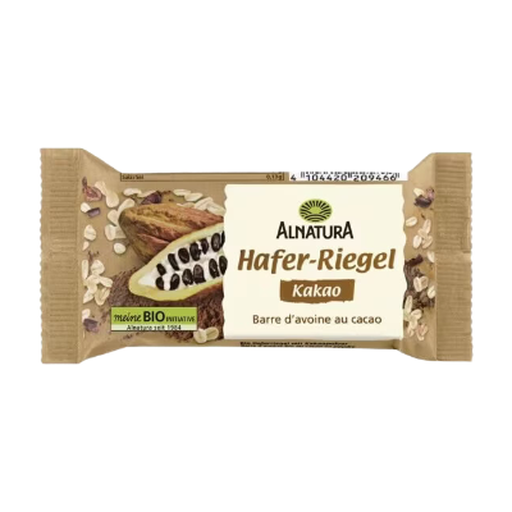
Why this product suits the profile: According to the product information, the bar is made with 50% oat flakes and contains 15% dark chocolate. The 60-g portion is designed for a more substantial snack.
The recipe and declared organic status can be checked directly against the ingredients list and packaging information, rather than relying solely on flavour claims.
Oat flakes are the first ingredient by weight; the product data lists 430 kcal and 30 g of sugar per 100 g.
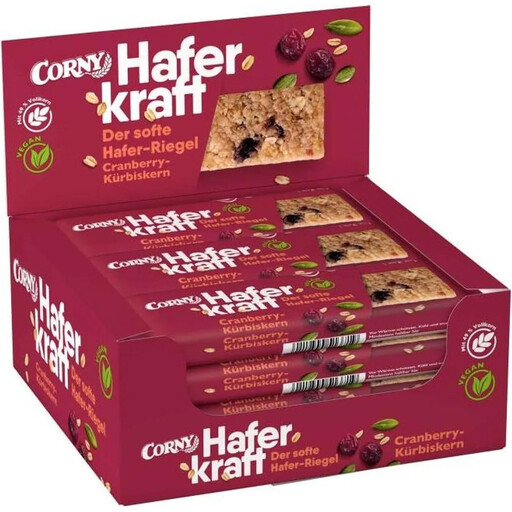
Why this product suits the profile: The multipack of 12 50-g bars is aimed at households, offices and active people who want to keep cereal bars stocked for days out or leisure activities.
The vegan label is supported by a plant-based recipe. The lack of a chocolate coating can be practical in warm conditions and during transport.
600 g total weight, 48% wholegrain oat flakes and 0.17 g of salt per 100 g according to the product data.

Why this product suits the profile: The recipe contains 52% wholegrain oat flakes and is described as vegan and with no added sugar. It suits consumers who are specifically looking for these features.
The information distinguishes between sugar and polyols: 0.1 g of sugar and 11.1 g of polyols per 100 g. According to the product information, excessive consumption of maltitol may have a laxative effect.
52% wholegrain oat flakes and 0.04 g of salt per 100 g; the pack contains four bars weighing 35 g each according to the product description.
We have put together a complete, regularly updated list of products that fully meet these strict selection criteria and the safety regulations applicable in the EU.
The best-before date is shown on the packaging. Unopened bars should be stored in a dry, cool place, protected from heat. Once opened, they should ideally be consumed promptly, particularly softer oat bars or products containing chocolate and milk cream.
Individually wrapped bars weighing between 20 and 50 g are suitable for rucksacks, desks, lunchboxes and travel luggage. In summer temperatures, varieties without a chocolate coating are less susceptible to melting. However, the packaging should not be exposed to direct heat for extended periods.
A multipack can be practical for families, offices and retailers. To assess the value, compare the price per 100 g or per bar and check the best-before date. If you eat them infrequently, a smaller pack may be more suitable, so that the bars do not need to be stored for a long time.