Holiday groups planning ahead
If you’re catering for several people over a number of days, you can match the pack size to the number of breakfasts you’ve planned. A large pack is most practical when your group is likely to finish it.


When you’re planning several breakfasts in a holiday rental, the biggest cereal pack isn’t necessarily the best choice. Work out how many people are travelling and how many breakfasts you’ll need before choosing a pack size, and check the ingredients and allergens for everyone who’ll be eating it.
If you’re catering for several people over a number of days, you can match the pack size to the number of breakfasts you’ve planned. A large pack is most practical when your group is likely to finish it.
If anyone has particular ingredient preferences or allergies, check the labelling on the specific mix. The right pack size won’t help if some of your fellow travellers can’t eat the cereal.
For just a few breakfasts, a smaller pack may be easier to finish. How much you need depends on the number of people and their usual portion sizes.
First, estimate how much you’ll need, then check that the ingredients and recipe suit everyone travelling with you.
| Criterion | What to check when buying | Who it matters to |
|---|---|---|
| Pack size | Compare the pack weight with the number of people, breakfast days and usual portion sizes. | If I’m planning several breakfasts for a group, I want to bring enough cereal without having to buy more. Around 31% of consumers prioritise getting a pack of sufficient size. |
| Ingredients and allergens | Read the ingredient list, declared allergens and any warnings about possible traces on the specific product. | If not everyone travelling with me can tolerate the same ingredients, the mix needs to suit those affected. Around 31% of consumers put ingredients and allergens first. |
| Recipe and flavour | Compare the type of cereal, its ingredients and the nutritional information per 100 g for each variety. | I’m looking for a mix the group will actually want to eat, perhaps one with fruit rather than a crunchy recipe. Around 23% of consumers focus on recipe and flavour. |
| Leftovers and storage | Think about how much is likely to be left over and check the storage instructions before choosing a large pack. | For a short stay, I don’t want to leave behind or transport a large opened pack. Around 15% of consumers prioritise having little left over and being able to store it easily. |
The cereals considered here vary in ingredients such as tree nuts, peanuts, soya, sesame and cereals containing gluten, as well as in their warnings about possible traces. So a favourite variety may not be suitable for everyone travelling with you.
If anyone has an allergy or intolerance, check the ingredients and allergen information on the exact pack you’re planning to buy.
Crunchy cereal, fruit muesli and other mixes can vary in their ingredients and nutritional values. Information for one variety won’t necessarily apply to a similarly named pack from the same brand.
Compare the ingredient list and nutritional information per 100 g for the specific products.
A 1 kg or 1,25 kg pack may be suitable for several breakfasts, but could leave you with leftovers if you’re only staying for a short time.
Before you buy, estimate how many people will be eating cereal, for how many days, and how much each person will need.
Also consider whether you’ll be able to take an opened pack with you and store it after your stay.
Kölln’s Knusper Klassik is a 1.250 g pack of crunchy muesli.
Alnatura Maxi-Müsli is a 1-kg mix made with organic ingredients; the product page describes the recipe as vegan.
Seitenbacher sells Mühlen Müsli 1 in a 1-kg bulk pack.
REWE ja! Früchte-Müsli comes in a 1-kg pack for travellers who want to shop once they arrive.
Brüggen describes how it makes different types of muesli, particularly for own-label brands.
These cereal packs range from 450 g to 750 g. Compare the pack size with the number of breakfasts you’ll need and your travel group’s ingredient requirements.
 No image available
You can plan to use this 750 g pack for several breakfasts for your travel group.
 No image available
If you’re looking for crunchy muesli for your stay, compare this 600 g pack with the amount you expect to need for breakfast.
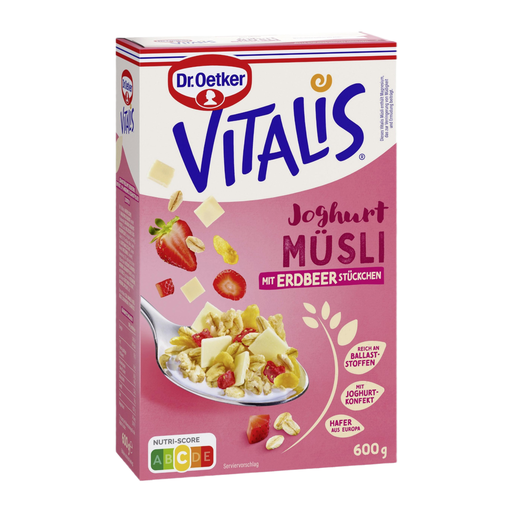 No image available
If your group would like a yoghurt and strawberry muesli, this 600 g pack gives you a handy amount to factor into your plans.
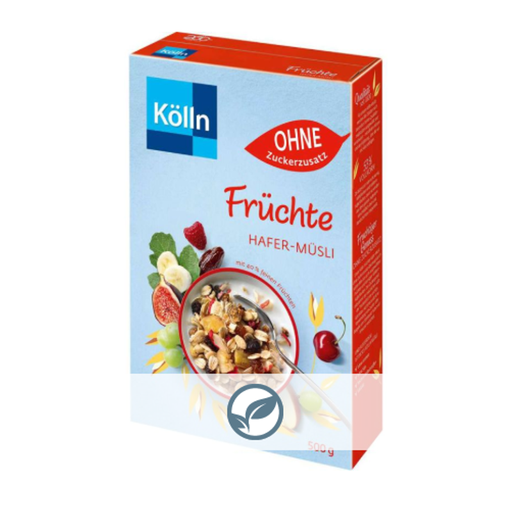 No image available
If you’re considering a smaller pack of fruit muesli, this one weighs 500 g. Check the ingredients and nutritional information on the specific pack.
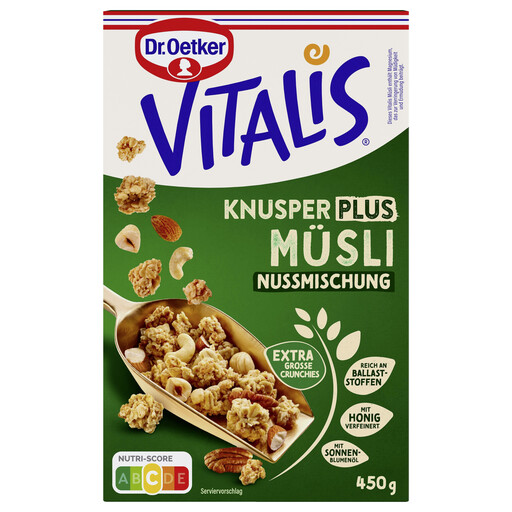 No image available
For a shorter stay, compare this 450 g pack with the amount of cereal you expect to need for breakfast. As it’s a nut-based mix, it’s especially important to check the allergen information.
Work it out based on the number of people, the number of breakfast days and the portion you expect each person to have. Compare the total with the pack weight, and consider whether you’ll want to take any leftovers with you after your stay.
Yes. The information on the specific pack is what matters, not the brand as a whole. The Federal Ministry of Agriculture, Food and Regional Identity explains that the 14 most common causes of food allergies and intolerances must be declared. You should also check the product’s warnings about possible traces.
When you buy food online, the ingredients list and nutritional information must be available before you enter into a contract. The Bavarian State Office for Health and Food Safety explains this requirement for distance selling; the best-before date may be provided at delivery.
Follow the storage instructions on the pack and reseal it after opening. For its Maxi-Müsli, Alnatura specifically recommends storing it in a dry place and keeping it away from heat.