Buffet planners with steady demand
When guest numbers are easy to predict, you can plan how to distribute a larger quantity across breakfast services. You’ll need dry storage space and a reliable way to manage opened packs.


Bulk packs work well for a hotel breakfast buffet when consumption is predictable and opened packs can be stored in a dry place and used up in good time. If guest numbers fluctuate or you want to serve several varieties separately, individual portions and variety packs may be a better fit. If cereal is served from open containers, information about allergenic ingredients must always be available.
When guest numbers are easy to predict, you can plan how to distribute a larger quantity across breakfast services. You’ll need dry storage space and a reliable way to manage opened packs.
If you want to cater for different tastes, you can offer a mix of classic flakes, muesli and sweeter cereals. A variety pack gives guests a choice without requiring you to buy a large pack of every variety.
If cereal is served from open containers, you must be able to match information about allergenic ingredients to the varieties actually on offer. The pack format doesn’t remove this responsibility.
A good fit if: One variety is regularly in demand and you can use it up before the next menu change.
Bear in mind: Opened packs need to be stored, and you’ll need a system for serving them at an open buffet.
A good fit if: Guest numbers fluctuate or you want to offer several varieties in separate portions.
Bear in mind: You’ll need to check the ingredients and allergens for every variety in the pack. Individual portions also mean more packaging.
Start by estimating how much of each variety you’re likely to use. Then you can match the pack format, ingredients and buffet serving arrangements to your needs.
| What matters | What to check when buying | Who it matters most to |
|---|---|---|
| Quantity and consumption | Compare pack size and the number of portions you’re likely to use with your storage space and expected consumption. | If I regularly replenish one variety, I want to use up opened packs rather than end up with leftovers. The right quantity is likely to be the main concern for around 27% of consumers. |
| Allergens and labelling | Check the current ingredients and allergen information for each variety. If serving from open containers, make sure the information is clearly matched to each one. | At an open buffet, I need to make it clear to guests which allergenic ingredients are in each variety. Around 33% of consumers would prioritise this when buying. |
| Choice and portioning | Check which varieties are included and how many individual packs there are. Plan how to serve and replenish them separately. | When guest numbers and preferences vary, I want to offer several varieties without opening large packs of each one. Flexible choice would be the main priority for around 20% of consumers. |
| Ingredients and nutritional values | Compare the ingredients list and the sugar, fibre and protein per 100 g for each specific variety. | Before putting the buffet together, I want to know how the varieties differ in their ingredients and nutritional values. For around 20% of consumers, this profile would be the most important selection criterion. |
Seitenbacher sells muesli in a 1 kg pack as well as a case containing nine 750 g packs. These quantities call for different plans for consumption and storage.
Before ordering, estimate how many portions of each variety you’ll actually serve and how long you can keep using opened packs.
If demand is low, you may be left with leftovers while needing to keep storing packs that have already been opened.
Nestlé Cereals Deutschland lists wholemeal wheat flour as an ingredient in CINI MINIS, alongside 24 g of sugar per 100 g. One ingredient doesn’t tell you everything about a variety’s nutritional values.
Compare the ingredients list and nutritional information per 100 g for the specific products before finalising your buffet selection.
In Germany, there are requirements for providing information about allergenic ingredients when unpackaged cereal is served at a buffet. The Federal Ministry of Agriculture, Food and Home Affairs explains the labelling requirements; the Hanover Chamber of Commerce and Industry refers to the LMIDV for unpackaged food in the hospitality sector.
Match each open variety to the current information on the pack you’re using, and check it again whenever the range or recipe changes.
Kellogg's Deutschland describes Variety as a selection of individually wrapped cereals. This format may suit a buffet offering several varieties.
According to Nestlé Cereals Deutschland, CINI MINIS are cinnamon-flavoured cereals and can add a different taste to the buffet.
Seitenbacher sells Mühlen Müsli 1 in a 1 kg pack and Bergsteiger Müsli in a case of nine 750 g packs. Both formats require careful planning to match consumption.
These two cereal packs may suit a hotel buffet where you’re looking for smaller units and a choice of varieties. If you’re planning to use larger bulk packs, consider the storage and quantity questions outlined above separately.
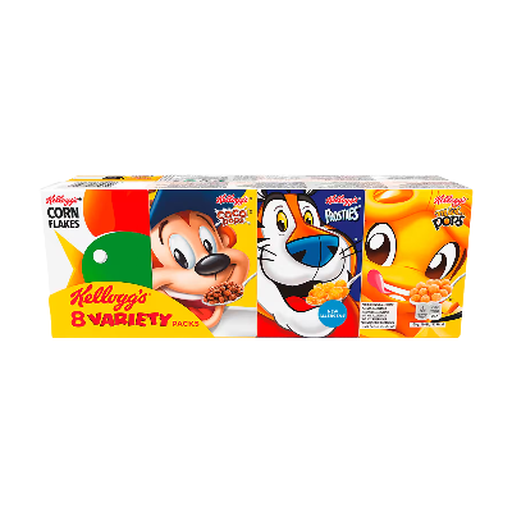 No image available
This variety pack is suited to serving several cereal varieties separately. The product name states that it’s an 8-pack with a total weight of 205 g. Check the pack you receive for the number of each variety and its ingredients.
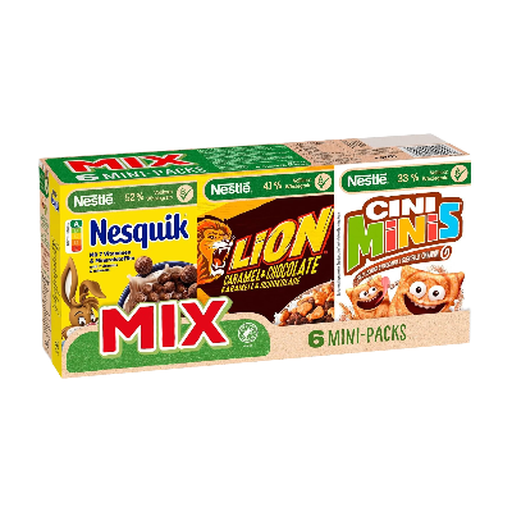 No image available
This variety pack may suit a buffet where different cereal varieties are served separately. The product name states a total weight of 200 g. Before serving, check the varieties included, how the pack is divided and the allergen information for each one.
Yes. In Germany, there are requirements for providing information about allergenic ingredients in unpackaged food. The Federal Ministry of Agriculture, Food and Home Affairs explains the labelling requirements; according to the Hanover Chamber of Commerce and Industry, the relevant rules for the hospitality sector are set out in the LMIDV. The information must match the varieties actually being served.
An ingredients list must match the product you’re using. Nestlé Cereals Deutschland notes that recipes for CINI MINIS can change, and packs made to different recipes may be on sale at the same time. So check the information on every delivery and update the buffet information if anything changes.
A bulk pack may be a good option if one variety is regularly used and you can store opened packs appropriately and use them up. If demand fluctuates or several varieties are only chosen occasionally, smaller individual packs can make it easier to manage quantities.
The ingredients and allergen information for the specific variety are what matter. For Mühlen Müsli 1, Seitenbacher lists cereals containing gluten, peanuts and soya, among other ingredients, and warns of possible traces of other allergens. Don’t assume this information applies to another muesli or pack without checking.