Families who regularly eat cereal
When several people have breakfast from the same pack, pack size, how quickly it will be used and storage instructions are all important factors.


Choose a pack size that suits your household’s consumption and everyone’s tastes. When comparing sweet cereals and muesli, nutrition information per 100 g is more useful than serving sizes that vary between products. If you have allergies, always check the labelling on the specific pack.
When several people have breakfast from the same pack, pack size, how quickly it will be used and storage instructions are all important factors.
Whether it’s cinnamon cereal, chocolate muesli or a crunchy mix, the key is choosing a variety that everyone at the breakfast table will actually want to eat.
If you’re looking for a sweet variety but also keeping an eye on sugar, wholegrains, fibre or allergens, check the information for the specific product.
First, decide which flavours everyone in your household likes and how much you’ll get through. Then compare the ingredients and nutritional values of the varieties you’re considering.
| Criteria | What to check when buying | Who it matters most to |
|---|---|---|
| Pack size | Check the pack size, best-before date and storage instructions against how much your household usually gets through. | If we’re having breakfast from the same pack, we want enough to go round without leaving an unwanted variety open for too long. Around 27% of consumers prioritise choosing the right pack size. |
| Flavour | Check the flavour and ingredients of the specific variety. Cinnamon cereal and chocolate muesli are different types of product. | At the breakfast table, we want to share a variety everyone enjoys. For around 20% of consumers, finding a flavour everyone likes is their top priority. |
| Sugar and ingredients | Compare sugar, fibre and salt per 100 g, as well as the ingredients list. Check serving information separately. | I want to choose a sweet variety while still being able to compare its ingredients with other products. Around 33% of consumers put this first. |
| Allergens and dietary requirements | Carefully read the current ingredients and allergen information on the exact pack you intend to buy. | If someone in your household needs to avoid certain ingredients, the labelling on the specific variety will determine whether it’s suitable. Around 20% of consumers prioritise these requirements. |
A large pack is no help if nobody in your household wants that variety or it will be open for too long.
Choose a size that suits your usual consumption, and check the pack’s best-before date and storage instructions.
Wholegrain content and sugar levels tell you different things. Nestlé Cereals lists 33% wholegrain and 24 g of sugar per 100 g for CINI MINIS.
Compare sugar and other nutritional values per 100 g, and read the ingredients list too. Don’t judge the whole product on a single figure.
A “no added sugar” claim doesn’t replace checking the sugar content of the finished product.
Check the sugar per 100 g and read the ingredients list if the types of sweetening ingredients matter to you.
Different varieties can contain different ingredients and carry different warnings. Older product information may not match the pack you’re buying either.
If you have an allergy, check the current labelling on the exact pack. If the information is unclear, don’t assume the product is suitable.
The brand offers classic Corn Flakes and other cereal varieties.
CINI MINIS are cinnamon-flavoured cereals for households looking for this taste.
The range includes chocolate muesli and a wholegrain mix described as “low sugar”.
familia offers crunchy muesli varieties, including chocolate flavours.
Here, MÜLLER is a retailer of muesli and cereals, not a cereal brand in its own right.
This selection includes crunchy, chocolate and fruit muesli in packs ranging from 400 g to 750 g. How many breakfasts you’ll get from a pack depends on how much your household eats.
 Image unavailable
This 750-g pack could suit households that want to share a crunchy muesli. Before buying, check the ingredients and storage instructions for after opening.
 Image unavailable
This 600-g pack is an option if your household fancies a crunchy muesli. Compare the nutritional values per 100 g and follow the storage instructions.
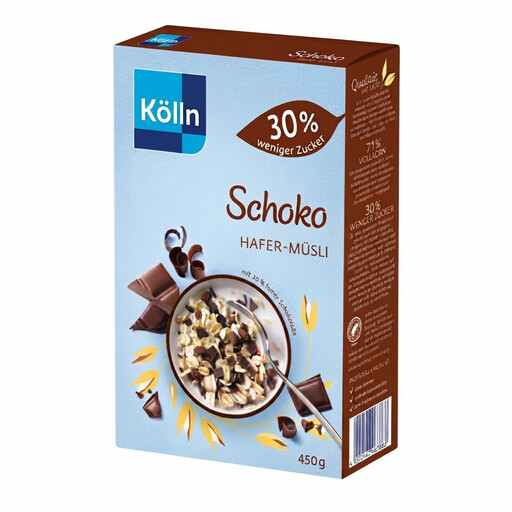 Image unavailable
This 450-g pack of chocolate oat muesli is worth considering if you’re after a chocolatey variety. Check the sugar per 100 g rather than relying on the variety name alone.
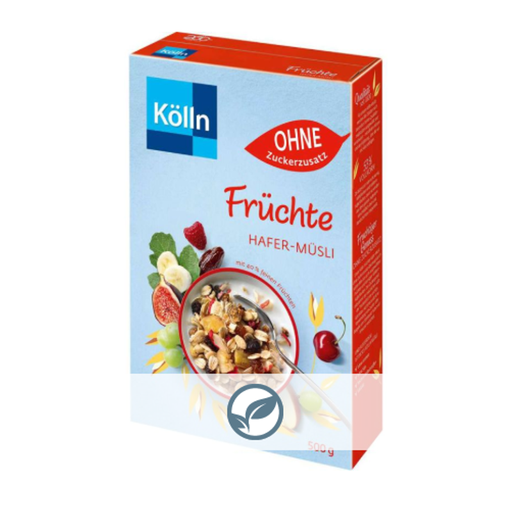 Image unavailable
This 500-g pack of fruit muesli is for households looking for a fruity alternative to chocolate. The variety name doesn’t replace checking the sugar per 100 g and reading the ingredients list.
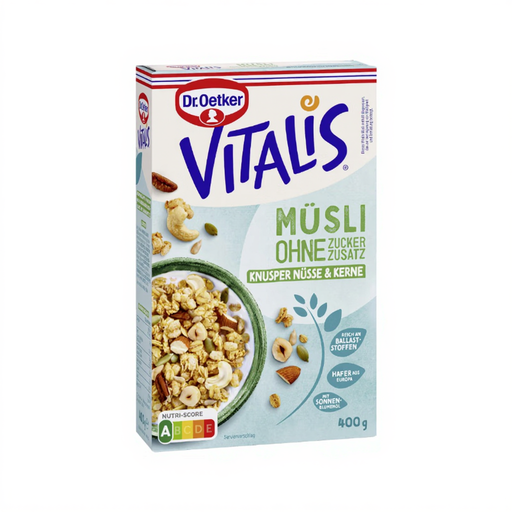 Image unavailable
This 400-g pack is a smaller option for households looking for a crunchy nut muesli. If you have a nut allergy, the current ingredients and allergen information on the specific pack is essential.
First, compare the pack size with how much your household gets through, then check the nutritional values per 100 g. Serving information can also be useful, but serving sizes aren’t always the same.
No. The “no added sugar” claim alone doesn’t tell you the product’s total sugar content. Check the nutritional values per 100 g and read the ingredients list for the specific variety.
Not without checking what the figures are based on: a prepared serving may include milk or other ingredients. To compare dry products, use their nutritional values per 100 g.
Read the current ingredients and allergen information on the exact pack you intend to buy. The German Food Federation explains that allergenic ingredients are highlighted in the ingredients list. Also look out for warnings about the possible unintended presence of allergens.
Follow the storage instructions on the pack and reseal the cereal or muesli after opening. Whether a large pack suits your household also depends on how quickly you’ll get through it.