Breakfast on your own, without weighing it out
If you’re the only one having breakfast on Sunday, individually wrapped cereal makes the portion clear straight away. A mixed pack also gives you several ready-portioned varieties to choose from.


For breakfast on your own on a Sunday, a mixed cereal mini pack is a good fit if you want to choose between varieties without weighing them out. If a particular muesli or nutritional profile matters more to you, look for a portion sachet. If you have a specific flavour in mind, a standard pack is another option, as long as you measure out your own portion. What matters is the actual packaging, the nutrition information and the ingredients in the specific pack.
If you’re the only one having breakfast on Sunday, individually wrapped cereal makes the portion clear straight away. A mixed pack also gives you several ready-portioned varieties to choose from.
If you’re particularly mindful of sugar, protein or fibre, check the figures per 100 g and for the portion you’ll actually eat. Ingredients and allergens still matter with a portion sachet, too.
If cinnamon, chocolate or a mix of varieties is what matters most, the product profile you want is more important than the format alone. Also check the nutrition information and ingredients for the variety you choose.
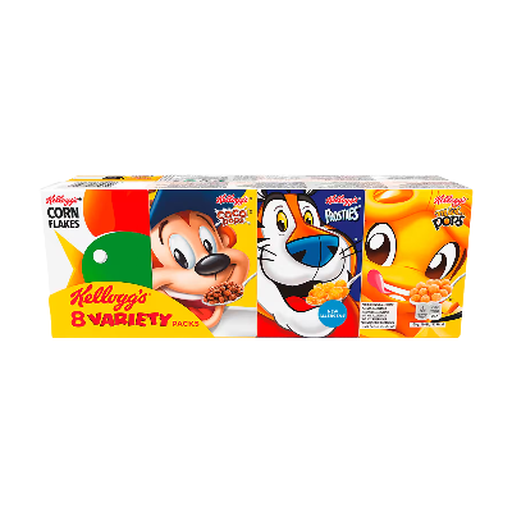
A good fit if: you’re having breakfast on your own and want a choice of varieties without weighing them out. Kellogg's says its Variety Pack contains eight small packs in five varieties.
The trade-off: the selection is fixed, so you may not like every variety in the pack.
A good fit if: you prefer a pre-measured portion of a particular muesli. Seitenbacher states that its protein muesli portion sachet contains 15 g of protein per sachet.
The trade-off: rather than a mix of varieties, you get the profile of the muesli you’ve chosen. Check its ingredients and allergens.
A good fit if: you have a particular variety in mind, such as cinnamon-flavoured Cini Minis, and are happy to measure out your own portion.
The trade-off: a serving size in the nutrition table doesn’t mean the portions are individually wrapped.
| Criterion | What to check when buying | Who it matters most to |
|---|---|---|
| Portion format | Check the number of individual packs and the weight of each one; a serving size alone doesn’t confirm that the product is individually wrapped. | When I’m having breakfast on my own on Sunday, I want to be able to open a portion without weighing it out. For around 33% of consumers, having a clearly defined portion comes first. |
| Nutritional value | Compare sugar, protein and fibre per 100 g and for the portion you’ll actually eat. | What’s in my breakfast portion matters more to me than how many varieties come in a pack. Around 27% of consumers put nutritional value first. |
| Flavour and varieties | Check which varieties are included and how many of each; with a standard pack, decide on your own portion size. | At Sunday breakfast, I want to choose between flavours or have a particular favourite. Around 20% of consumers would consider flavour first. |
| Ingredients and allergens | Read the current ingredients list and allergen labelling for each variety you choose. | If I need to avoid certain ingredients, the labelling on the pack I’m actually eating is what matters most to me. Around 20% of consumers would make this their priority. |
Nutrition information for a particular serving doesn’t tell you whether that amount is sold in its own sachet. For example, Nestlé gives a serving size for Cini Minis; you’ll need to check the specific listing to find out how it’s packaged.
Look for details such as ‘individually wrapped’, the number of packs and the weight of each one.
A ‘less sugar’ claim refers to the sugar in the stated comparison; it doesn’t automatically cover all carbohydrates. The Verbraucherzentrale also points out that ingredients such as honey or dried fruit can contribute to the sugar content.
Read the ingredients list alongside the nutrition information, and compare both per 100 g and per portion eaten.
A familiar variety or similar-looking pack is no substitute for checking the current ingredients list: recipes can change. Lebensmittelklarheit documented a muesli case where a new recipe also included peanuts.
Check the ingredients and highlighted allergens on the specific pack every time you buy it.
The Variety Pack is worth considering if you want individually wrapped cereal in several varieties for breakfast.
Seitenbacher’s muesli portion sachets are aimed at shoppers who want a single portion of a particular muesli.
Cini Minis are an option if cinnamon flavour matters more to you than having a pre-portioned pack.
The muesli brand offers different product ranges if you’re looking for a particular muesli profile.
This selection features two cereal mini packs for breakfast on your own on a Sunday. Compare the portions and varieties included with how much you actually want to eat for breakfast.
 No image available
For breakfast on your own when you want to choose from a selection of cereal varieties and open an individual pack.
Kellogg's says the Variety Pack contains eight small packs in five varieties; the product name gives the total contents as 205 g. Check the weight of each pack and the current ingredients and allergen labelling.
 No image available
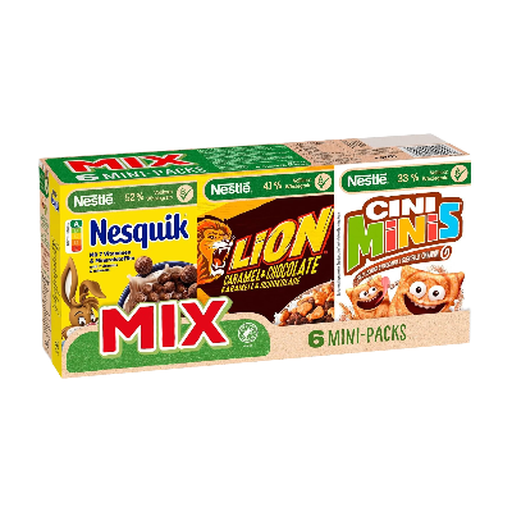
For breakfast on your own when you’re looking for a cereal mini pack rather than a portion you measure out yourself.
The product name gives the total contents as 200 g. Before buying, check the number and weight of the individual packs, the varieties included and the current allergen labelling.
Check the stated number of individual packs and the weight of each one. Kellogg's describes its Variety Pack as a selection of individually wrapped cereal; a serving size in the nutrition information alone doesn’t confirm that it’s individually wrapped.
Both figures answer different questions: comparing per 100 g lets you assess products on the same basis, while the amount per portion you actually eat tells you what you’ll have at breakfast. The term ‘less sugar’ refers to the sugar in the specific comparison; it doesn’t describe the product’s overall nutritional profile.
Yes. If you need to avoid certain ingredients, the labelling on the pack you’ve just bought is what counts. Recipes can change, even when the product name is familiar or the packaging looks similar.
Follow the storage instructions on the pack. Kellogg's Variety Pack is labelled for storage in a cool, dry place; an unopened individual pack will stay sealed until breakfast.