Commuters on their way to a workout
If you want to carry a bar in your bag or gym kit, consider the weight of each bar and how the pack is divided into portions. The nutritional values per bar make it easier to compare different portion sizes.


When choosing an individually wrapped cereal bar to take to your workout, start by checking whether the ingredients suit you, how much each bar weighs and its nutritional values. You don’t need a protein bar just because you’re eating a snack before exercising. If you’re considering nut-based bars, check the ingredients and allergens carefully.
If you want to carry a bar in your bag or gym kit, consider the weight of each bar and how the pack is divided into portions. The nutritional values per bar make it easier to compare different portion sizes.
If you want to assess the carbohydrate content of your snack, check the figures for one bar rather than just those per 100 g. The German Nutrition Society describes carbohydrates as important for supplying energy during sport. Your individual needs depend, among other things, on the duration and intensity of your activity.
If you need to avoid certain ingredients or follow a particular diet, check the ingredients list, highlighted allergens and any precautionary allergen statements on the specific pack. The product range name alone isn’t enough to tell you.
Start by checking the ingredients and allergens. Then compare the portion size and nutritional values per bar; claims such as ‘protein’ don’t replace this information.
| What matters | What to check | Who should pay particular attention |
|---|---|---|
| Carbohydrates per portion | Compare the carbohydrate and sugar content per bar. If portion sizes differ, the figures per 100 g can also help. | If I want to match my snack to my workout, I need a clear figure per portion rather than just information for the whole pack. Around 40% of consumers prioritise comparing carbohydrate content. |
| Portability and portion size | Check the number of bars, whether they’re individually wrapped and how much each one weighs. | On my way to a workout, I want to be able to pop a bar in my bag without repacking it, and know how big the portion is. For around 30% of consumers, this convenience comes first. |
| Ingredients and allergens | Read the ingredients list, check highlighted allergens and look for any precautionary allergen statements on the specific pack. | If I need to avoid certain ingredients or follow a particular diet, the actual recipe determines my choice. This check is the priority for around 20% of consumers. |
| Protein claims | Compare the protein content per bar and its ingredients with those of a standard cereal bar, while taking your overall diet into account. | A protein claim alone doesn’t tell me whether I need this particular bar before a workout. Around 10% of consumers make assessing the protein content their main reason for buying. |
A protein bar isn’t automatically necessary for every workout. Germany’s consumer advice centre points out that even people who exercise can meet their protein needs through ordinary foods.
Compare the protein content and ingredients, and take the rest of your diet into account when deciding.
For a 25 g bar, the amount per portion is only a quarter of the figure per 100 g. REWE lists 46.4 g of carbohydrates per 100 g for the ja! Peanut Cereal Bar, and 11.6 g per 25 g bar.
For portion planning, use the figures per bar or calculate the amount based on the bar’s weight.
Ingredients vary from product to product. The examples described by EDEKA contain peanuts, milk and cereals containing gluten, among other ingredients.
If you have relevant intolerances, check the ingredients, highlighted allergens and precautionary allergen statements on each specific pack.
Recipes and labelling can vary. ALDI SÜD notes that its GOLDEN BRIDGE Peanut Cereal Bar may differ because it uses various suppliers.
Always check the details on the bar you’re actually buying, especially the ingredients, allergens and nutritional values.
REWE stocks classic cereal bars as well as CORNY Haferkraft, Free and Protein varieties.
EDEKA stocks a chocolate cereal bar from this own-brand range in an 8 × 25 g pack.
EDEKA describes its Nut Mix Crunchy Bar as a 3 × 25 g pack.
REWE stocks a sweet-and-salty peanut cereal bar from ja! in an 8 × 25 g pack.
ALDI SÜD describes a peanut cereal bar from this own-brand range in an 8 × 25 g pack.
This selection includes individually portioned oat and cereal bars, as well as a peanut-based option. When choosing a snack before your workout, compare the weight of each bar and the ingredients of the variety you’re considering.
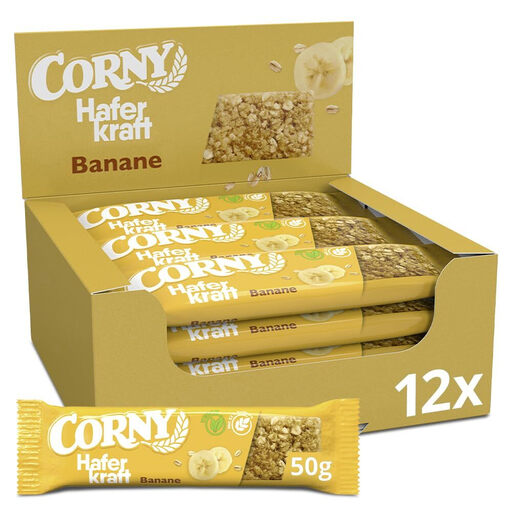 No image available
A handy option if you’re looking for an individually portioned oat and cereal bar to take with you.
Compare the nutritional values for the 50 g bar and check the pack details if you have any allergies.
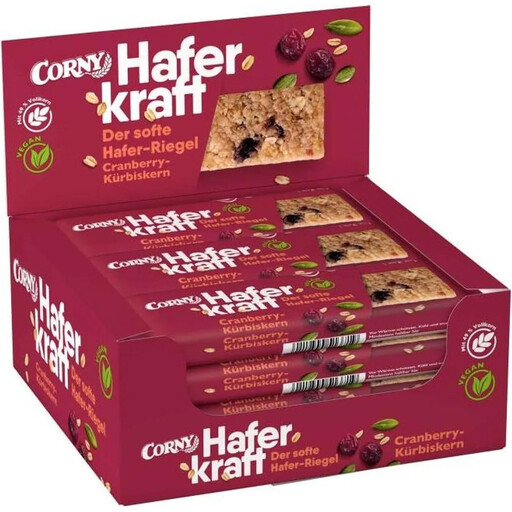 No image available
This cranberry and oat variety is worth considering if a 50 g individual portion suits your plans.
Check the ingredients, allergens and nutritional values on the specific pack.
 No image available
These 20 g bars are worth considering if you want to compare a smaller, chocolate-flavoured portion.
Assess this variety using the full ingredients and nutritional information, not just the ‘No Added Sugar’ wording in the product name.
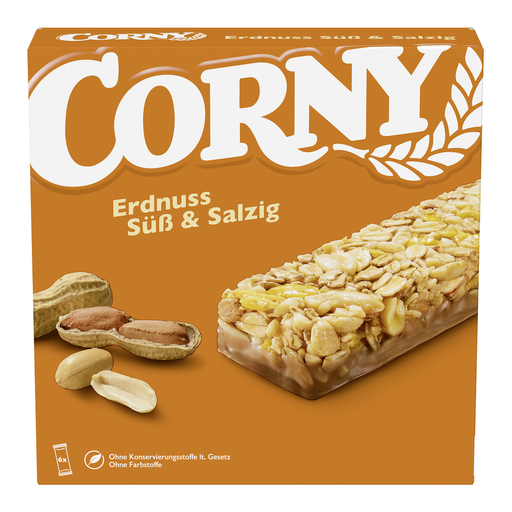 No image available
These peanut cereal bars are an option if you’re looking for a nut-based recipe in 25 g portions.
This variety isn’t suitable if you have a peanut allergy. Check the other ingredients and precautionary allergen statements on the pack, too.
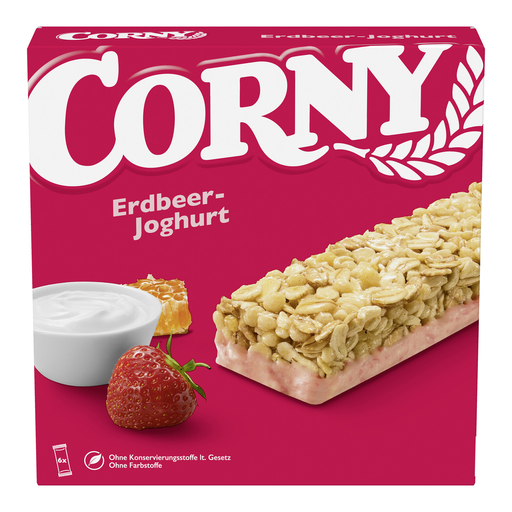 No image available
If you’d like to take a strawberry yoghurt-flavoured cereal bar in a 25 g portion, you can compare this variety with other pack sizes.
Before choosing, check the nutritional values per bar, as well as the ingredients and allergens on the pack.
Compare the nutritional values of each bar and check that its ingredients suit you. The German Nutrition Society describes carbohydrates as important for supplying energy during sport, but this doesn’t mean there’s one ideal amount of cereal bar for every activity.
No, you don’t need a protein bar simply because you’re working out. Germany’s consumer advice centre points out that you can meet your protein needs through ordinary foods. Make your choice based on your overall diet and the ingredients in the specific bar.
Read the ingredients list, check the highlighted allergens and look for any precautionary allergen statements on the specific pack. Check claims such as ‘vegan’ or ‘gluten-free’ for the exact variety you want to buy rather than assuming they apply to another bar from the same brand.