
Lieferung heute & morgen

Qualitätsgarantie

Willkommens-Angebote freischalten: KOSTENLOSE Lieferung | Bis zu 80 % RABATT | Kostenlose 30-Tage-JoyPlus-Testphase
App herunterladen
Challenge and puzzle games can offer very different playing experiences depending on how they are designed. Some encourage quiet solo problem-solving, while others are ideal for quick duels or family game sessions. Choosing the right one is not always easy, however. Age recommendations, materials, play modes and the actual level of difficulty are often only described briefly in marketing materials.
“From 6 years” does not automatically mean that every child will be able to solve all the tasks straight away. With logic games for children, it is important to check whether the challenges increase in difficulty step by step and whether the instructions are easy to understand. A product with lots of tasks may be suitable for beginners, while a complex cube may already require substantial previous experience.
Lights, music and multiple play modes can be appealing, but they do not necessarily increase long-term play value. With a push game, it is therefore worth checking whether the controls are clearly explained and whether the game remains enjoyable without continuous sound effects.
A family game with lots of loose pieces is less practical when travelling than a compact travel game with a sealable container. With a 3D maze or puzzle games for ages 6 and over, it is also worth checking the dimensions, weight and storage options. Small parts must be kept safely and should not be given to children under three.
First, check the recommended age group and the preferred play mode:
SmartGames IQ puzzles, for example, are often designed for solo play with tasks that build on one another. With an escape-room game for teenagers, on the other hand, you should consider the group size, playing time and whether the materials can only be used once.
For plastic games, material information, sturdy connectors and easy-to-clean surfaces are useful points to check. With cube puzzles such as a Speed Cube 6x6 or Speed Cube 7x7, the movement of the layers is also important. A complex mechanism should not need to be forced, as this could damage its components.
Look out for:
“BPA-free” or “non-toxic” should only be included if this information is clearly stated in the product details. General claims about health benefits are not appropriate for puzzle games. Terms such as brain training for children or concentration games simply describe the intended type of activity, not a medical benefit.
For travel, waiting times and holidays, compact games with a fixed playing surface or lid are often more practical. A 3D maze such as the Perplexus Spin Master Phantom Beast, on the other hand, requires room to handle it freely and an environment where the ball cannot fall onto the floor. For a permanent place in a child’s bedroom, building sets such as LEGO Speed Champions are also worth considering if you want to combine building, playing and displaying.
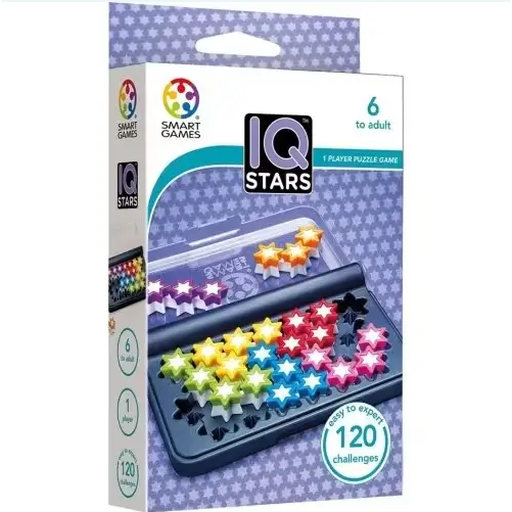
Why this product suits this profile: This solo puzzle is designed for children aged 6 and over and includes 120 tasks with increasing difficulty. The seven star-shaped pieces and the playing board with transparent cover also make it suitable for taking on the go.
The number of tasks and the structure are clearly specified. This makes it easier to assess the expected scope than with games that simply advertise “lots of challenges”.
120 tasks, compact storage and a clear solo play mode.
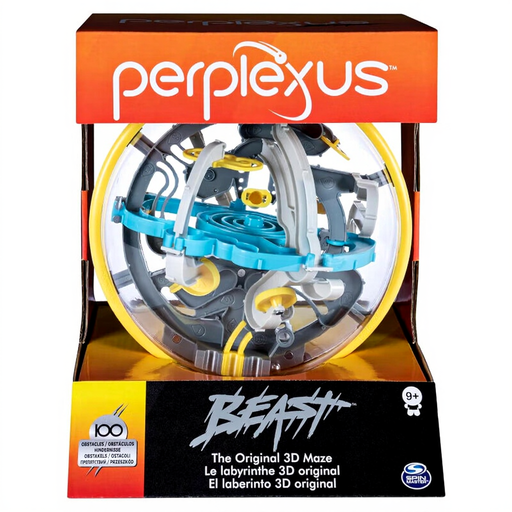
Why this product suits this profile: The Perplexus 3D maze is designed for children aged 9 and over and offers a 100-level challenge. The ball is guided through a three-dimensional course by tilting and turning it.
The recommended age and number of levels are stated in the product information. Buyers can therefore compare the three-dimensional challenge with the child’s age and patience before purchasing.
A three-dimensional dexterity game with 100 stated sections and manual operation without batteries.
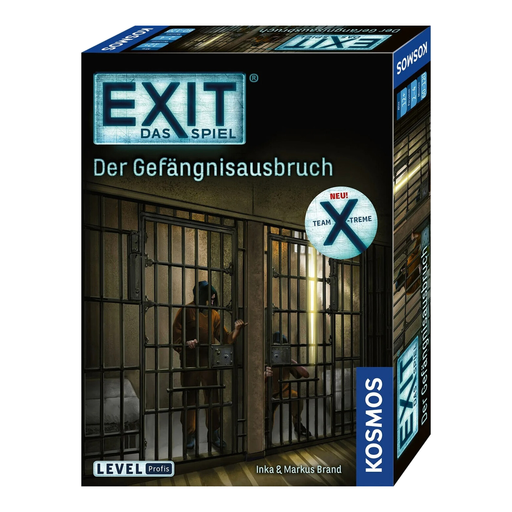
Why this product suits this profile: This escape-room game is designed for people aged 12 and over, can be played by 1 to 4 people and also includes a team challenge mode for two teams.
The single-use format is stated explicitly. If you are looking for a game that can be played repeatedly, you can take this into account before buying.
Team game for up to four people, optional app with timer and an age recommendation of 12 and over.
We have put together a complete, regularly updated list of products that fully meet these strict selection criteria and the safety regulations applicable in the EU.
For short rounds with several players, simple logic games or Connect Four-style games are ideal. A push game with lights and music can be used as a quick dexterity challenge or given as a gift. With mixed models, the specific colour or design may be selected at random, so this should be taken into account before purchasing.
For a creative activity, a LEGO Speed Champions set is a good choice. Model 77237 contains 390 pieces and a racing driver minifigure, and is intended for children aged 9 and over as well as adult collectors. If you are looking for a Hot Chip Challenge, you should read the safety information particularly carefully: according to the product details, the snack on offer is intended exclusively for teenagers aged 16 and over and is not suitable for children, pregnant people or breastfeeding people. Consumption is not recommended for people with certain health conditions. Such a challenge should not be organised as a dare for younger children.
Suitable games have a clear age recommendation, a small number of easy-to-handle pieces and tasks that increase in difficulty. SmartGames IQ Stars, IQ Mini and IQ-Puzzler PRO are examples of compact solo puzzles for ages 6 and over. With younger children, adults should follow the warnings and store small parts safely.
Lifespan depends on the materials, mechanism and how the game is used. Plastic puzzles and Speed Cubes can last a long time when stored in a dry place and handled carefully. With an escape-room game containing consumable materials, single use is part of the concept. Before buying, you should therefore decide whether you want something reusable or a one-off group experience.
Many challenge games work entirely without batteries and have no ongoing costs after purchase. Products with lights or music may require batteries, so you should check the relevant product information. App support, as found with certain escape-room games, may be optional. In addition, complex Speed Cubes may occasionally benefit from care products such as suitable lubricant.