If you usually listen to chamber music from one fixed spot, a well-positioned pair of stereo speakers is a good place to start. The right choice depends on whether you want a straightforward active system, Wi-Fi features or passive speakers for an amplifier you already own. Also consider room reflections, speaker placement, connections and everyday listening levels: choosing a particular system or turning up the volume won’t automatically make up for poor positioning.
Which solution is right for you?
Chamber music from a fixed listening spot
If you want to hear where the instruments are positioned, check whether you can place two speakers suitably for your listening spot. Genelec points out that similar reflections on both sides are important for stereo imaging; the room’s surfaces also affect the sound.
Listening in a noise-sensitive open-plan flat
If you need to be considerate of housemates or neighbours, practical speaker placement and a suitable volume matter more than playing as loudly as possible. According to the German Environment Agency, local rules and building regulations may also apply.
Using your existing hi-fi system
If you want to keep using your amplifier, passive speakers are worth considering. ELAC and Teufel describe models designed for use with an amplifier or receiver; check that the connections and placement options suit your system.
What should you consider when choosing?
Active, connected stereo pair
A good fit if: you want to set up two speakers and connect digital sources without a separate amplifier. According to KEF, the LSX II LT includes USB-C and HDMI ARC, among other connections.
Things to consider: The two speakers are connected by a cable, so plan the cable route and check that the inputs match your sources.
Two compatible Wi-Fi speakers
A good fit if: you want an app-controlled system or would like to add to a stereo pair over time. Sonos documents how to pair two Era 100 speakers for stereo.
Things to consider: One Era 100 on its own is not a stereo pair with separately positioned speakers. Wi-Fi is needed for initial setup; Sonos lists an input adapter for analogue line-in.
Passive stereo pair
A good fit if: you already have a suitable amplifier or want to choose your speakers and amplification separately.
Things to consider: Your amplifier, source connections and cables all need to be factored into your system setup; the speakers alone won’t play music.
| Priority |
What to check when buying |
Who is it important to? |
| Spatial sound |
Choose your listening spot first, then check whether you can position the speakers suitably on the left and right. Genelec highlights the importance of similar positioning and reflections on both sides. |
If I want to listen to chamber music from one fixed spot, I want a clear left-to-right arrangement. Around 33 % of consumers put spatial sound at their listening spot first. |
| Room and volume |
Check where you can place the speakers, which surfaces reflect sound and what volume will be comfortable day to day. The German Environment Agency notes that local rules and building regulations may apply. |
If I listen in an open-plan flat where sound carries easily, I want to improve the sound at my listening spot without disturbing others by turning it up. Around 27 % of consumers prioritise room acoustics and consideration for others. |
| Existing system |
Check that your amplifier is suitable, how you’ll connect your music source and whether the listing includes a pair. |
If I want to keep using my amplifier, I need to know whether the speakers and source connections will work with it. Around 20 % of consumers prioritise their existing system and the components it needs. |
| Sources and controls |
Check that your music sources match the connections and setup requirements of the exact model. Sonos specifies that the Era 100 requires Wi-Fi for initial setup and an adapter for analogue line-in. |
If I want to play music from the sources I already own, suitable connections and easy-to-use controls matter to me. Around 20 % of consumers prioritise sources and controls. |
Common buying mistakes
-
Assuming a single speaker is the same as a stereo pair
You can’t position one speaker cabinet to the left and right of your listening spot. A single Sonos Era 100 isn’t the same as two separately positioned speakers.
Decide whether you need two speaker positions for your listening spot, then check which pairings the system in question supports.
With a suitable Wi-Fi system, you may need a second compatible speaker to create a stereo pair with separately positioned speakers.
-
Buying passive speakers as a complete system
The passive models described by ELAC and Teufel are designed to be used with an amplifier or receiver.
Before buying, check the equipment you already own and the complete signal path from your music source to the speakers.
-
Assuming ‘wireless’ means no connecting cables at all
KEF says the LSX II LT uses a cable to connect the two speakers.
Check the exact model and plan the power supply and cable route for both speaker positions.
-
Trying to fix poor speaker placement by turning up the volume
Genelec explains how speaker placement and room reflections affect sound. Turning up the volume won’t fix poor positioning and may disturb other people in your home or your neighbours.
Start by checking your listening spot and speaker positions. Set the volume with your living situation and local rules in mind.
A guide to relevant speaker brands
KEF
The LSX II LT is an active, connected speaker pair for digital sources.
- KEF lists USB-C, HDMI ARC and a cable connecting the two speakers.
- Plan the cable route around your room. The manufacturer’s claims about sound quality aren’t an independent assessment of how it will sound at your listening spot.
Sonos
The Era 100 can be added to an app- and Wi-Fi-based system; Sonos says that two compatible units can form a stereo pair.
- Sonos documents how to pair two Era 100 speakers for stereo.
- Wi-Fi is needed for initial setup. Sonos lists an input adapter for analogue line-in; one unit on its own isn’t a stereo pair with separately positioned speakers.
ELAC
The passive Debut 3.0 DB63-BK is an option for a system with a suitable amplifier.
- ELAC describes the DB63 as a bookshelf speaker for connection to an amplifier or receiver.
- Your system needs a suitable amplifier and compatible source connections. The manufacturer’s claims aren’t an independent assessment of performance in your particular room.
Teufel
The documented ULTIMA 20 Mk4 25 is a passive pair of bookshelf speakers for use with an amplifier or receiver.
- The German product page lists a pair of ULTIMA 20 Mk4 25 speakers.
- Check the exact model designation: a different generation of ULTIMA 20 isn’t automatically the same product.
Speakers at Joybuy
This Joybuy selection includes active and passive speakers, as well as a compact stereo system for playing music. For each model, check that the design, connections and placement suit your listening spot and existing system.
 No image available
Lemega Active Stereo Speaker Pair, 40 W
This active speaker pair is worth considering if you’re looking for a stereo setup without a separate amplifier.
The product details list Bluetooth, HDMI ARC, optical inputs, USB, AUX and RCA.
View at Joybuy
 No image available
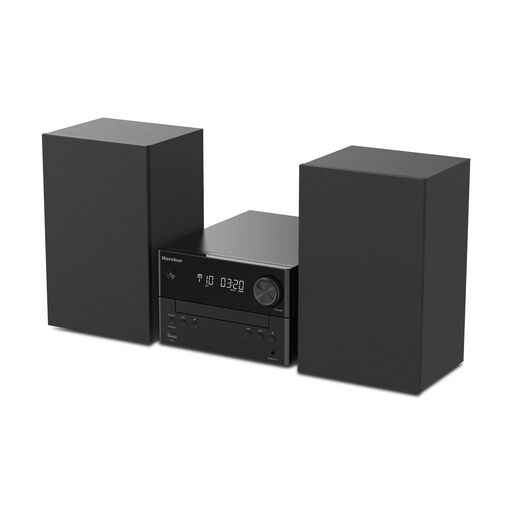
Karcher MC 6475D Compact Stereo System
This compact system is an option if you want to play music from several sources through one stereo system.
The product details list CD, DAB+, FM, Bluetooth, USB, MP3 playback and AUX. The stated power output is 20 W.
View at Joybuy
 No image available
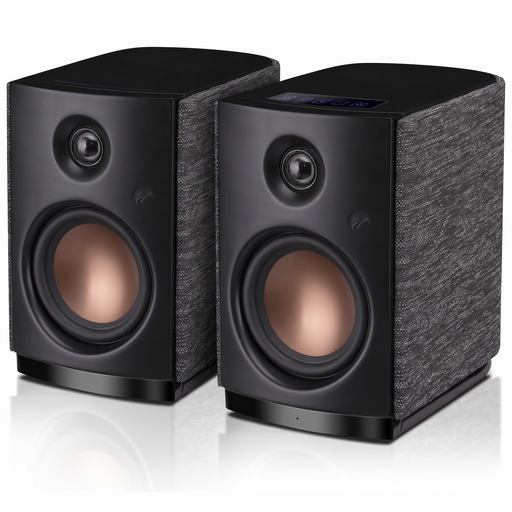
HiVi-Swans OS-10 Active Hi-Fi Stereo Speakers
These active speakers are an option if you want Bluetooth playback and a stereo system.
The product details list Bluetooth 5.0, a 4-inch woofer and 62 W RMS.
View at Joybuy
 No image available
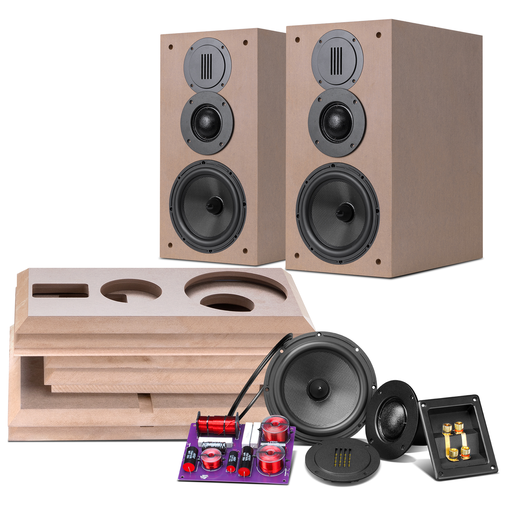
HiVi-Swans DIY3.1 Passive Bookshelf Speaker Pair
This passive pair is a good fit if you’re adding a suitable amplifier or receiver to your system.
The product description lists a 6.5-inch driver, a 26-mm tweeter and 8 ohms. A suitable amplifier is required.
View at Joybuy
 No image available
HiVi D3.1MKII Passive Hi-Fi Stereo Speakers
These passive bookshelf speakers are worth considering if you already have a suitable amplifier or plan to add one.
The product details list a 6.5-inch driver, a 28-mm soft-dome tweeter, 8 ohms and a recommended amplifier power of 10–120 W. A suitable amplifier is required.
View at Joybuy
Frequently asked questions
Do I definitely need two speakers for chamber music?
Not for every kind of music playback. If clear left-to-right sound from separately positioned speakers matters to you at a fixed listening spot, plan for a pair and decide where to place them. One Era 100 isn’t the same as two paired units.
Can I set up a Sonos Era 100 straight away using Bluetooth only?
No. Sonos says the Era 100 must first be set up on a Wi-Fi network; after that, you can switch it to Bluetooth mode. Sonos lists a dedicated input adapter for analogue line-in.
What should I check first in an open-plan flat with lots of echo?
Start by checking the position of your listening spot and speakers, along with any reflective surfaces. Genelec explains how speaker placement and room reflections affect sound. Its studio monitor placement advice can help you think about acoustics, but it isn’t a set of mandatory spacing rules for every home speaker.
What additional equipment should I consider when choosing?
Check whether you’ll need an amplifier, a second speaker, an adapter, cables or stands, and what’s actually included in the listing. Passive models require a suitable amplifier; for analogue line-in on the Era 100, Sonos lists an input adapter.
Can I play music as loudly as I like at any time in Germany?
No. Section 117 of the German Administrative Offences Act (OWiG) covers noise which, in the circumstances set out there, is liable to cause substantial nuisance to the public or neighbours, or harm other people’s health. According to the German Environment Agency, additional requirements may apply under state or local rules or building regulations; there is no single time that applies to every home.


