
Lieferung heute & morgen

Qualitätsgarantie

Willkommens-Angebote freischalten: KOSTENLOSE Lieferung | Bis zu 80 % RABATT | Kostenlose 30-Tage-JoyPlus-Testphase
App herunterladen
As a Joybuy Product Recommendation Officer, I see expectant parents every day trying to find the right furniture for their nursery. Choosing a changing dresser seems simple, but well-intentioned advice or clever marketing often leads to purchases that later prove impractical or short-lived. The goal of this guide is to provide you with objective criteria to help you find a functional and long-lasting solution.
Before we dive into the key features, let's look at the typical problems that lead to buyer's remorse.
To avoid these traps, it's best to evaluate your purchase based on three key parameters. The most thoughtful solution is often a dresser with a changing topper.
The key advantage of a modular solution is obvious: you combine a full-fledged nursery dresser with a removable changing topper. After the diapering stage, you simply remove the topper and continue to use the dresser for many years. This is not only more sustainable but also makes better financial sense. Ensure that the depth of the dresser is compatible with the chosen topper.
Safety is the top priority. A good changing topper has raised side edges (at least 10 cm high) to prevent the child from rolling off. Additionally, the dresser itself must be stable. A wall anchor (anti-tip kit) is essential to prevent it from tipping over, especially when your child starts pulling up on drawers. The screws and edges of the topper should be rounded or countersunk to minimise the risk of injury.
The ideal dimensions for the changing surface are based on standard changing pads (approx. 75x75 cm or 80x75 cm). A changing dresser 80 cm wide generally offers sufficient space. The height of the changing surface should be adapted to your height, ideally at hip level (usually between 85 cm and 95 cm), to ensure an ergonomic posture. The dresser underneath should provide enough drawers or compartments to keep all necessary items within easy reach.
Instead of presenting a single 'perfect' solution, we're showcasing components that suit different needs and living situations. The focus is on combining a durable dresser with a secure topper.
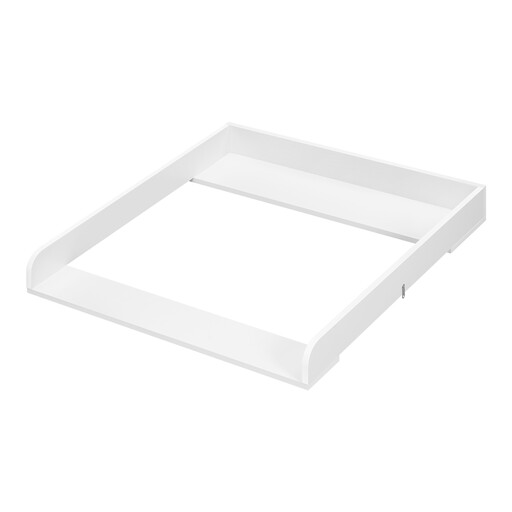
Why This Fits Their Persona: Ideal for parents who want to repurpose an existing dresser or turn a new, long-lasting dresser of their choice into a changing station. Maximum flexibility and cost-effectiveness.
This topper is the direct answer to the 'specialty furniture' trap. It allows the dresser to be used long-term by only temporarily converting it into a changing table.
Safety Features: Raised edges, rounded corners, and an anti-tip strap are integrated. Compatibility: Fits dressers with a depth of 46.5–50 cm and a width of up to 80 cm.
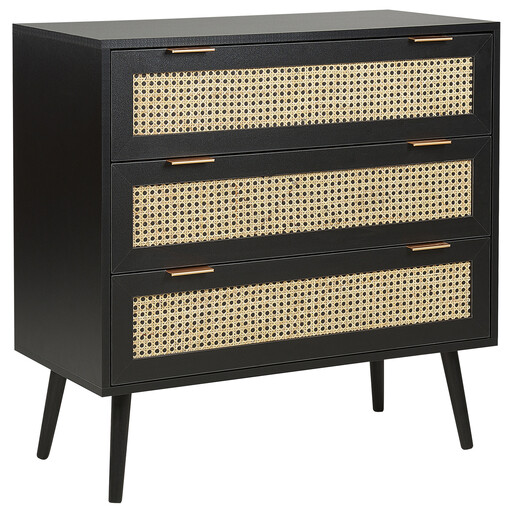
Why This Fits Their Persona: For parents seeking a stylish piece of furniture that blends seamlessly into their home and remains a design statement for years to come. The focus is on aesthetics and generous storage.
This dresser is primarily a high-quality piece of furniture, not just a baby product. Its durability and timeless design prevent it from becoming obsolete after the diapering stage.
Generous Storage: Three wide drawers offer plenty of space. Design: The combination of a black body, rattan fronts, and gold handles is an eye-catcher. Its 40 cm depth is compatible with many slimmer changing toppers.
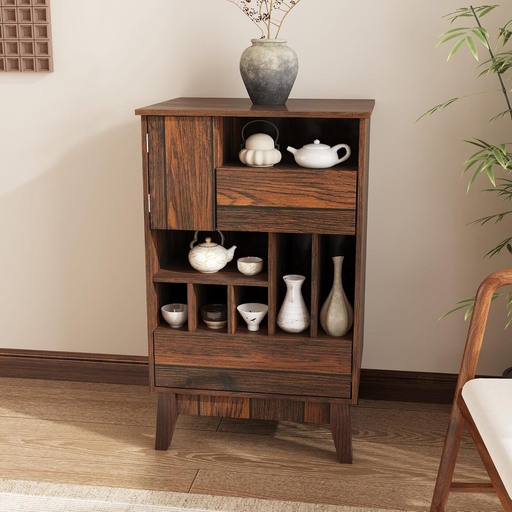
Why This Fits Their Persona: Perfect for smaller rooms or for parents looking for a multifunctional storage solution. The dresser can later be used in a hallway or living room.
With its compact size and versatile design, this dresser is extremely adaptable. It's designed from the outset as a universal piece of furniture, thus avoiding the single-use trap.
Versatile Storage: Offers a mix of drawers and compartments. Compatible Depth: The 50 cm depth is ideal for pairing with the Woltu changing topper to create a secure and stable changing station.
Combining a solid dresser with a secure topper is a smart investment. We've curated a selection of furniture that is perfect for this long-lasting solution.
The ideal height depends on your own height. As a rule of thumb, the changing surface should be at your hip level to prevent back pain during diaper changes. This generally corresponds to a height of 85 cm to 95 cm. Before buying, measure what height is most comfortable for you personally.
The typical period of use for the changing station is about two to three years, depending on when your child is potty-trained. This is precisely why a modular solution of a dresser and a removable topper is so advantageous: you are investing in a piece of furniture that will last well beyond this period.
A classic changing table is often a lighter, more open structure designed primarily for changing and offers less enclosed storage. A changing dresser, on the other hand, is a full-fledged dresser with drawers and/or doors, equipped with a changing surface. It offers significantly more storage in the nursery and is the foundation for the long-lasting solution recommended here.