Joybuy Insights

Changing Station Essentials: A Guide to Avoiding Costly Mistakes

Preparing for a baby's arrival is an exciting time, but it also involves countless decisions. The initial changing station setup, in particular, presents expectant parents with the challenge of making the right choice from an overwhelming array of products. Marketing promises can often create more confusion than clarity. Many well-intentioned purchases later turn out to be impractical, short-lived, or even unsafe.

This guide focuses on the objective criteria that truly matter. We'll show you the three common pitfalls to avoid and which core parameters are essential for selecting a functional, safe, and durable solution for your home.

The 3 Most Common Pitfalls When Choosing Changing Station Gear

Before deciding on a model, it's helpful to understand the typical problems that only become apparent with daily use.

  1. The Short-Lifespan Trap: Many changing tables are designed exclusively for the first few months. Once the child is out of diapers, the bulky piece of furniture becomes redundant and takes up valuable space. A lack of convertibility leads to a short useful life and, consequently, an uneconomical investment.
  2. Ignoring Safety Aspects: An appealing design is often prioritized over fundamental safety features. Side barriers that are too low, a lack of stability, or missing anti-tip hardware pose a significant risk. The child's safety must always be the highest priority.
  3. Impractical Storage: At first glance, the storage space may seem adequate. However, in the hectic reality of daily life, it quickly becomes clear whether compartments and drawers are truly practical. If diapers, wipes, and creams aren't within one-handed reach while the other hand secures the baby, changing becomes unnecessarily complicated and stressful.

Core Parameters for the Right Decision: What to Look For

To avoid the pitfalls mentioned above, you should base your selection on three fundamental criteria. These will help you objectively evaluate functionality and safety.

1. Safety and Stability

The safety of the changing station is non-negotiable. Look for the following features:

  • High Side Barriers: The edges of the changing surface should be high enough to prevent the child from rolling off.
  • Stability and Anti-Tip Protection: A stable construction is essential, especially for dressers. An additional wall mount is a crucial safety feature to prevent tipping.
  • Load Capacity: Check the manufacturer's specified maximum weight limit. It should be suitable for the entire diapering period, up to a weight of about 11 to 15 kg (24 to 33 lbs).
  • Non-Toxic Materials: Finishes and materials should be tested and certified as safe for use in a nursery.

2. Longevity Through Multifunctionality

A smart purchasing decision considers life after the diaper stage. There are several approaches here:

  • A changing dresser with a removable topper is a very popular solution. After the diapering phase, the topper can be easily removed, and the dresser can continue to be used in the child's or teen's room.
  • A foldable, wall-mounted changing table is the ideal solution for small apartments or for setting up a changing station in the bathroom. It saves floor space and discreetly folds away against the wall when not in use.
  • A bath and changing combination unites two functions in one piece of furniture. Often mounted on casters, it offers flexibility and is particularly practical when the bathroom and changing area are combined in one room.

3. Ergonomics and Thoughtful Storage

A well-organized changing station makes daily life significantly easier.

  • Ergonomic Changing Height: A height of about 90-95 cm (35-37 inches) is considered back-friendly for most parents. With wall-mounted changing tables, you can set the installation height yourself.
  • Accessible Storage: Open shelves directly beneath the changing surface are ideal for items that need to be within quick reach. Drawers and closed compartments are suitable for supplies and clothing. Everything should be arranged so that you never have to take your eyes or a hand off your child.

Top Picks for Every Need

Based on the criteria above, we have identified several products that are well-suited for different living situations and requirements.

MATCH FOR: Urban Homes with Limited Space
roba Wall-Mounted Baby Changing Unit, White, with 'roba style grau' Changing Mat, Foldable, Space-Saving, 2 Compartments

roba Wall-Mounted Changing Shelf, Foldable, White

Why This Fits Their Persona: Ideal for families in city apartments or with small bathrooms where every square foot counts. This model takes up no floor space and folds up easily and securely after use.

How It Avoids the Trap

It bypasses the short-lifespan trap by allowing it to be completely removed or repurposed as a small wall shelf after the diapering stage, preventing it from becoming a bulky obstacle.

Key Advantage & Pros

Maximum space-saving; custom, back-friendly installation height; integrated shelves for direct access to essentials.
MATCH FOR: Forward-Thinking Planners
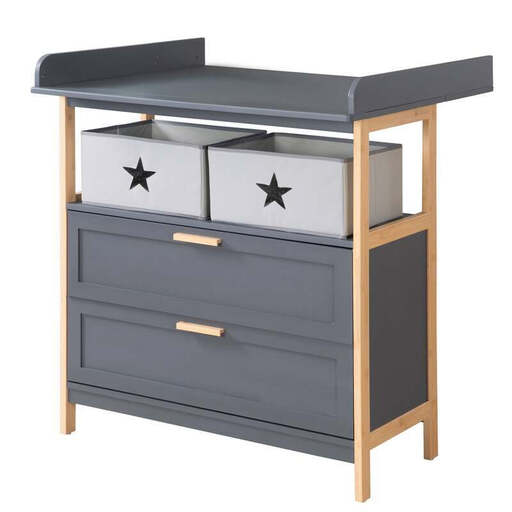
roba Berlin Changing Dresser with Removable Changing Top - Changing Table with Drawers & Fabric Storage Boxes - Bamboo Wood Handles & Frame - Anthracite

roba Berlin Changing Dresser with Removable Topper

Why This Fits Their Persona: Perfect for parents who want to invest in long-lasting furniture. This dresser grows with the child and, thanks to its timeless design, will blend seamlessly into a child's or teen's room later on.

How It Avoids the Trap

The removable changing topper solves the problem of a short lifespan. After the diapering phase, it leaves behind a fully functional, stylish dresser with no visible drill holes on the top surface.

Key Advantage & Pros

Sustainable reuse as a dresser; generous storage with drawers and open compartments; ergonomic changing height of 92 cm (36.2 in).

MATCH FOR: Multifunctional Efficiency
roba Bath and Changing Combo 'Baby Pool' incl. changing mat 'roba Style grey', extendable bath tub, white wood

roba Bath and Changing Combo 'Baby Pool'

Why This Fits Their Persona: A clever 2-in-1 solution for parents who want to handle changing and bathing in one place. Especially practical when the changing station is set up in a bathroom with limited space.

How It Avoids the Trap

It solves the problem of an impractical setup by combining two central care routines. The pull-out bathtub with a drain hose eliminates the need to carry heavy tubs of water.

Key Advantage & Pros

Combines changing table and bathtub; mobile thanks to lockable casters; integrated storage for bath and changing supplies.

The Complete Changing Station Checklist for New Parents

In addition to the main piece of furniture, other items are part of the basic setup to make the changing station complete and functional:

  • Changing Pad: A soft, wipe-clean pad is essential. Additional covers, like the hauck 2-in-1 Topper & Wipe made of cotton, can increase comfort.
  • Diapers: An adequate supply of diapers in the right size, such as the Pampers Baby Pants Premium Protection in a monthly box.
  • Care Products: Wipes, diaper rash cream, and mild baby wash.
  • Heat Lamp: A heating lamp provides a comfortable temperature, especially in cooler rooms or for newborns.
  • Diaper Pail: A model with an odor-proof seal is a worthwhile investment.
  • Diaper Bag for On-the-Go: For outings, a well-organized bag like the hauck Diaper Bag with Changing Mat is practical for carrying all the necessities.

Looking for more options?

We've compiled a complete, up-to-date list of products that fully meet these strict selection criteria and German safety regulations.

Frequently Asked Questions (FAQ)

1. What are the essentials for a changing station? The basic new baby checklist for a changing station includes: a changing table or dresser, a wipe-clean changing pad, diapers, wipes, diaper rash cream, a diaper pail, and a change of clothes. A heat lamp and a few toys for distraction can also be very useful.

2. What is the ideal height for a changing dresser? An ergonomic changing height that is easy on parents' backs is typically between 90 cm and 95 cm (35-37 inches). With a foldable, wall-mounted changing table, you have the advantage of being able to adjust the installation height precisely to your own height.

3. How long is a changing dresser used? The changing function is typically used until the child is two to three years old, depending on when they are potty-trained. A changing dresser with a removable topper offers the key advantage of being usable as a regular dresser in the child's room for many years afterward.


Authored by: Joybuy Product Recommendation Officer