
Lieferung heute & morgen

Qualitätsgarantie

Willkommens-Angebote freischalten: KOSTENLOSE Lieferung | Bis zu 80 % RABATT | Kostenlose 30-Tage-JoyPlus-Testphase
App herunterladen
Purchasing a changing table is a major decision for expectant parents. However, the market is flooded with models that promise more than they deliver. A changing table with a removable topper seems like the ideal solution for long-term use, but not every model is a worthwhile investment. Often, supposed bargains turn out to be impractical or even unsafe. This guide will help you avoid common purchasing pitfalls and make an informed decision.
Many parents only discover the shortcomings of their new changing table during daily use. Pay close attention to these three points to avoid disappointment:
To make a sustainable and safe choice, you should examine three core aspects. These define the quality and utility of a changing table far more than pure design considerations.
Your child's safety is the top priority. A solid changing table is distinguished by several features. The material, usually engineered wood (MDF) or solid wood, should be robust. An anti-tip kit is also crucial. This is a bracket used to securely anchor the dresser to the wall to prevent it from tipping over. Also, pay attention to the paints used. Water-based and certified non-toxic paints are essential for a healthy nursery environment.
The true strength of a changing table with a removable topper lies in its versatility. A good model can be converted in such a way that no screw holes or marks are left on the top surface. This transforms the changing table with storage into a neutral dresser for a teenager's room or another living area. Check how the topper is attached and whether the manufacturer explicitly guarantees a seamless removal process.
The changing height is an often-underestimated factor. A tall changing table with a work surface of about 92 cm allows most parents to maintain a back-friendly posture. Also, consider what type of storage is most practical for you. A white changing table with drawers offers the advantage of storing items in a dust-free and concealed way. Open compartments, on the other hand, provide quick access to frequently used items like boxes of wipes or diapers. A combination of both is often ideal.
Instead of making a one-size-fits-all recommendation, we have identified products that suit different requirements and lifestyles.
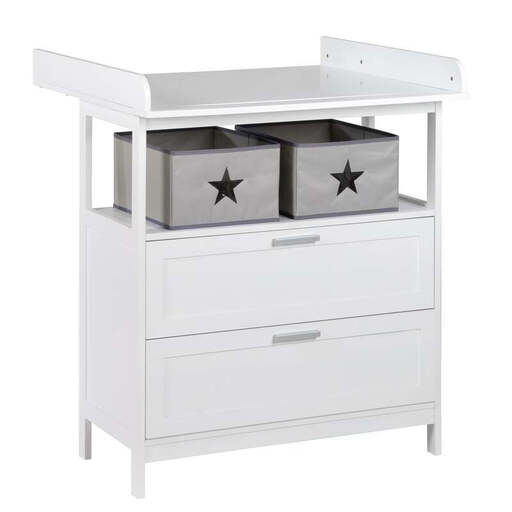
Why this model is a great fit: Ideal for parents seeking a long-term investment. The combination of closed drawers and open compartments offers flexible organisation that remains practical long after the diaper phase.
The removable topper is designed so that no visible screw holes are left on the top surface after removal. This transforms the unit into a complete, aesthetically pleasing dresser.
Back-friendly changing height of 92 cm. Includes an anti-tip kit for wall mounting. The drawers provide dust-free, concealed storage.

Why this model is a great fit: For parents looking for a solid, functional, and cost-effective solution. The doors conceal storage space for larger items like diaper packs or towels.
This model from the roba 'Hamburg' changing chest series offers a stable construction and an included wall bracket to prevent instability. According to the manufacturer, the paint is water-based and tested.
Also features an ergonomic changing height of 92 cm. The included fabric boxes for the open compartment help maintain order. The topper is removable for long-term use.
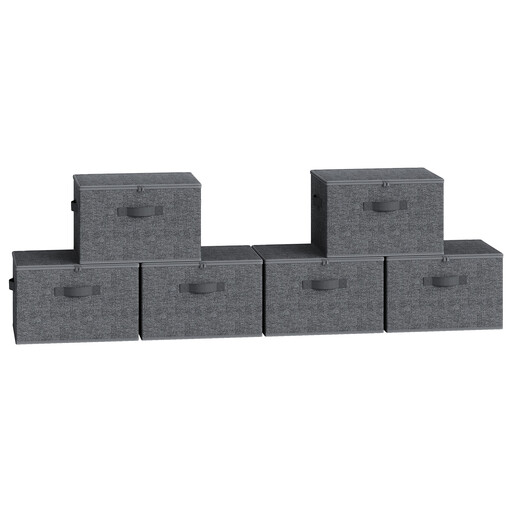
Why this model is a great fit: A flexible addition to any changing station. Perfect for parents who want to use an existing dresser or strategically organise the storage space of their new changing table.
These boxes solve the problem of impractical, messy storage. They instantly create a clear structure in open compartments or on shelves, keeping everything from clothes to diapers within easy reach.
The set of six boxes with lids offers a large volume (30L per box). They are foldable and can be stored to save space when not in use. Handles make them easy to pull out.
We have compiled a complete, up-to-date list of products that fully meet these strict selection criteria and safety regulations.
1. How high should a changing table be? An ergonomic height is crucial to avoid back pain during diaper changes. A changing surface at a height of approx. 90 to 95 cm has proven comfortable for most parents. The tall changing table featured here, at 92 cm, falls perfectly within this ideal range.
2. How do you securely attach a changing table to the wall? High-quality changing tables come with an anti-tip kit. This usually consists of a bracket or a strap that is attached to the dresser and the wall. For wall mounting, use wall plugs and screws that are appropriate for your wall type (e.g., concrete, plasterboard). The manufacturer's assembly instructions will provide precise details.
3. Can any dresser be converted into a changing table? Theoretically, yes, but it comes with risks. A simple, loose changing topper on a regular dresser can slip. Additionally, the height is often not optimal. A solution specifically designed as a convertible changing table offers integrated safety features, a suitable height, and a construction designed to handle the additional load.