
Lieferung heute & morgen

Qualitätsgarantie

Willkommens-Angebote freischalten: KOSTENLOSE Lieferung | Bis zu 80 % RABATT | Kostenlose 30-Tage-JoyPlus-Testphase
App herunterladen
Purchasing a changing table is one of the first major decisions when setting up a nursery. A changing table with a removable topper promises to be a particularly sustainable solution: first, a safe place for the baby, and later, a stylish dresser. However, not every model lives up to this promise. Many parents quickly discover that their purchase is marred by hidden flaws or an impractical design. This guide highlights the pitfalls to avoid and the features that truly matter.
Before you make a decision, it's important to know the typical problems that often only become apparent after the purchase.
To avoid the problems mentioned above, you should check three core parameters before buying. These define the quality, safety, and longevity of your future dresser.
The stability of a changing table is directly linked to the material and construction. A solid wood changing table offers significantly greater robustness and durability compared to furniture made from particle board. Pay attention to the following points:
Daily use determines whether a changing table is a help or a hindrance. The right dimensions are crucial here.
A truly sustainable changing table is designed to remain appealing and functional for years to come.
Based on the criteria above, we have analysed products that offer a well-designed solution for discerning parents.
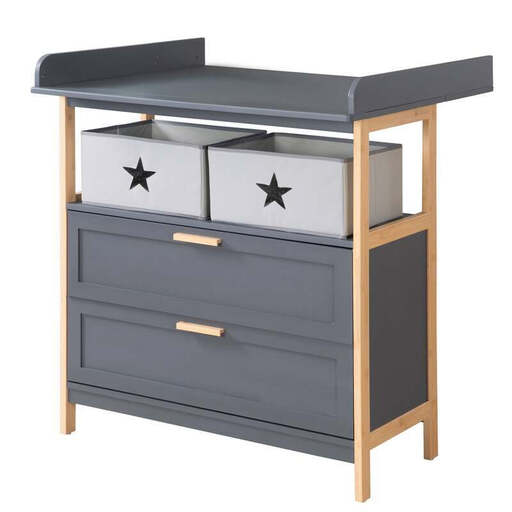
Why it's a great fit: Perfect for parents seeking a long-term investment. Its modern anthracite design with bamboo handles and solid wood construction will blend seamlessly into a stylish living space even after the diaper phase.
The solid wood construction and included wall anchor address stability issues. The topper can be removed without a trace, and the timeless design avoids the trap of short-lived nursery furniture. The 92 cm changing height is ergonomically designed.
1. Long-term use as a full-fledged dresser.
2. A combination of two large drawers and an open compartment with fabric boxes for organised storage.
We've compiled a complete, up-to-date list of products that meet these strict selection criteria and safety requirements.
1. How high should a changing table be? An ideal ergonomic changing height is between 90 cm and 95 cm. This allows most parents to maintain an upright, back-friendly posture while changing diapers. It is advisable to consider your own height and test which height is most comfortable before purchasing.
2. Is a solid wood changing table better? A solid wood changing table generally offers greater stability, a heavier weight, and a longer lifespan than models made from cheaper particle board. This robustness is a key safety factor in a child's room. Additionally, solid wood often ages more gracefully, which makes its long-term use as a regular dresser more appealing.
3. What do I do with the dresser after the diaper phase? With a model that has a completely and seamlessly removable changing topper, the piece of furniture transforms into a standard dresser. It can then be used for many years in a child's or teenager's room, or even in other areas of the home, such as the hallway or bedroom. This makes the initial investment particularly sustainable.