Households with different mealtimes
If chapatis are eaten at different times, reheating individual portions should be distinguished from keeping food hot for longer and storing it safely in between.


For reheating individual, already-cooked chapatis, consider an adjustable, flat tabletop griddle or an electric frying pan specifically designed for reheating. The key factors are the usable cooking surface, the space the appliance takes up and the use specified by the manufacturer. A crêpe maker is not automatically suitable for reheating chapatis. A keep-warm function is no substitute for checking food temperature or storing food safely between widely spaced mealtimes.
If chapatis are eaten at different times, reheating individual portions should be distinguished from keeping food hot for longer and storing it safely in between.
When you’re cooking several chapatis, consider whether the usable surface is large enough for them and leaves room to turn them. A larger griddle will also take up more worktop space.
If you want to reheat other dishes as well as chapatis, the appliance’s intended use and how easy it is to store may matter more than having the largest possible cooking surface.
Suitable if: You want to lay chapatis flat and turn them individually, and you have enough worktop space for the griddle.
Consider: An open griddle has no lid, and a larger model needs more space.
Suitable if: You also want to reheat other dishes and would find a lid useful. Tristar specifically describes the PZ-2963 as suitable for reheating and keeping food warm.
Consider: The sides of the pan may make it harder to turn a large, thin flatbread. Temperature settings don’t tell you the temperature of the food itself.
Suitable if: The instructions for the specific model cover the use you have in mind.
Consider: A flat cooking surface alone doesn’t confirm that you can use it to reheat cooked chapatis.
| Buying priority | What to check | Who it matters most to |
|---|---|---|
| Reheating individual portions | Check the intended use and distinguish between reheating and keeping food hot for longer. | When we don’t all eat at the same time, I want to reheat individual chapatis without assuming that an appliance’s setting tells me the actual temperature of the food. Around 40 % of consumers prioritise reheating individual portions. |
| Cooking surface and turning | Compare the flatbread’s diameter with the usable surface and allow room to turn it. | When preparing several portions, I want to be able to lay out and turn chapatis without running short of shared cooking space. Around 30 % of consumers prioritise a suitable cooking surface and capacity. |
| Worktop space and storage | Check the usable surface and appliance dimensions separately, and make sure you have enough room to set it up. | When we share worktop space, I want to be able to put the appliance away easily after use. Around 20 % of consumers prioritise the space available for using and storing the appliance. |
| Cleaning and cooking surface | Read the care instructions for the specific model; don’t assume removable parts are dishwasher-safe. | When sharing an appliance, I want to know how to clean the surface once it has cooled and what care the instructions recommend. Around 10 % of consumers prioritise ease of care. |
For keeping food hot for longer, the German Federal Institute for Risk Assessment recommends a temperature of at least 60 °C throughout. For reheating, it recommends at least 70 °C throughout for two minutes. You can’t determine these temperatures from a thermostat setting alone.
An appliance setting doesn’t show the temperature reached throughout the chapati. Reheating, keeping food hot and storing it chilled in between are different steps.
Follow the food-safety advice of the German Federal Institute for Risk Assessment: it recommends keeping hot food at a minimum of 60 °C throughout, and reheating food to at least 70 °C throughout for two minutes. For longer storage, it recommends cooling hot food quickly to below 7 °C.
The instructions for the Severin CM 2199 limit its intended use to crêpes, galettes and similar thin pancakes, and prohibit grilling or frying.
Before buying, check that the instructions for the exact model cover the way you plan to use it.
For the Princess 103090, the manufacturer gives a cooking surface of 28 × 28 cm, while the appliance measures 29 × 39,5 cm.
Measure the flatbread, the appliance and the space needed to turn it safely separately.
The PZ-2963 is an electric frying pan that the manufacturer says is also designed for reheating and keeping food warm.
The Table Chef Premium Compact 103090 is a flat tabletop griddle designed for kitchens with less space.
The Maxi Plancha CB690D is a large, flat alternative if you need to prepare several portions and have enough room to set it up.
The CM 2199 is a crêpe maker, so don’t assume it’s suitable for reheating chapatis without checking first.
The Crêpes-Maker 6630 is a flat, specialist appliance for making crêpes.
The following Joybuy product options include electric tabletop grills, griddles and plancha grills. For each specific model, check whether it’s designed for use with chapatis and review the information about its food-contact surface.
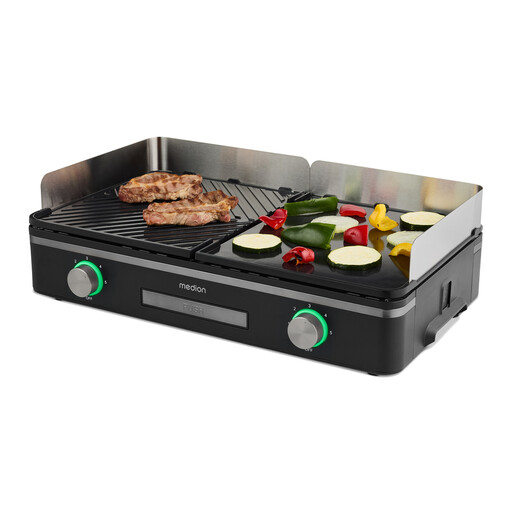 No image available
Could suit you if you want to set two grilling zones independently. First check whether the intended use includes reheating chapatis.
2400 W; two removable plates; individual temperature control; LED display; IPX4.
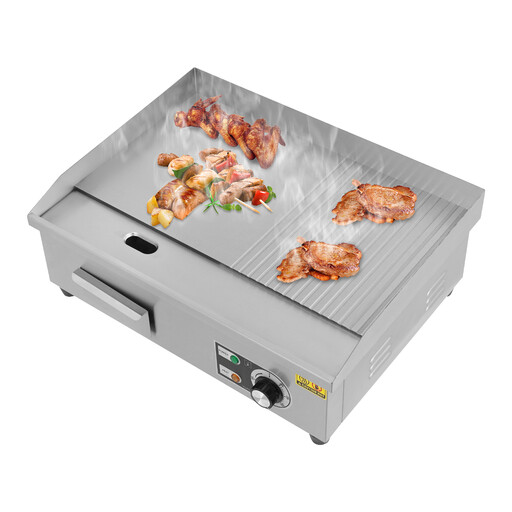 No image available
The flat grilling surface may be useful for chapatis. Check the intended use and whether the size and design suit your kitchen.
3000 W; 8 mm-thick grill plate; temperature control from 122–572 °F; removable 16.91oz drip tray.
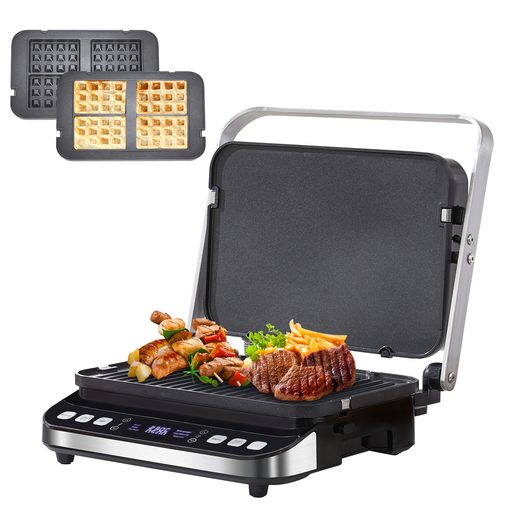 No image available
Could suit households looking for an adjustable grill surface for different foods. Check whether this model is designed for use with chapatis.
Maximum power 2000 W; removable plates; temperature control and timer.
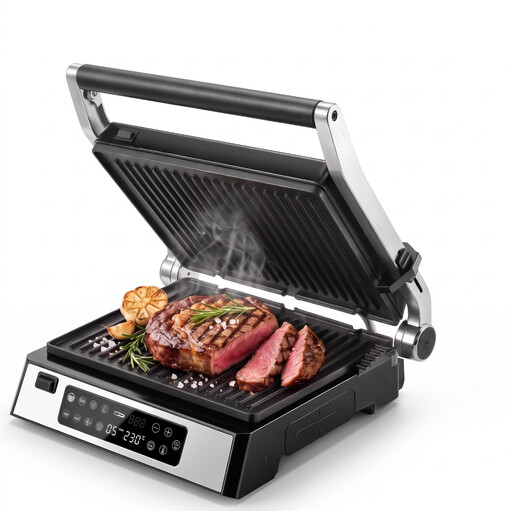 No image available
It opens flat to 180°, which may be useful if you want a flat grilling surface. Check the instructions to make sure they cover the way you plan to use it for chapatis.
2200 W; four removable plates; opens flat to 180°; LED touchscreen.
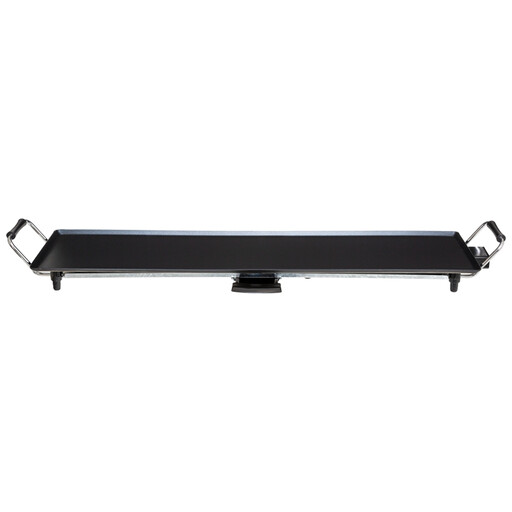 No image available
The stated size may be useful when preparing several portions. Before buying, check that you have enough space to set it up and that the model is designed for your intended use.
Electric plancha; 90 cm.
Not based on the appliance’s description alone. The German Federal Institute for Risk Assessment recommends keeping hot food at a minimum of 60 °C throughout, and reheating it to at least 70 °C throughout for two minutes. A thermostat setting doesn’t show these food temperatures. For longer storage, the institute recommends cooling hot food quickly to below 7 °C.
Only if the instructions for the specific appliance expressly say you can. The instructions for the Severin CM 2199 prohibit immersing the appliance, and the technical specifications don’t state that its individual parts are dishwasher-safe. Unplug the appliance before cleaning and let it cool down.
If an item is faulty, your statutory rights apply against the seller; a voluntary guarantee is separate. According to the Verbraucherzentrale, online purchases generally also come with a 14-day right to cancel. The requirements depend on the circumstances of your case.
No. For electrical appliances covered by the rules, the manufacturer uses the CE mark to declare that the product complies with the relevant EU requirements; it isn’t an independent quality mark. The European Union doesn’t issue a central CE certificate. Food-contact surfaces are also subject to separate requirements.