For individual chapatis you plan to eat later, a flat, adjustable surface for reheating one portion at a time is usually enough. A dedicated warming zone is most useful if you want to cook and set aside ready-to-serve food at the same time. A hotplate won’t automatically stop chapatis drying out, and its setting doesn’t tell you the temperature inside a chapati. For keeping food hot for longer, the German Federal Institute for Risk Assessment (BfR) recommends a temperature of at least 60 °C throughout.
Which option is right for you?
Households with family members eating later
If you’re serving chapatis at different times, you’ll need to weigh up covering them, briefly reheating them or keeping them hot for longer. A chapati recipe from Misty Ricardo’s Curry Kitchen recommends covering chapatis to help prevent them drying out too quickly.
Anyone reheating one portion at a time
A flat, adjustable surface could be a good choice for individual portions. Severin and Cloer list a surface of around 30 cm and infinitely variable temperature control for certain crêpe makers.
Anyone cooking and serving at the same time
If you want to cook several portions side by side or set aside ready-to-serve food, check the usable surface area and whether there’s a separate zone. Rommelsbacher lists a side warming zone on the CG 2303/E, while Princess gives the Table Chef Superior Classic a surface measuring 46 × 26 cm.
What should you look for when buying?
First decide whether you want to briefly reheat individual chapatis or set aside several foods while you cook. The appliance setting alone doesn’t tell you the temperature of the food.
| What you need |
What to look for when buying |
Who is it most relevant to? |
| Keeping chapatis soft for later |
Consider the difference between briefly reheating food and keeping it hot for longer. The BfR recommends keeping heated food at a minimum of 60 °C throughout if it’s being held hot until served. |
If chapatis won’t be served straight away, I want to keep them covered and briefly reheat them when needed. Around 36% of consumers say their main priority is keeping chapatis soft for later. |
| Reheating one portion at a time |
Check the usable flat surface and temperature control on the specific model, and follow any preheating instructions. |
I only want to reheat one portion at a time, rather than keep the whole hotplate occupied. Around 29% of consumers prioritise reheating portions individually. |
| Cooking several foods at once |
Check the usable dimensions and what a separate warming zone does; a designated zone doesn’t tell you the temperature inside a chapati. |
If I’m cooking and serving at the same time, I need space for several portions or a separate area to set food aside. Around 21% of consumers prioritise being able to use different areas at the same time. |
| Cleaning and surface |
Compare the coating, removable parts and cleaning instructions for the specific model. |
If I use it regularly, I want to know how to clean the heating surface and what care it needs. Around 14% of consumers put ease of care first. |
Common buying and usage mistakes
-
Assuming a warming zone will keep food hot safely
The name of a zone doesn’t tell you what temperature will be reached throughout a chapati.
Assess the appliance setting and the temperature of the food separately. If you’re keeping food hot for longer, follow the BfR recommendation of at least 60 °C throughout.
-
Leaving chapatis uncovered on a hot surface for too long
A heating surface won’t automatically stop chapatis drying out; a chapati recipe recommends covering them to help prevent this.
If you’re serving portions at different times, you can keep them covered and briefly reheat them when needed, rather than leaving them uncovered on the hotplate.
-
Taking a high wattage as proof of low energy use or better results
The 2500 W power rating given by the manufacturer for the Princess Table Chef Superior Classic doesn’t tell you how much energy it uses to keep food warm, or whether chapatis will stay soft.
Don’t treat the wattage as a measure of energy consumption or proof of how well the appliance reheats food.
Brands to consider
Rommelsbacher
According to Rommelsbacher, the CG 2303/E is a glass-ceramic griddle with a side warming zone, allowing you to cook and set food aside at the same time.
- The manufacturer lists a cooking surface of 36 × 27 cm and infinitely variable temperature control.
- The surface doesn’t have a non-stick coating. The listed warming settings of 50 to 120 °C are appliance settings, not temperature readings taken inside a chapati.
Severin
According to Severin, the CM 2198 is a crêpe maker with a round, flat surface for individual portions.
- The manufacturer lists a diameter of around 30 cm, a non-stick coating and infinitely variable temperature control.
- This model doesn’t have a designated warming zone, so its suitability for keeping chapatis warm hasn’t been established.
Cloer
According to Cloer, the Crêpes-Maker 6630 is a flat option for individual portions that can be stored compactly.
- Cloer lists a diameter of up to 30 cm and infinitely variable temperature control.
- There’s no designated warming zone. The manufacturer says the surface can be cleaned with a damp cloth once it has cooled.
Princess
According to the manufacturer, the Table Chef Superior Classic is a flat teppanyaki griddle for cooking several foods side by side.
- Princess lists a surface measuring 46 × 26 cm, an adjustable thermostat and a power rating of 2500 W.
- The power rating isn’t a measure of energy consumption when keeping food warm, nor does it show how soft chapatis will stay.
Joybuy product options
This selection includes adjustable crêpe makers, tabletop griddles and grills for individual portions or reheating several portions at once. Before buying, check that the usable surface is large enough for your chapatis and that the appliance is suitable for food contact as intended.
 No image available
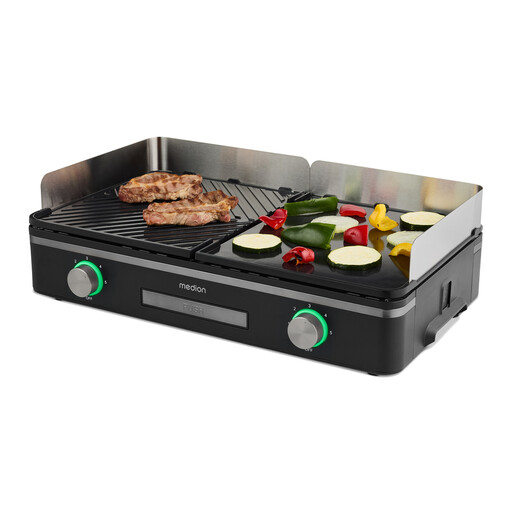
MEDION MD12027 Electric Table Grill, Dual Zone System, 2400 W
The dual-zone system and individual temperature control could suit you if you want to grill food in different areas at the same time.
The product name lists 2400 W, two removable plates and an LED display. Check that the usable surface is large enough for your chapatis.
View at Joybuy
 No image available
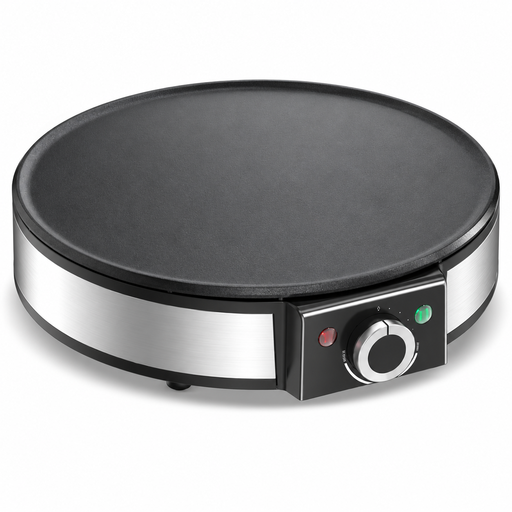
YASHE AN-110 Crêpière, 1200 W
This adjustable crêpe maker could work for individual portions; compare the usable surface with the size of your chapatis.
The product name lists 1200 W, temperature control, a stainless steel cooking plate, a batter spreader and a spatula.
View at Joybuy
 No image available
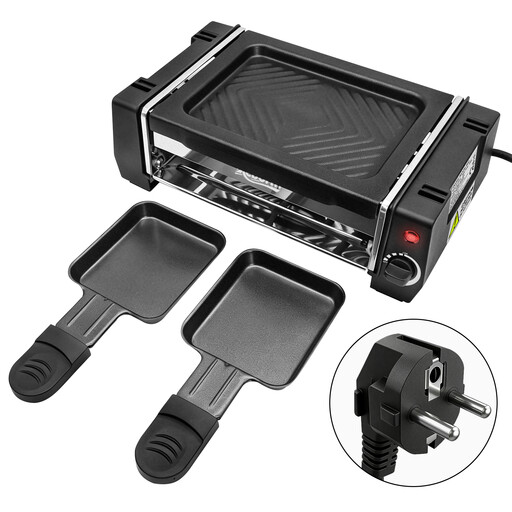
MAWIRON RT508 Contact Grill, 800 W
The listed plate dimensions could suit individual chapatis, as long as each chapati fits on the surface.
The product name lists two metal grill plates measuring 25,5 × 14 cm and 800 W.
View at Joybuy
 No image available
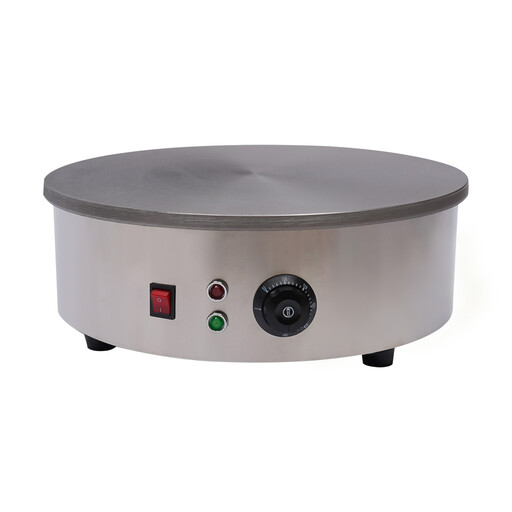
Electric cast-iron crêpe maker, 17.7 inches, 3 kW
Adjustable temperature makes this model an option for reheating individual portions. Check that the surface and controls suit the way you plan to use it.
The product name lists a cast-iron heating surface, 3 kW, a batter spreader and a spatula.
View at Joybuy
 No image available
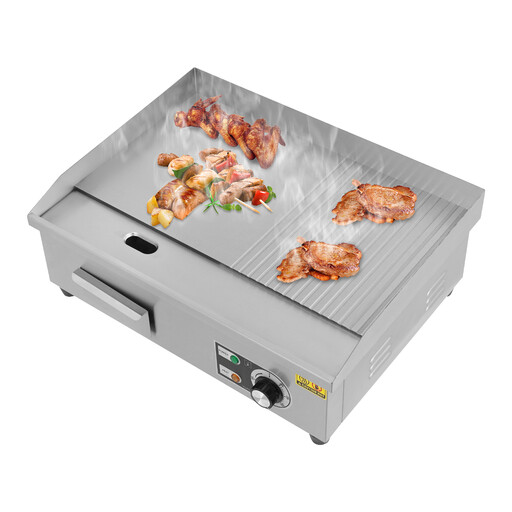
Commercial electric grill, 3000 W, smooth and ridged surface
The flat surface could be suitable for several foods; check that its usable dimensions are right for the portions you want to prepare.
The product name lists an 8 mm-thick iron plate, temperature control from 122–572 °F and a removable drip tray with a capacity of 16,91 oz.
View at Joybuy
Frequently asked questions
Can I keep chapatis warm on a switched-on griddle for a long time?
The control setting or a designated warming zone doesn’t tell you the temperature throughout a chapati. The German Federal Institute for Risk Assessment recommends keeping heated food at a minimum of 60 °C throughout if it’s being held hot until served. If you want chapatis to stay soft, briefly reheating individual portions could be an alternative to leaving them uncovered for a long time.
How can I clean the plate without damaging its surface?
Follow the instructions for the specific model. For its non-stick CM 2198, Severin advises against using metal utensils; Cloer says the cooled 6630 can be cleaned with a damp cloth. The Rommelsbacher CG 2303/E has an uncoated glass-ceramic surface and is supplied with a cleaning scraper.
What regulations apply to surfaces that come into contact with food?
Food contact materials on the EU market are covered by Regulation (EC) No 1935/2004. For electrical appliances covered by the relevant harmonised EU rules, the CE marking is the manufacturer’s declaration of conformity, not an independent quality mark. You can’t tell from the product name alone whether a particular product meets the relevant requirements.


