What should you look for when buying?
Electric tabletop pan
A good fit if: You want to reheat several portions in succession or use the appliance for other dishes, too.
Things to consider: The rim, handles and lid take up space and may make it harder to turn flatbreads. A manufacturer’s description of an appliance’s functions doesn’t prove that food will reach a particular temperature.
Open, flat griddle
A good fit if: Participants will be reheating and turning individual chapatis on an easily accessible surface.
Things to consider: Check the diameter against the size of your flatbreads. An open griddle is no substitute for a deep pan or an appliance proven suitable for keeping food hot for longer.
Cover briefly
A good fit if: You only need to keep cooked chapatis warm while the next batches are cooking. A recipe from King Arthur Baking recommends covering them with a clean cloth in the meantime.
Things to consider: This is a short-term step while cooking, not a way to keep food hot for longer in a way that meets food-safety guidance. For longer hot holding, the German Federal Institute for Risk Assessment recommends keeping food at a minimum of 60 °C throughout.
For longer periods of hot holding, the German Federal Institute for Risk Assessment recommends keeping food at a minimum of 60 °C throughout. A thermostat setting doesn’t automatically tell you the temperature inside a chapati.
| What matters |
What to check before buying |
Who it matters most to |
| Usable cooking space and portions |
Measure your chapatis and compare them with the usable cooking area, rim and space needed to turn them. |
If you’re serving several flatbreads in succession during a class, the workflow matters just as much as the cooking area. Around 36% of consumers focus primarily on serving capacity. |
| Heat and hot holding |
Check the controls and instructions for the specific appliance; plan for longer hot holding separately from brief reheating. |
If controlled heating matters to you, distinguish between the appliance’s setting and the actual temperature of the food. Around 29% of consumers prioritise heat control and this distinction. |
| Space on the class table |
Compare the overall dimensions, including handles, with the table space and storage available; consider the socket location and cable routing. |
If there’s little room on the class table for the appliance, flatbreads and a turner, the footprint and storage requirements become especially important. Around 21% of consumers focus primarily on the space available. |
| Cleaning |
Check the instructions for the exact model to see which parts can be removed and how they should be cleaned. |
If you need to clean the cooking surface after several batches, follow the specific cleaning instructions. Around 14% of consumers prioritise easy cleaning. |
Joybuy products
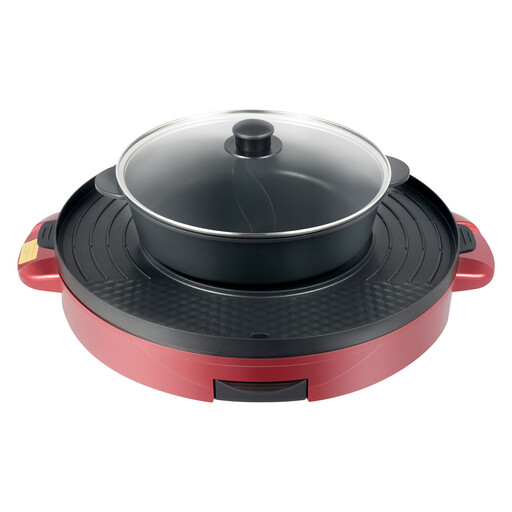
The Joybuy products below are mostly open crêpe makers for individual flatbreads. There’s also a tabletop cooker with grilling and cooking zones. On this model, the grill area makes up only part of the cooking surface.
 No image available
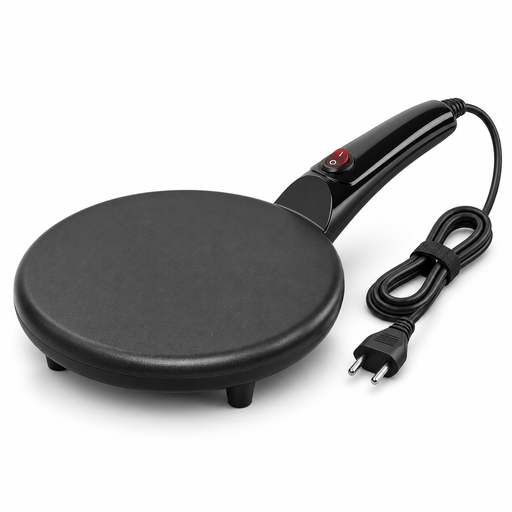
AN-108 crêpe maker with non-stick plate, 800 W
Could be worth considering for individual flatbreads on an open plate. The product title lists 800 W and a non-stick plate.
View at Joybuy
 No image available
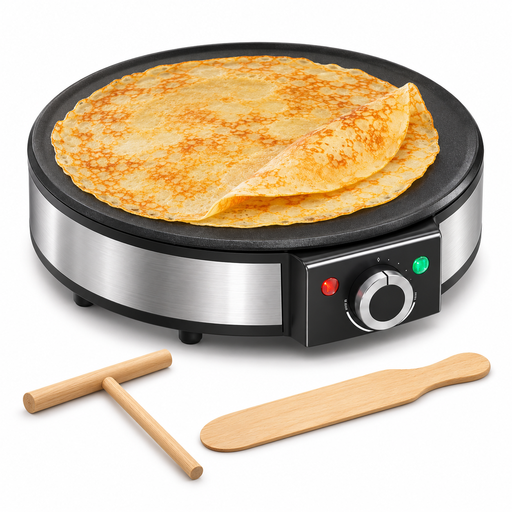
YASHE AN-110 crêpe maker with stainless steel cooking plate, 1200 W
An open crêpe maker could suit you if you want to turn individual flatbreads. The product title lists 1200 W; the description mentions a stainless steel cooking plate, adjustable temperature and tools for spreading and turning.
View at Joybuy
 No image available
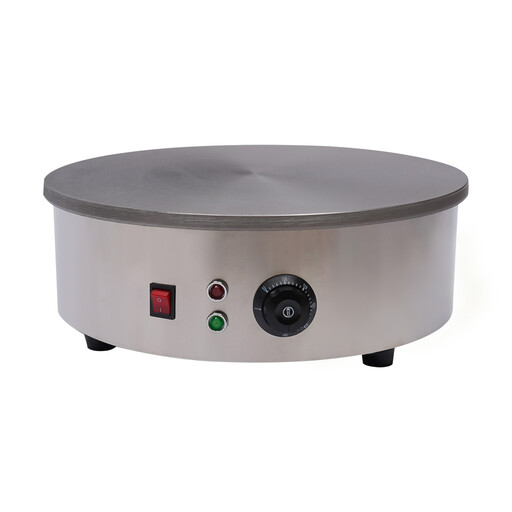
Electric cast iron crêpe maker, 17.7 inches, 3 kW
The open plate could suit individual flatbreads. First, check that its size is right for your chapatis and the table space available. The product title lists 17.7 inches, 3 kW and adjustable temperature, as well as a batter spreader and spatula.
View at Joybuy
 No image available
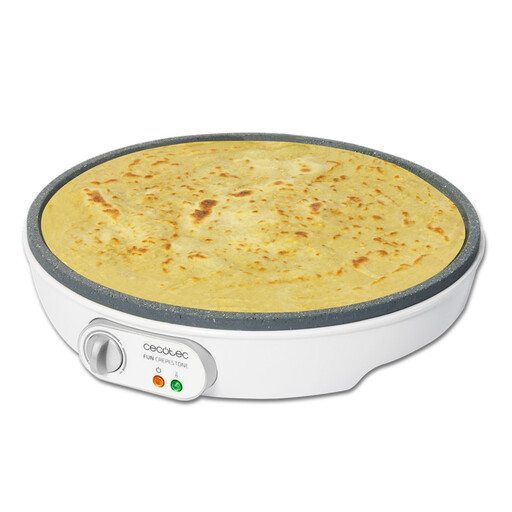
Cecotec Fun Crepestone crêpe maker, 30.5 cm, 1000 W
Could suit individual flatbreads on an open surface. The product title lists a 30.5 cm diameter, 1000 W and adjustable temperature control; a spatula and batter spreader are also included.
View at Joybuy
 No image available
2-in-1 tabletop cooker with grill plate, 220 V, 2200 W
Could be an option if you’re looking for a tabletop cooker with a grill area; bear in mind that the grill area makes up only part of the cooking surface. The product title lists 220 V and 2200 W. Before buying, check that the stated power supply is compatible with your socket.
View at Joybuy
Frequently asked questions
Is a low thermostat setting enough to keep chapatis safely hot throughout the class?
No. A low setting on the appliance doesn’t prove that food is being kept at a safe temperature. If cooked food is being kept hot until it’s served, the German Federal Institute for Risk Assessment recommends a minimum of 60 °C throughout. The appliance temperature or control setting isn’t the same as the temperature inside the food.
How can you keep freshly baked chapatis warm while the next batches are cooking?
A recipe from King Arthur Baking recommends covering cooked flatbreads with a clean cloth while you prepare the rest, then serving them warm. This describes a short step while cooking, not keeping food hot for longer in a way that meets food-safety guidance.
Can the removable plate on the Severin CM 2199 go in the dishwasher?
According to the manufacturer’s technical information, the individual parts aren’t dishwasher-safe. So, although the plate is removable, it can’t go in the dishwasher; other models may have different instructions.
Who should you contact about a fault with an appliance bought in Germany?
The seller is generally responsible for your statutory consumer rights, which are separate from any voluntary manufacturer’s guarantee. If there’s a fault, you may initially be entitled to have the appliance repaired or replaced. The Verbraucherzentrale explains the difference between statutory rights and guarantees.
What does the CE marking on an electric pan mean?
Appliances covered by relevant harmonised EU legislation must carry the CE marking. Under the Low Voltage Directive, this applies to electrical equipment with an input or output voltage of 50 to 1000 V AC. The CE marking isn’t a central EU approval or an independent quality mark for cooking results. Also check the product details, manufacturer information and relevant instructions for use.


