Which solution is right for you?

Artists seeking high-quality reproductions

If you want to photograph drawings consistently for a portfolio, archive or print, look for controllable tonal values and straight image edges. The Professional Association of Visual Artists of Munich and Upper Bavaria distinguishes simple documentary snapshots from professional reproduction photography.

Sketchers building a work-in-progress archive

An existing device may be enough for quick photos of work in progress. First check whether its images meet your documentation needs before buying any extra equipment.

Photographers working with changing window light

If you take photos at different times of day, you should be able to check and control exposure and white balance consistently. Nikon Germany recommends adjusting the white balance when lighting conditions change.

What should you look for when buying?

Existing smartphone or basic digital camera

A good fit if: You mainly want to record work in progress and don’t need high-quality reproductions for a database or print.

The trade-off: You’ll need less extra equipment, but basic documentation isn’t the same as a professional reproduction.

Mirrorless camera with a suitable lens

A good fit if: You want to photograph drawings consistently or create files for more demanding digital and printed uses.

The trade-off: Choosing a lens, positioning the camera, managing the lighting and, where necessary, using a tripod and editing your images all make the set-up more involved.

What matters What to check when buying Who is this important to?
Even tones in window light Check the lighting across the whole sheet and whether you can control exposure and white balance. If I want to distinguish the charcoal from the paper clearly in changing light, I look for even lighting and settings I can control consistently. Around 36% of consumers prioritise even tones and lighting.
Straight edges and reproduction detail Position the camera parallel to the sheet and check for distortion and sharpness right to the edges in a test image. Choose the resolution you need for your intended output. Anyone preparing drawings for an archive, portfolio or publication needs straight edges and clear detail. Around 29% of consumers prioritise reproduction and detail requirements.
A simple, repeatable process Check that positioning, taking the shot and transferring files fit your workflow; check the white balance again if the light changes. If I want to record lots of stages in my sketches, I need a process that’s easy to repeat. Around 21% of consumers prioritise straightforward documentation.
Cost of the complete set-up Compare what’s included with the accessories you already have, and check whether you might need to buy a lens or tripod separately. Anyone who needs to keep overall spending down will want to know what else they need for their planned set-up before buying. Around 14% of consumers focus primarily on the cost of the complete set-up.

Common mistakes when choosing

  • Assuming more megapixels mean a faithful reproduction

    Resolution alone won’t correct lens distortion, a camera that isn’t positioned straight or soft corners in the image.

    Photograph the sheet with its edges visible and check the perspective, edges and tonal values before choosing any more equipment.

  • Assuming window light is always even

    Light can vary across the sheet, and changing conditions may mean you need to adjust the white balance again.

    Check the whole sheet and repeat your lighting and white-balance checks whenever conditions change.

  • Assuming a camera body and kit lens are all you need for reproduction

    A kit lens isn’t necessarily suitable for photographing flat artwork with minimal distortion. The reproduction guide from the Museums Association of Brandenburg highlights the importance of low distortion.

    Compare what’s included with your photography needs and the accessories you already have.

    Depending on your set-up, you may also need a tripod, a way to trigger the shutter or a different lens.

Camera brands to consider

Canon

Canon Germany lists the EOS R50 with the RF-S 18-45mm F4.5-6.3 IS STM as a kit.

  • Canon specifies an APS-C sensor with 24.2 effective MP and an RF mount for the EOS R50.
  • According to Canon, EF-M lenses aren’t compatible; an adapter is required for EF and EF-S lenses. These specifications don’t confirm that the kit lens is suitable for low-distortion reproduction.

Sony

Sony Germany lists an α6400 kit with a 16–50 mm II lens.

  • The ILCE-6400 specifications list an APS-C sensor, 24.2 effective MP and RAW shooting.
  • Check the exact model version: specifications for the ILCE-6400 can’t automatically be applied to the separately named ILCE-6400A kit. The power zoom lens isn’t described as a reproduction lens.

Nikon

Nikon Germany lists the Z50II with the NIKKOR Z DX 16-50mm f/3.5-6.3 VR as a kit.

  • Nikon confirms that this kit includes the lens and that it has built-in lens stabilisation.
  • The kit specifications don’t confirm that it’s suitable for low-distortion art reproduction. For a stationary drawing, don’t base your choice solely on features designed for use on the move.

Cameras for documenting your work

This selection includes cameras for basic photo and video documentation, as well as a mirrorless APS-C camera with a lens. Product titles alone don’t confirm whether a lens is suitable for reproducing drawings with minimal distortion.
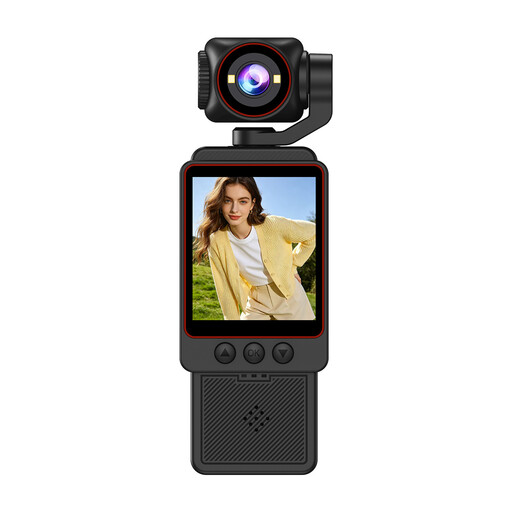
Compact camera with 1080P video and HD photos

Compact camera with 1080P video

For basic photo and video documentation; the product title lists HD photos and 1080P video.

View at Joybuy
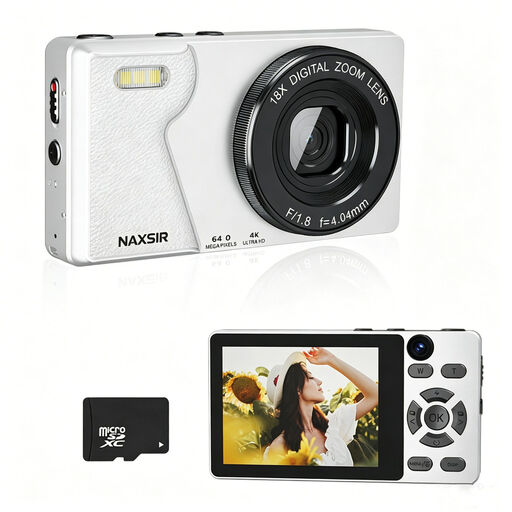
NAXSIR digital camera with 64 MP photo resolution and 32 GB memory card

NAXSIR digital camera, 64 MP

For basic photo and video documentation; the product title lists autofocus and an included 32 GB memory card.

Photo resolution: 64 MP; 18x digital zoom.

View at Joybuy

Sony Alpha 6100 APS-C camera with 16–50 mm power zoom lens

Sony Alpha 6100 APS-C with 16–50 mm power zoom lens

For repeatable single shots if you’re looking for a mirrorless APS-C camera with a lens; check whether the specific lens is suitable for your reproduction needs.

The product details list 24.2 MP, RAW shooting and a Sony E-mount.

View at Joybuy

Pink KOMERY G7-A digital camera with 80 MP and 4K video

KOMERY G7-A digital camera, pink

For basic photo and video documentation; the product title lists autofocus and a 4K video format.

Photo resolution: 80 MP; 18x zoom.

View at Joybuy

Songdian digital camera with 8x optical zoom

Songdian digital camera with 8x optical zoom

For photography where optical zoom suits your subject; the product details also list autofocus.

The product name lists a 64 MP resolution and a 5K format.

View at Joybuy

Frequently asked questions

Is my smartphone good enough for a charcoal drawing?

A capable smartphone may be enough for simple photos of work in progress. If you’re planning a high-quality reproduction or print, decide on the intended output first and check the image against the original. The Professional Association of Visual Artists of Munich and Upper Bavaria distinguishes basic documentation from professional reproduction photography.

How should I position my camera and drawing by a window?

Position the camera parallel to the flat drawing and check that the light falls evenly across the whole sheet. Museums of Brandenburg recommends parallel alignment for flat works of art; the artificial lighting set-up described there isn’t a fixed requirement for window light.

Do I need to adjust the white balance when daylight changes?

Check the white balance again when the lighting conditions change. Nikon Germany recommends adjusting it in changing light.

Are lots of megapixels enough for a good reproduction?

No. Resolution alone doesn’t guarantee a faithful reproduction. Also check that the camera is positioned parallel to the drawing, that the lighting is even, and that there’s no distortion and the image is sharp right to the edges.

Can I publish a photo of my drawing online?

If it’s your own drawing and it qualifies for copyright protection, you can generally decide how it’s used. Owning or photographing someone else’s drawing doesn’t automatically give you the right to publish it online: the German Patent and Trade Mark Office lists reproduction and making a work available to the public as relevant rights of exploitation. Whether permission or an exception applies depends on the specific work and how it’s used.