Which option is right for you?

Artists with a permanent photography setup

If you’d rather not touch your camera when photographing a still drawing, first check whether a compatible cable release or your camera’s self-timer will do the job. Nikon USA lists the self-timer as a possible alternative when the camera is stationary.

Artists who move between setups

If you move between your drawing, lighting and camera, a compatible radio or Bluetooth remote can let you take the shot from beside your subject. The right option depends on your camera model and the connections it supports.

Photographers who want to check the image on screen

If you want to check the framing or settings on your smartphone or computer, look into your camera’s dedicated app or computer-control software. Canon describes EOS Utility as offering remote control and live preview for supported cameras.

What should you look for when buying?

Built-in self-timer

Best for: A still drawing, a securely positioned camera and a few seconds to wait after setting up your shot.

The trade-off: You won’t need any extra accessories, but you’ll have less control over exactly when the shutter fires.

Cable release

Best for: Staying by your tripod, provided your camera has the specific connection the release requires.

The trade-off: Your choice is limited by the connection and cable length; the brand alone doesn’t guarantee compatibility.

Bluetooth remote

Best for: Moving away from the camera to check your drawing, as long as your model supports the remote in question.

The trade-off: You’ll also need to check camera compatibility, pairing and battery requirements.

Radio transmitter and receiver

Best for: Taking photos wirelessly, provided you can choose a camera cable that fits the receiver.

The trade-off: Rollei says the Wireless remote release 28146 requires a separate, compatible camera cable.

Camera app or computer control

Best for: Checking the framing or settings remotely as well as taking the shot; Canon describes EOS Utility as offering live preview for supported EOS cameras.

The trade-off: Your camera, connection and required software all need to work together.

What matters What to check before buying Who it matters most to
Camera compatibility Check the exact camera body model, connection and any adapters or cables you may need. I want to avoid buying a release with the wrong connection; around 36% of consumers put camera compatibility first.
Taking the shot without touching the camera Check that your tripod is stable and consider whether the built-in self-timer is enough. If my drawing is still, I don’t want to touch the camera when taking the shot; around 29% of consumers prioritise a steady release.
Freedom to move around Check the supported camera model, pairing requirements and, for radio systems, the receiver cable you’ll need. I want to check my drawing and setup without having to return to the camera for every shot; freedom to move around is a priority for around 21% of consumers.
Keeping extra steps to a minimum Check your existing self-timer, app and computer-control features, as well as the lighting, in a test shot. I want to use the features I already have and only add accessories if they make a noticeable difference; around 14% of consumers are especially keen to keep extra steps to a minimum.

Avoid common buying mistakes

  • Choosing by camera brand alone

    A cable release needs to match your camera’s connection. For certain RR-100 and camera combinations, Fujifilm also specifies an adapter.

    Compare your camera’s full model name with the manufacturer’s information, and check the connection and any adapter you may need.

  • Assuming “wireless” means “no cable connected to the camera”

    You can operate a radio transmitter wirelessly, while the receiver still needs to be connected to the camera with a compatible cable.

    Check the transmitter, receiver connection and required cable type together. For Bluetooth options, your camera must support the specific remote.

  • Expecting a remote release to reproduce a white background correctly

    A remote release lets you take the shot without touching the camera, but it doesn’t control the lighting or the tones in your image.

    Check your setup and lighting, then use a test shot to see whether the background looks even and the different charcoal tones remain visible. National Gallery of Art Custom Prints describes even lighting as part of its image reproduction process.

Useful brands and product ranges to know

Canon

Cable releases such as the RS-60E3 are designed for Canon EOS cameras with an E3 connection. Canon also lists Camera Connect and EOS Utility as ways to control supported cameras remotely.

  • Canon Germany specifies a cable length of 60 cm for the RS-60E3.
  • The EOS name alone doesn’t confirm an E3 connection or support for an app or software feature.

Nikon

The MC-DC2 is a cable option for certain Nikon cameras, while the ML-L7 is a Bluetooth remote for supported models.

  • Nikon describes the MC-DC2 as a way to take a photo without touching the camera; the ML-L7 includes a photo shutter button.
  • Check the compatibility lists for the MC-DC2 and ML-L7 separately.

Sony

The RMT-P1BT is a Bluetooth remote for supported Sony cameras.

  • Sony says it uses the camera’s built-in Bluetooth receiver, so no additional receiver is needed.
  • Your camera must support the remote; check compatibility and setup requirements in advance.

Rollei

The Wireless remote release 28146 combines a transmitter with a receiver that connects to the camera.

  • Rollei lists interval functions for this model.
  • Rollei says you’ll need to select a separate compatible cable for the camera connection.

Fujifilm

The RR-100 is a cable release for the X and GFX cameras listed on Fujifilm’s accessories page.

  • Fujifilm lists the camera models supported by the RR-100.
  • For certain listed models, Fujifilm also specifies a 2.5 mm to 3.5 mm adapter.

Smartphone accessories at Joybuy

For photographing your drawing with a smartphone when you want to mount the phone on a tripod and take the shot remotely.
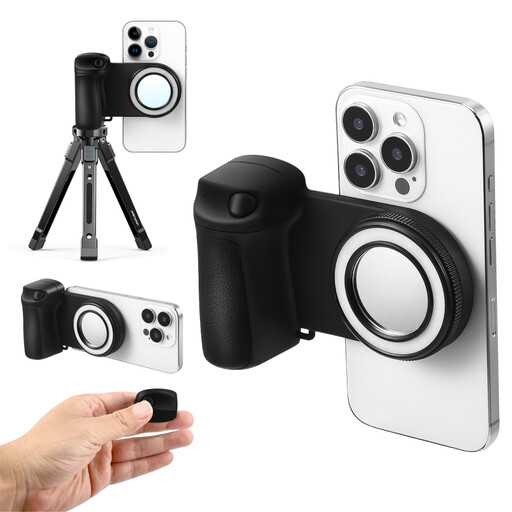
Magnetic smartphone grip with detachable remote shutter and fill light, black

Magnetic smartphone grip with detachable remote shutter and fill light (black)

For smartphone photography when you want to mount your phone on a tripod and take the shot remotely.

The grip has a 1/4-inch tripod thread. The shutter release is detachable and Bluetooth-enabled.

View at Joybuy

Frequently asked questions

Do I need a separate remote release to photograph a still charcoal drawing?

Not necessarily. If your camera is fixed in place, its built-in self-timer can help you avoid touching it when taking the shot. A compatible remote release is useful if you want to take the shot straight away or move away from the camera.

What should I check before connecting or pairing a remote?

Check your camera’s full model name against the accessory’s compatibility information. With cable systems, the connection and any required adapter are key. For Bluetooth, your camera must support the specific remote, and you’ll need to set it up correctly.

How can I check that the white background and charcoal marks look right?

Check a test shot for even brightness and clearly visible tones in the drawing. National Gallery of Art Custom Prints describes even lighting as part of its image reproduction process; a remote release doesn’t control it.

Does the Rollei Wireless remote release 28146 need an additional camera cable?

Yes. Rollei says you need a cable selected to match your camera to connect the receiver. Make sure you choose the right cable type for your camera model.

What requirements apply to radio remote controls in Germany?

The European Commission’s Radio Equipment Directive governs the making available of radio equipment on the EU market. As part of its market surveillance, Germany’s Federal Network Agency checks matters including CE marking and product and manufacturer information. This does not, in itself, confirm that any particular product complies.