
Lieferung heute & morgen

Qualitätsgarantie

Willkommens-Angebote freischalten: KOSTENLOSE Lieferung | Bis zu 80 % RABATT | Kostenlose 30-Tage-JoyPlus-Testphase
App herunterladen
An RGB LED strip can transform a room—from a cozy oasis to a dynamic party zone. But the vast selection of products also has its pitfalls. Many buyers find that after a short time, the brightness fades, the self-adhesive light strip peels off the wall, or the promised app control causes more frustration than joy. As your Joybuy Product Recommendation Officer, I'll help you navigate these common issues and make an informed decision.
Before you choose a product, you should be aware of the three most common flaws that often only appear in budget-friendly models after a few weeks or months.
To avoid the problems mentioned above, you should pay attention to a few core technical specifications. These are crucial in determining the quality and longevity of your LED strip.
The number of LEDs per metre (LED density) and the type of chip used are critical for the brightness and uniformity of the lighting.
The control method should match your usage habits.
Measure the desired application area carefully before you buy. Whether for TV backlighting or as decorative room lighting, the right length is crucial. Make sure the strip can be cut at the designated markings. This allows you to precisely adjust the length without damaging the strip.
Here are some recommendations tailored to different needs and spaces.
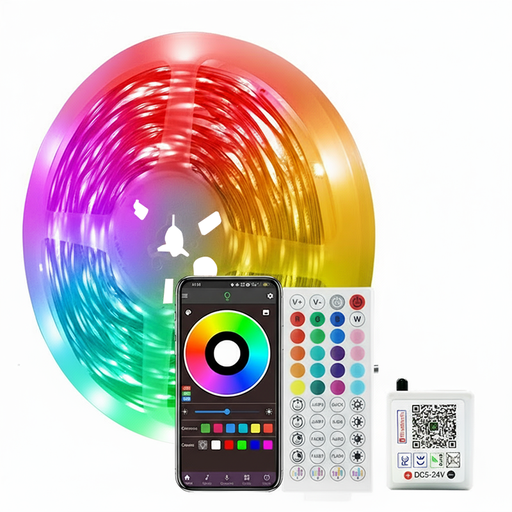
Why This Fits Their Persona: At 10 metres long, this strip is ideal for a first-time room setup or for medium-sized projects like accenting a bed or desk. It offers all the essential features at an accessible price point.
Thanks to dual control via app and remote, you aren't solely dependent on the software. If the app connection ever fails, you retain full control with the remote.
Offers both app control (Bluetooth) and a 40-key remote. The built-in music sync and timer functions complete the package.
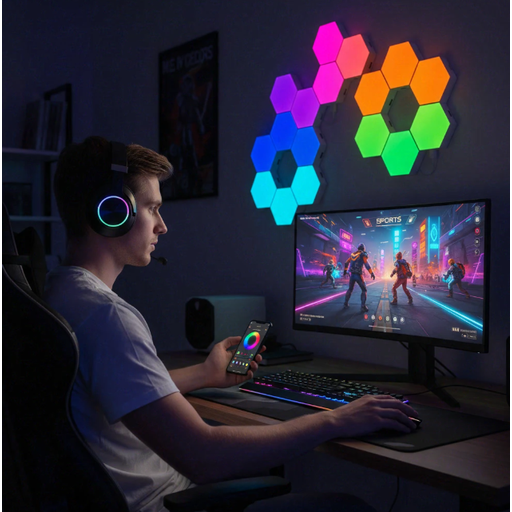
Why This Fits Their Persona: For modern gaming room decor, modular light panels are an excellent choice. They allow for creative, custom patterns on the wall and visually set the setup apart from classic LED strips.
Instead of one long, fragile adhesive strip, individual, lightweight panels are mounted. This reduces the risk of peeling. The control is designed for visual effects and music sync, meeting the core needs of gamers.
Modular DIY design for unlimited creativity. The lights react to music and ambient sounds, creating an immersive atmosphere for gaming or streaming.
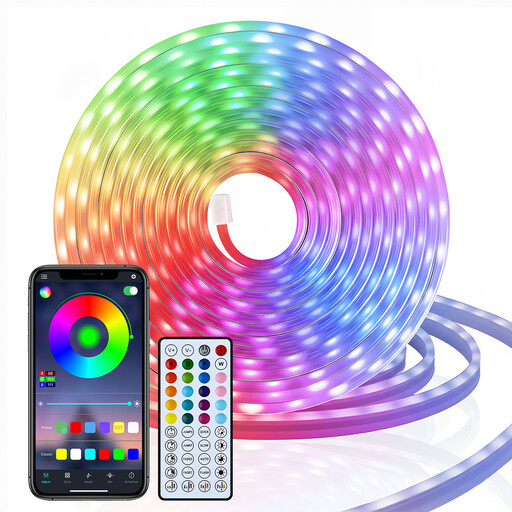
Why This Fits Their Persona: Anyone looking for a lighting solution that is both visible and high-end will benefit from the neon effect. The 15-metre length is ideal for fully illuminating large rooms or for creative, curved light installations on walls and ceilings.
The silicone casing provides a diffuse, dot-free light, solving the problem of visible LED dots often found distracting on standard strips. This makes the light appear significantly more professional and uniform.
Creates a homogeneous neon light without visible dots. The material is highly flexible, making it suitable for creative DIY projects that go beyond simple straight lines.
We've compiled a complete, up-to-date list of products that fully meet these strict selection criteria and local safety regulations.
1. Can you cut and reconnect an LED strip? Yes, most LED strips can be cut with scissors at the designated gold or copper-coloured markings. To reconnect separate sections, you will need special corner or quick connectors, which are sold separately. Soldering is another, more technically demanding method.
2. Will a self-adhesive light strip stick to textured wallpaper? Adhesion on textured wallpaper is a challenge. The standard adhesive tape from many manufacturers is often not strong enough. For a permanent installation, it is recommended to thoroughly clean and degrease the surface. Additionally, you can use transparent mounting clips or stronger double-sided mounting tape to secure the strip in critical areas.
3. How much power does an LED strip consume? Power consumption is very low compared to traditional light sources. It depends on the length of the strip, the LED density, and the set brightness level. A typical 5-metre RGB strip consumes about 20 to 30 watts at full brightness. When dimmed or displaying single colours, consumption is correspondingly lower. The exact details can be found in the technical specifications of the respective product.