What should you look for when buying?
The consumer advice centre suggests around 8 °C in the top shelf of the fridge as a guide for cheese, and recommends keeping it covered but not necessarily in an airtight container. Also follow the instructions on the packaging (advice dated 14 January 2025).
| Priority |
What to check when buying |
Who is it important to? |
| Store portions hygienically |
Separate, usable shelf space; storage instructions for the type of cheese |
If I want to take out several portions separately and hygienically, I need shelves that are easy to reach. Around 33% of consumers put hygienic portioning first. |
| Space and fridge capacity |
External dimensions or housing dimensions; available fridge capacity |
If the fridge needs to hold cheese as well as other food, I want enough cooling space without exceeding the space available. Around 27% of consumers prioritise suitable dimensions and enough usable capacity. |
| Energy consumption |
Stated annual energy consumption in kWh; appliance size suited to your needs |
If a new appliance will be running continuously, I want to compare its annual energy consumption with my needs and electricity tariff. Around 20% of consumers put ongoing electricity costs first. |
| Fridge or freezer compartment |
Compare fridge and freezer capacities separately; decide whether you need extra freezer space |
If I mainly need to chill cheese and can store frozen food elsewhere, I don’t want to pay for a compartment that takes up fridge space. Around 20% of consumers prioritise available fridge space over an unnecessary freezer compartment. |
Compact additional fridges at Joybuy
This selection includes compact additional fridges, with and without a separate freezer compartment. Compare the fridge capacity and appliance dimensions with your needs. A freezer compartment isn’t available as fridge space for cheese portions.
 No image available
Sonlu CS-100L, 82 l, energy class E
Described as a compact additional appliance with no freezer compartment; the product details list 82 l of fridge space.
Adjustable glass shelves and temperature control are listed.
Stated annual energy consumption: 84 kWh.
View at Joybuy
 No image available
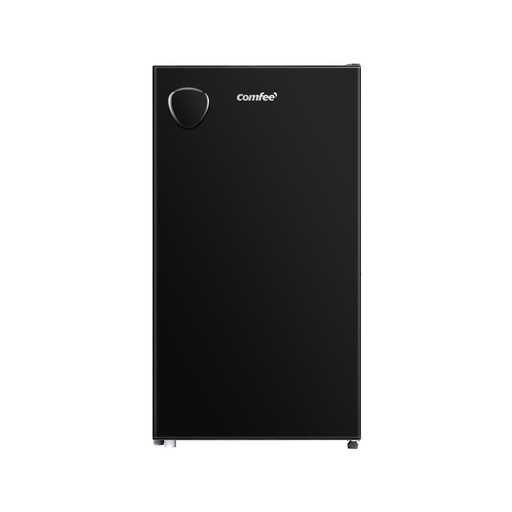
Comfee RCD92BL2EUY(E), 88 l, energy class E
Described as a compact additional appliance; the product details list a capacity of 88 l and removable glass shelves.
Thermostat control, interior lighting and a reversible door are listed in the product description.
According to the description, the separate cooler zone is intended for short-term cooling only. Food stored there should not be kept for more than 2 hours.
View at Joybuy
 No image available
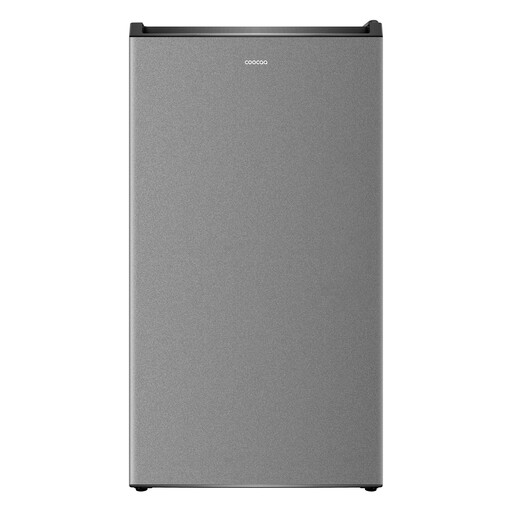
Coocaa SRS-120DTE, 83 l, energy class E
The product details list 83 l of fridge space in a compact fridge.
One shelf, three door shelves, temperature control and interior lighting are listed.
View at Joybuy
 No image available
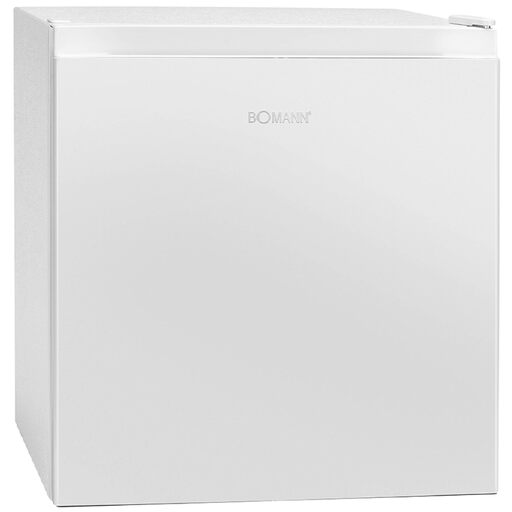
Bomann KB 7245, 45 l net capacity
This compact appliance has a separate 4-l freezer compartment, which isn’t available for chilled cheese portions.
The stated temperature control range is from 0 °C to +8 °C. A removable glass shelf is listed.
According to the description, the freezer compartment needs to be defrosted manually.
View at Joybuy
 No image available
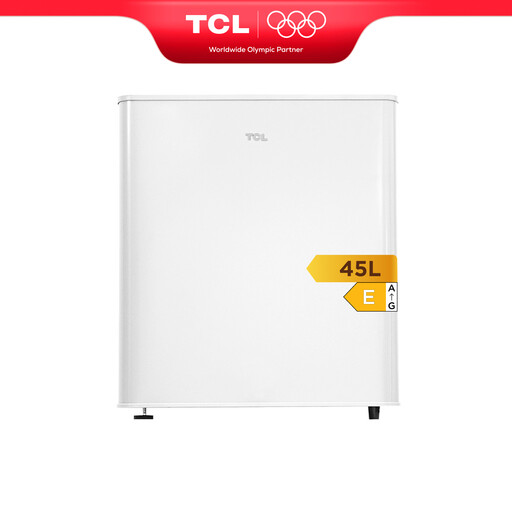
TCL RF60DWE0, 45 l, energy class E
This tabletop fridge has a separate 3-l freezer compartment, which isn’t available as fridge space for cheese portions.
A mechanical thermostat with a stated temperature range of 0–10 °C and a toughened glass shelf are listed.
Check the appliance dimensions against the space available before positioning it.
View at Joybuy
Frequently asked questions
Where should I store cheese for different mealtimes?
First, follow the instructions on the packaging. In its advice dated 14 January 2025, the consumer advice centre suggests around 8 °C in the top shelf of the fridge as a guide. It recommends keeping cheese covered, but not necessarily in a completely airtight container. Use clean hands or utensils to take out portions.
Do I need a special freshness drawer for cheese?
Not necessarily. Liebherr describes the EasyFresh-Safe in the Rd 4200 as being for unpackaged fruit and vegetables; there’s no evidence of a particular benefit for cheese. Choose a storage place based on the packaging instructions and the actual cooling zone.
What should I check when choosing a built-in fridge?
Check the housing height, width and depth, as well as the door installation, against the specifications for the exact model. Siemens lists a housing measuring 1025 mm high, 560 mm wide and 550 mm deep for the KI31RADD1, along with flat-hinge installation.
How do I compare purchase and running costs?
Compare the stated annual energy consumption in kWh for appliances that suit your needs, and factor in your electricity tariff and how long you plan to use the appliance. Since 2021, the EU energy label for fridges has used a scale from A to G. The European Union lists fridges as a category for which the former plus-rated classes are no longer used.
Can I put an old fridge in household rubbish?
No. The Federal Environment Agency explains that old electrical appliances must be disposed of separately, and that you can return a large old appliance free of charge when buying a corresponding new one, including online purchases with delivery. Before placing your order, check how collection will be arranged in practice.


