Which oven suits you?

Baking for a larger group

If you want to bake as many scones as possible in one go, compare the usable tray area, what’s included and the heating function specified for baking on multiple levels. Good Food recommends preheating the oven for its cheese scone recipe.

Baking without space for a built-in oven

If a built-in appliance isn’t an option, check both the usable tray area and the worktop space and safety clearances specified in the instructions for a countertop oven. Rommelsbacher and Severin’s specifications show that their appliances come in different sizes and configurations.

Occasional baking in small batches

A compact oven may be enough for small batches, as long as its heating function suits the recipe. Good Food gives settings for conventional top-and-bottom heat and fan-assisted cooking; Severin states that the TO 2052 has one shelf level and no fan function.

What to look for when buying

Built-in oven with multi-level fan cooking

A good fit if: You have a suitable oven cavity and need to bake on several trays. Bosch and Siemens state that their respective models support fan cooking on up to three levels.

Consider: The cavity dimensions and electrical connection must be suitable. The manufacturers’ stated number of levels doesn’t guarantee a particular result when baking cheese scones.

Countertop mini oven with fan function

A good fit if: You don’t have space for a built-in oven and the scones will fit on the usable tray. Rommelsbacher lists a 42-litre capacity and conventional top-and-bottom heat with fan function for the BG 1805/E; Severin lists a 20-litre capacity and fan function for the TO 2068.

Consider: Smaller trays may mean baking in more than one batch. You’ll also need to allow for the space required and the clearances specified in the instructions for your particular model.

Compact mini oven without a fan function

A good fit if: You’re baking a small batch on one tray and your recipe calls for conventional top-and-bottom heat. According to the manufacturer, the Severin TO 2052 has a 9-litre capacity, one shelf level and no fan function.

Consider: You may need to bake in several batches for a larger group. The model specifications don’t state a specific number of scones.

Buying consideration What to look for Who it matters most to
Scones per batch Compare the planned quantity and spacing between scones with the usable tray dimensions. If you’ll use several trays, check the heating function and what’s included. If I want to bake as many scones as possible at once for a larger group, the usable tray area is what counts. Around 36% of consumers have this as their main consideration.
Space and positioning Check the external dimensions and, where relevant, the cavity dimensions, electrical connection and clearances specified in the instructions for the particular model. If the oven needs to fit in a particular spot in my kitchen, I want to check the dimensions and positioning guidance in advance. Around 29% of consumers have this as their main consideration.
Heating function to suit the recipe Choose conventional top-and-bottom heat or fan-assisted cooking to match your recipe, and check that the oven can reach the required temperature. If I’m baking a particular cheese scone recipe, I want to be able to select its recommended heating function on the oven. Around 21% of consumers have this as their main consideration.
Energy use and cleaning For household ovens covered by the relevant rules, compare the kWh figure per standard cycle and the operating mode. Check cleaning features for each model. If I use the oven regularly, I also want to take energy use and cleaning effort into account. Around 14% of consumers have this as their main consideration.

Common misconceptions

  • Assuming the oven capacity tells you how many scones will fit

    The capacity in litres doesn’t tell you how many scones you can space out properly on a tray.

    Compare the usable tray dimensions with the size of the scones you plan to make, and check what’s included.

    Depending on the tray area, you may need to bake another batch or buy an additional tray that fits.

  • Planning to use a countertop oven without allowing for the required clearances

    For the BG 1805/E, Rommelsbacher warns that the rear panel gets very hot and refers users to the safety clearances in the operating instructions.

    Check the external dimensions and positioning guidance for the particular model against the space you have in mind.

    Your chosen spot may not be suitable, so you may need to find somewhere else to put the oven.

  • Taking the energy label or wattage as a guide to the cost of baking one batch of scones

    The German consumer advice centre describes energy use for standard oven cycles. According to the European Commission, small and portable ovens are excluded from the stated scope of the energy label for household ovens.

    Only compare figures based on the same measurement method, and don’t use them to calculate the exact electricity cost of baking a single batch.

Brands to consider

Bosch

Built-in ovens for kitchens with a suitable cavity. The HBA572BB4 is one example, with the manufacturer specifying fan cooking on several levels.

  • Bosch lists a 71-litre capacity, conventional top-and-bottom heat and retrofittable telescopic rails for the HBA572BB4.
  • Check the cavity dimensions and whether a tray is included. The manufacturer’s multi-level specification isn’t an independent test of how well it bakes scones.

Siemens

Built-in ovens. Siemens states that the HB314G0S3 has 3D hotAir for up to three levels.

  • For this model, the manufacturer lists conventional top-and-bottom heat, a 71-litre capacity and one baking tray included.
  • Whether you’ll need additional compatible trays depends on the quantity you plan to bake. The specifications don’t guarantee a particular result when baking scones.

Rommelsbacher

Countertop mini ovens. With a 42-litre capacity, the BG 1805/E is an option if a built-in appliance isn’t suitable.

  • The manufacturer lists conventional top-and-bottom heat with a fan function and one baking tray included.
  • You’ll need enough space for the external dimensions and safety clearances in the instructions. The capacity doesn’t indicate a specific number of scones.

Severin

Countertop ovens in different sizes: according to the manufacturer, the TO 2068 has a 20-litre capacity and a fan function, while the TO 2052 has a 9-litre capacity and no fan function.

  • The different features give you a choice of appliance to suit your batch size and preferred heating function.
  • The capacity in litres doesn’t tell you how many scones will fit on the tray supplied with each model.

NEFF

Built-in ovens. NEFF states that the B2CCG6AK3 has CircoTherm for up to three levels.

  • For this model, NEFF lists a 71-litre capacity, plus pyrolytic and hydrolytic cleaning.
  • According to the product page, telescopic rails can be retrofitted. The multi-level specification isn’t an independent comparison of the scone-baking results.

Joybuy products for cheese scones

The models below include built-in and countertop ovens for different batch sizes and kitchen spaces. Before choosing, check that the tray area, heating function and positioning or installation requirements suit your recipe and kitchen.

Bosch HBG578ES3 built-in oven

Bosch HBG578ES3 built-in oven with pyrolytic cleaning, 60 cm

An option if you’re looking for a built-in oven with multi-level fan cooking specified by the manufacturer.

71 litres; conventional top-and-bottom heat and 3D hotAir for up to three levels are listed. The temperature range is 30–275 °C, and a baking tray is included.

Joybuy
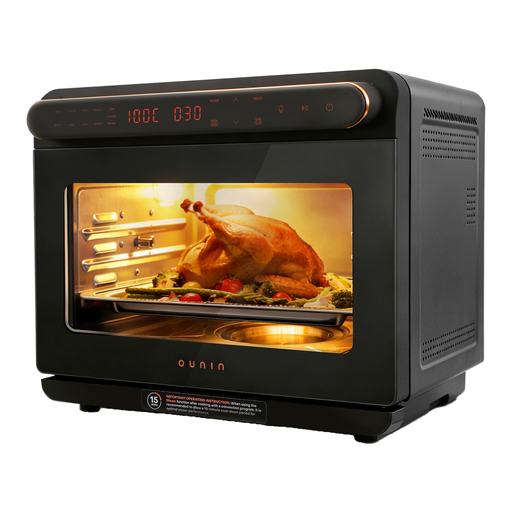
OUNIN 24-litre combination steam oven, 10-in-1

OUNIN 24-litre combination steam oven, 10-in-1

A countertop oven with a baking function and baking tin included, if you’re not looking for a built-in model.

24 litres; Steam Bake and Bake functions are listed. The 1-litre water tank is among the stated features.

Joybuy

WOLTU BF12sz mini oven, 32 litres

WOLTU BF12sz mini oven, 32 litres, black

A countertop oven with a baking tray included, if its dimensions and heating functions suit your available space and recipe.

32 litres; 100–250 °C, top heat, bottom heat and combined heating modes are listed. A baking tray, wire rack and crumb tray are included; the external dimensions are 52,3 × 36 × 32,2 cm.

Joybuy

WOLTU mini oven with pizza function, 10 litres, white

WOLTU mini oven with pizza function, 10 litres, white

Its compact size makes it a practical option for small batches. The product description presents this countertop oven as suitable for 1–2 people.

10 litres; top-and-bottom heat and 100–230 °C are listed. A baking tray and wire rack are included accessories.

Joybuy

WOLTU mini convection oven, 28 litres

WOLTU mini convection oven, 28 litres, black

A countertop oven with several shelf levels, if you’d like to use this feature when planning your baking.

28 litres; 100–230 °C, three shelf levels, a baking tray and a wire rack are listed.

Joybuy

Frequently asked questions

Do I need to use the fan function for cheese scones?

No. Good Food’s cheese scone recipe calls for 200 °C using conventional top-and-bottom heat, or 180 °C with the fan on, and says to preheat the oven. Follow the setting in the recipe you’re using and your oven’s instructions. These temperatures won’t necessarily apply to every scone recipe.

How much clearance does a countertop oven need?

Check the instructions for your particular model. For the BG 1805/E, Rommelsbacher warns that the rear panel gets very hot and says to follow the safety clearances in the operating instructions.

When do I need an electrical contractor to connect an oven?

If the fixed electrical installation needs to be installed, extended or altered, § 13 NAV sets out who may carry out the work: in addition to the network operator, this must generally be a company registered in its installer register. This is different from plugging an appliance designed to use a plug into a suitable existing socket. Check the appliance’s connection details.

Does every mini oven in Germany need an EU energy label?

No. The European Commission lists small and portable ovens as being outside the stated scope of the energy label for household ovens. For appliances covered by the rules, the label includes information such as energy use in kWh per standard cycle. An exempt mini oven without a label can’t be compared on energy use on that basis alone.

Is a manufacturer’s guarantee the same as your statutory rights?

No. The German consumer advice centre distinguishes between your statutory rights against the seller if goods are faulty and a voluntary guarantee. Read the guarantee terms separately and, before buying, check whether you’ll need delivery, installation or disposal services.