Households with staggered mealtimes
If everyone eats at different times, you can reheat baked cheese scones in portions later, or split and toast them. Consider whether this suits your routine better than baking several fresh batches.


If you’re making a larger batch of cheese scones in one go, a suitable existing or built-in oven with enough usable baking tray space is the obvious choice. For regular, smaller batches baked fresh, consider a mini oven or an air fryer with a baking function. If the scones are already baked, you can reheat them in portions later rather than keeping them warm for a long time. What matters is the usable space and the functions of the specific model – not just its capacity in litres or whether it has a keep-warm programme.
If everyone eats at different times, you can reheat baked cheese scones in portions later, or split and toast them. Consider whether this suits your routine better than baking several fresh batches.
If you want to bake a few scones fresh at different times, compare the heating options and usable tray or basket space with the portion size you usually make.
For a larger first batch, the available tray space and, where relevant, suitable shelf positions are key. If you’re buying a built-in model, the housing dimensions and accessories must also suit your kitchen.
A good choice if: You want to bake several scones on trays at once and already have a suitable oven, or are planning a suitable built-in space.
Things to consider: A large oven cavity may be more than you need for a single small batch. If you’re buying a new one, check that the dimensions and accessories are right.
A good choice if: You regularly bake smaller batches and don’t need a built-in appliance. Rommelsbacher lists top and bottom heat with optional fan-assisted cooking for the BG 1550, as well as a 32.5 × 28.5 cm baking tray.
Things to consider: A smaller tray may mean baking in more batches. The space needed and installation guidance also vary by model.
A good choice if: You want to make a few scones at a time or reheat individual portions. Philips lists baking and reheating among the functions of the NA221/00.
Things to consider: The stated basket capacity doesn’t tell you how many scones will fit with space between them, so check the usable area.
| What you’re looking for | What to check before buying | Who it matters to most |
|---|---|---|
| Serving in portions later | Check for a reheating or suitable baking function and enough space for your usual portion. Keeping food warm for a long time is different from reheating it later. | If I want to serve baked scones in portions later, reheating matters more to me than keeping them warm for a long time. Around 36% of consumers have this as their main priority. |
| Small, freshly baked batches | Check that the heating option and temperature settings suit your needs, and compare the usable tray or basket space of the exact model. | If you want to bake a few scones fresh at different times, look for suitable settings and enough room for a small batch. Around 29% of consumers have this as their main priority. |
| Larger first batch | Check the tray dimensions, accessories and built-in dimensions. Only use multi-shelf cooking as directed in the model’s instructions and your recipe. | If I want to bake as many scones as possible in one go, suitable tray space is essential. Around 21% of consumers prioritise this. |
| Space and energy use | Check the external dimensions and installation guidance. For ovens covered by the energy label, compare consumption per standard cycle only on the same declared basis. | If you need to find space for another appliance and assess energy figures in relation to your own use, weigh up the space required and the basis of the measurements together. Around 14% of consumers focus on this. |
The capacity of a basket or oven cavity alone doesn’t tell you how many shaped scones will fit with space between them.
Compare the usable dimensions of the tray or basket base with the size and number of scones you usually make.
The German Federal Institute for Risk Assessment (BfR) recommends keeping food at a minimum of 60 °C throughout. This is about the temperature of the food, not the name of a button on an appliance.
Consider whether reheating later would suit your routine better. If you do keep food hot, follow the BfR recommendation rather than relying on the programme setting alone.
The EU energy label for ovens covered by the scheme shows consumption per standardised baking cycle. This doesn’t directly tell you how much energy a small batch of scones will use. Manufacturer claims about energy savings with an air fryer are based on the specific comparison conditions stated.
When comparing appliances, consider the stated measurement basis, portion size and how you plan to use the appliance.
Built-in ovens for households with a suitable housing space and a need for plenty of baking room.
Freestanding mini ovens with a baking tray, offering an option for smaller batches.
Air fryers with baking and reheating functions, offering an option for smaller portions.
Freestanding baking and toaster ovens with top and bottom heat.
Built-in ovens are another option for baking larger batches.
This selection includes built-in ovens, freestanding mini ovens and air fryers with a baking function – for larger batches as well as smaller portions.
 No image available
For larger batches if a built-in model is suitable for your kitchen.
71 l oven cavity; 3D hot air for up to three levels. The product description lists top/bottom heat and a universal pan. Have it installed by a professional in accordance with the stated housing dimensions.
 No image available
For smaller batches if you’re looking for a freestanding mini oven with a baking tray.
32 l; temperature range of 100 to 250 °C; 60-minute timer. A baking tray is listed as an accessory.
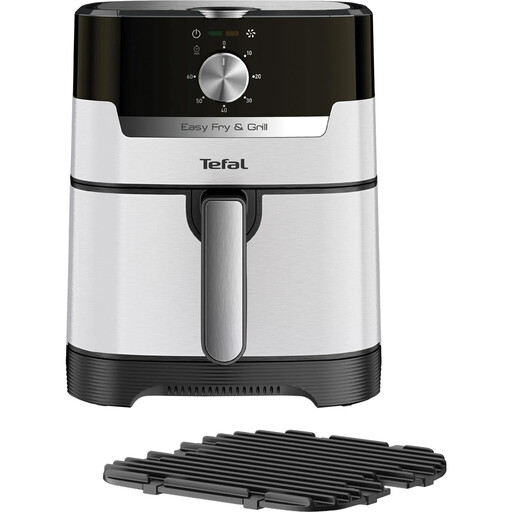 No image available
For small portions if you’re looking for a model with a specifically listed baking function and manual settings.
4.2 l; adjustable temperature range of 80 to 200 °C; 60-minute timer. The stated temperature range goes up to 200 °C.
 No image available
For larger batches if a built-in model with fan-assisted cooking is suitable for your kitchen.
70 l oven cavity; ten functions listed in the product description, including fan-assisted cooking, grill and pizza. The description also mentions baking on several levels. Check the built-in dimensions and ventilation requirements when installing.
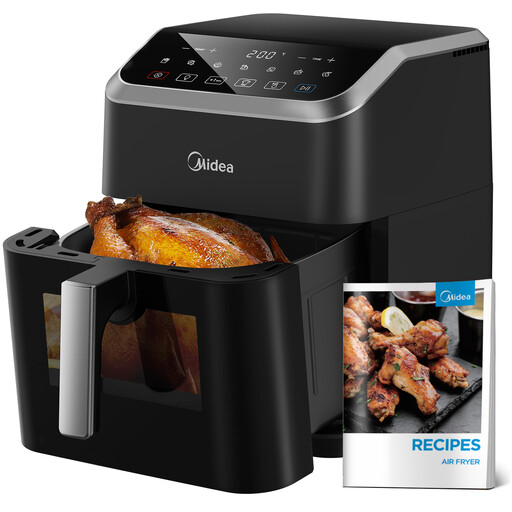 No image available
For smaller batches if you’re looking for an air fryer with a specifically listed baking programme.
7 l; seven preset programmes listed in the product description, including baking; illuminated viewing window.
No, not necessarily: Good Food’s cheese scone recipe also suggests splitting and toasting them later. If you do keep cooked food hot, the German Federal Institute for Risk Assessment recommends a minimum temperature of 60 °C throughout. This guidance is about keeping food hot; it doesn’t mean every scone needs to be kept hot continuously. The appliance’s set temperature doesn’t prove that the food itself is at that temperature.
Not as a general rule. Good Food’s Cheddar scone recipe gives different temperatures for different heating methods: 220 °C for conventional heat and 200 °C for fan-assisted cooking. Choose the setting that matches the recipe and follow the instructions for your specific appliance. This doesn’t provide a tested cooking-time chart for every air fryer.
Before setting it up, check the safety instructions for the exact model. For the BG 1550, Rommelsbacher lists features including a removable crumb tray and a dismantlable oven door for cleaning. These features apply to this model and shouldn’t be assumed to apply to other mini ovens.
Your statutory rights are generally against the seller and are separate from any voluntary manufacturer’s guarantee. The German consumer advice centre says that new goods are generally covered by a two-year statutory warranty. What applies in a specific case also depends on the fault and the sales contract.
No. Not every compact appliance falls within the labelling rules for domestic ovens. The European Commission lists small ovens as an example of products outside this scope. Check how the specific appliance is classified; on its own, the absence of an oven energy label on a compact appliance doesn’t prove that it breaches the rules.