Baking on a small tray
If you want to bake a few scones with space between them on a flat surface and choose the heating setting specified in your recipe, pay particular attention to the tray size and temperature settings.


If your existing oven can reach the temperature and use the heating setting specified in your recipe, you don’t need to buy another appliance just to make cheese scones occasionally. If you regularly bake small batches on a tray, a mini oven could be worth considering. An air fryer may be a better fit if the scones can sit with space between them in the basket and the appliance reaches the required temperature. Before you buy, check the usable cooking area, where you’ll put the appliance and the instructions for the specific model.
If you want to bake a few scones with space between them on a flat surface and choose the heating setting specified in your recipe, pay particular attention to the tray size and temperature settings.
Check whether the appliance will actually fit in the space you have and whether its instructions allow it to be placed there.
If you’d like to make other small portions as well as scones, check the basket size, temperature range and cleaning instructions for the specific model.
A good fit if: You only bake occasionally and your oven offers the recipe’s temperature and heating setting.
The trade-off: You won’t need another appliance or extra space to store it. For small portions, what matters is the actual energy used for one baking session.
A good fit if: You regularly bake small batches on a tray and have a suitable spot for it, as set out in the instructions.
The trade-off: A tray and a choice of heating settings can be handy. But the capacity in litres won’t tell you the usable tray area or the clearance needed when positioning the appliance.
A good fit if: You’d like to use it for other small portions too, and the scones fit with space between them in the basket or a suitable tin.
The trade-off: A removable basket can make cleaning easier, but it’s no substitute for a baking tray. Philips does not recommend using baking paper in its air fryers.
| What matters | What to check before buying | Who it matters to |
|---|---|---|
| Temperature and heating setting | Check the temperature range and whether the appliance offers conventional heat or fan-assisted cooking to match your specific recipe. | If I want to follow the recipe as written, the appliance needs to offer the right settings. Around 33% of consumers put the right temperature and heating setting first. |
| Usable cooking area | Compare the size of your scones, including the space between them, with the tray, basket base or suitable tin. | I want to be able to fit the whole small batch in at once, rather than relying on the capacity in litres alone. Around 27% of consumers prioritise this. |
| A safe place to put it | Check the appliance’s dimensions and the positioning and clearance instructions in the model’s manual. | If my worktop space is limited, I need somewhere the appliance can safely stand according to its instructions. Around 20% of consumers put finding a suitable place first. |
| Cleaning and effort | Check which parts are removable and dishwasher-safe according to the instructions. Only compare energy use under equivalent conditions. | If I use it regularly, I want cleaning and effort to be manageable. Around 20% of consumers give this the greatest weight. |
The oven or basket capacity doesn’t tell you directly whether several shaped scones will fit with space between them on the tray or basket base.
Before buying, compare the usable area with the size and arrangement of your scones.
If the scones don’t all fit at once, you may need to bake them in multiple batches.
Tefal’s comparison is based on 300 g of frozen chips, not baked goods.
Don’t use it to estimate savings for a batch of scones. Compare energy use only between suitable appliances, quantities and settings.
Small external dimensions don’t override the positioning and safety instructions for the specific model. The Severin TO 2052 manual warns that surfaces you can touch may get very hot during use.
Read the manual before buying and measure the space you have in mind. Don’t assume the clearances are the same as for another appliance.
The TO 2052 is one example of a small freestanding oven for baking and toasting.
The BG 1055/E is a mini oven with several heating settings and a baking tray included.
The HD9252/90 is an example of a basket-style air fryer rather than an oven with a baking tray.
The Easy Fry Compact EY145810 is a compact basket-style appliance for small portions.
The HBA372EB4 is an example of a built-in oven to consider if you already have one or need a built-in appliance for other reasons.
The Joybuy products below include freestanding mini ovens and basket-style air fryers. For each model, check that the cooking area, temperature and positioning suit your recipe and kitchen.
 No image available
The included baking tray could be useful for a small batch. Check the internal dimensions and the space needed for your scones first.
32 l; 1,600 W; 100–250 °C; timer and crumb tray.
 No image available
If you’re looking for a tray-style appliance for a small kitchen, check not only how much space it takes up but also whether the tray is big enough for your scones.
10 l; 100–230 °C; top and bottom heat; baking tray and wire rack.
 No image available
The choice of heating settings could be useful if you want to match the recipe’s instructions. Check that the tray has enough room for your batch.
28 l; up to 230 °C; top heat, bottom heat or both; three adjustable shelf positions.
 No image available
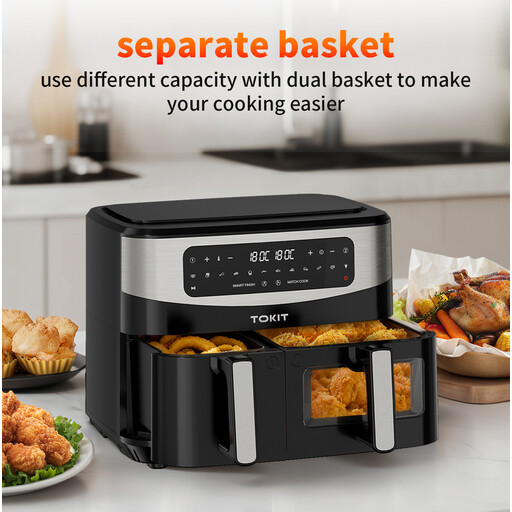
If you’d like to cook different foods at the same time, the separate compartments could come in handy. Check that your tin or scones fit in the usable area.
10 l; 220–240 V; 2,850 W; separate cooking zones with independent time and temperature settings.
 No image available
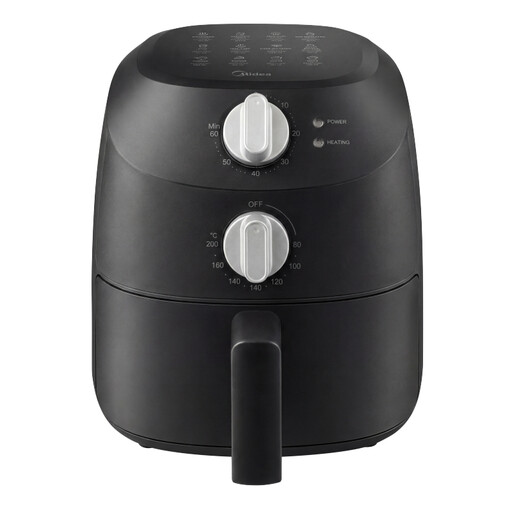
The stated 2 l capacity is worth bearing in mind for small portions. Measure the usable basket area before planning a particular arrangement of scones.
2 l; 1,150 W; non-stick, dishwasher-safe basket; 60-minute timer.
Only if you want to follow the conventional setting in the Cheddar scone recipe we checked without changing it: Good Food specifies 220 °C for a conventional oven or 200 °C for a fan oven. Follow your specific recipe and use the heating setting available on your appliance. Don’t simply apply an oven cooking time to an air fryer.
There’s no single answer. Check the positioning and clearance instructions in the manual for your specific model. The Severin TO 2052 manual also warns that surfaces you can touch may get very hot during use.
Philips doesn’t recommend using baking paper or aluminium foil in its air fryers. Covered surfaces can affect airflow, and loose paper could come into contact with the heating element. If you have a different model, follow its own instructions.
When you buy from a business seller, you’re generally entitled to a legal guarantee of at least two years from the date you receive the goods. Your Europe, the European Union’s information service, distinguishes these rights from a voluntary manufacturer’s guarantee. Which rights apply in a particular case depends on the circumstances.
No. The European Commission excludes small and portable ovens from the scope of the energy-labelling rules for household ovens. Not having an energy label doesn’t, by itself, say anything about product safety; the applicable product requirements should be considered separately.