Who needs to make this decision

Cheese with specific chilling requirements

If the packaging gives a specific storage temperature, what matters is the temperature where you plan to keep the cheese – not just the setting on the fridge dial. The German Federal Institute for Risk Assessment and the consumer advice centre recommend following the relevant storage instructions.

People using a full shared fridge

Having a clearly designated space of your own can make sharing the fridge easier. The consumer advice centre recommends using suitable cheese containers and handling cheese hygienically; it shouldn’t be wrapped completely airtight.

People short on space

If you’re adding another appliance, its capacity, footprint, door clearance and running costs all need to work for you. The consumer advice centre recommends using the energy label and energy consumption figures to compare models.

What to consider when buying

Use the existing shared fridge

A good fit if: you can agree on a space of your own and the measured temperature there matches the instructions on the cheese packaging.

The trade-off: You won’t need another appliance, but you’ll need to agree on space, cleaning and how to use it with the other people sharing the fridge.

Fridge without a freezer compartment

A good fit if: you regularly need your own chilled space for several portions or other food, and have room for an appliance.

The trade-off: Shelves and fridge space make it easier to keep your food separate, but the appliance takes up space and uses electricity all the time.

Table-top fridge with freezer compartment

A good fit if: you genuinely need a separate freezer compartment for other food as well as chilled storage.

The trade-off: The freezer compartment won’t be available for cheese portions. With the Exquisit KS16-4-E-040E, you’ll also need to allow for manual defrosting and enough space to open the door.

Very small thermoelectric cool box

Only suitable if: you can verify that the temperature meets the needs of the food you’re storing under the specific conditions in which you’ll use it.

The trade-off: A stated cooling temperature alone doesn’t prove that cheese will be stored at a suitable temperature in a warm shared kitchen.

Priority What to look for when buying Who it matters most to
Suitable chilling temperature Follow the instructions on the packaging and use a fridge thermometer to check the temperature where you plan to store the cheese. If I store cheese with specific chilling instructions, I want to be able to check the temperature where I plan to keep it. Around 36% of consumers prioritise having the right chilling conditions.
Separate, hygienic storage Check whether you can have a dedicated space and store the cheese suitably in the shared fridge. If I want to keep my portions separate and handle them hygienically in a full shared fridge, having my own space is important. Around 29% of consumers prioritise this.
Fridge capacity and space Check the usable fridge capacity, interior layout, dimensions and door clearance of the specific model; consider freezer capacity separately. If I’m considering an additional appliance, it needs to fit my portions and their containers, with enough room for the appliance and its door. Around 21% of consumers prioritise this question of size.
Energy use and noise Compare the annual energy consumption in kWh and the stated noise level of the specific model. If a fridge will run constantly in a shared kitchen, I want to weigh up its energy use and noise in advance. Around 14% of consumers prioritise these factors.

Common mistakes to avoid

  • Assuming a stated cooling temperature means cheese will be stored correctly

    A temperature you can set, or one advertised by the manufacturer, doesn’t tell you what the temperature will be where the cheese is actually kept. The German Federal Institute for Risk Assessment and the consumer advice centre point to food storage guidance and the instructions for the specific cheese.

    Follow the instructions on the packaging and check the temperature where you plan to store the cheese. If you’re considering a very small cool box, assess it under the conditions in which you’ll actually use it.

  • Always wrapping cheese airtight

    A container can help you store cheese separately, but it doesn’t solve the question of suitable chilling or hygienic handling. The consumer advice centre advises against wrapping cheese completely airtight.

    Choose a suitable cheese container and follow the instructions on the packaging for each type of cheese.

  • Comparing only capacity or energy rating

    Freezer capacity is no substitute for fridge space for cheese. If you’re adding another appliance, you also need to consider its footprint, door clearance and annual energy consumption.

    Compare the fridge and freezer capacity, interior layout, dimensions and annual energy consumption in kWh for the specific model.

Brands and models to consider

Bomann

The VS 7255 schwarz is a compact fridge with no specified freezer compartment.

  • For this model, Bomann lists 87 l, three glass shelves, 85 kWh/year and 40 dB.
  • The dial’s 0 to +8 °C range doesn’t tell you what temperature a particular shelf will reach. The appliance also needs a space of its own.

Liebherr

The Re 1200 Pure is a table-top fridge for people who want more chilled storage and a stated low noise level.

  • Liebherr lists a total capacity of 110 l, a noise level of 35 dB and an adjustable temperature range of +2 to +8 °C.
  • At 50 × 85 × 60,7 cm (W × H × D), the appliance needs to fit your available space. The adjustable range and the actual temperature aren’t the same thing.

Exquisit

The KS16-4-E-040E weiss may suit you if you need a freezer compartment as well as fridge space.

  • The product data sheet lists 95 l of fridge space, 14 l of freezer space and 139 kWh/year.
  • Allow for manual defrosting and enough space to open the door. Check the dimensions in the documentation for the specific model.

Klarstein

The Beersafe model reviewed is sold as a drinks fridge with a glass door, so it shouldn’t automatically be treated as equivalent to a household fridge for cheese.

  • For article 10047757, Klarstein lists a 47-l compressor drinks fridge with adjustable temperatures of 3–10 °C and a maximum noise level of 39 dB.
  • Drinks shelves and the adjustable temperature range don’t prove that the shelves or actual temperature are suitable for a particular portion of cheese.

Denver

The MFR-404B is a portable 4 l thermoelectric cool box.

  • Denver lists cooling down to 6 °C and space for six drinks cans.
  • The manufacturer’s stated temperature doesn’t prove that cheese will stay at a temperature that meets the packaging instructions at any room temperature.

Joybuy products for a dedicated chilled area

The Joybuy products below are compact household fridges for a separately organised chilled area. If you choose a model with an additional cool box or chiller drawer, check its suitability and stated usage limits separately.
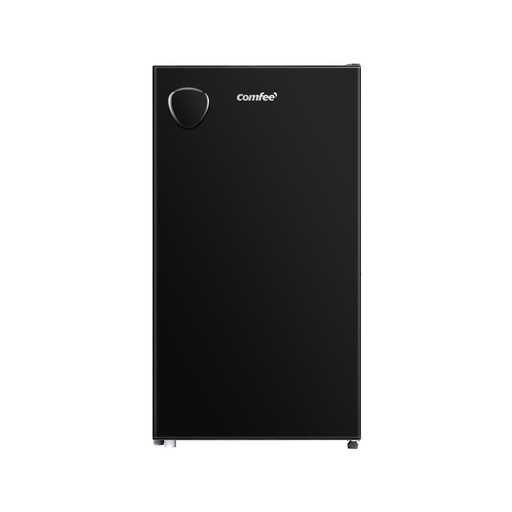
Comfee RCD92BL2EUY(E) under-counter fridge, 88 l

Comfee RCD92BL2EUY(E), 88 l

Could provide a dedicated chilled area for keeping portions separate; measure the space available first.

88 l usable capacity; removable glass shelves and an adjustable thermostat. Dimensions: 44,5 × 47 × 82,7 cm.

According to the product description, the separate chiller box is intended for short-term cooling only. Don’t store items in it for more than 2 hours.

Joybuy

TCL RF120DWE0 fridge with chiller box, 90 l

TCL RF120DWE0, 90 l

The three glass shelves give you several levels for organising food; check the temperature where you plan to store the cheese.

90 l total capacity and three glass shelves. The fridge compartment has a stated adjustable range of 0 °C to 10 °C, while the separate chiller box is rated at −5 °C to 5 °C. Dimensions: 449 × 485 × 842 mm.

The adjustable range doesn’t tell you the actual temperature on a particular shelf.

Joybuy
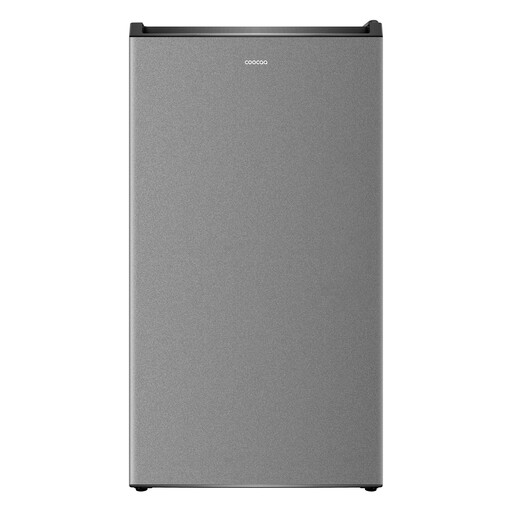
Coocaa SRS-120DTE single-door fridge, 83 l

Coocaa SRS-120DTE, 83 l

A dedicated chilled area can make it easier to keep portions separate; make sure the shelf space suits the containers you use.

83 l usable fridge capacity, temperature control, one shelf and a separate vegetable drawer. No specific temperature range is stated.

Joybuy
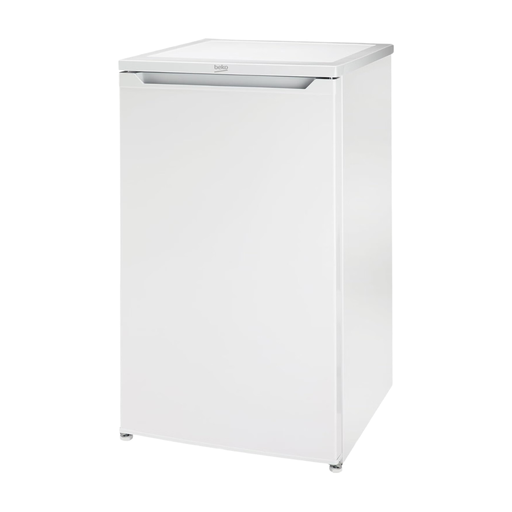
Beko TS190040N fridge, 88 l

Beko TS190040N, 88 l

The three glass shelves let you organise the fridge space; check that there’s enough room for the appliance and to open its door in your shared kitchen.

88 l total capacity, 38 dB, 85 kWh/year and automatic defrosting. Dimensions: 81,8 × 47,5 × 50 cm (H × W × D).

Joybuy
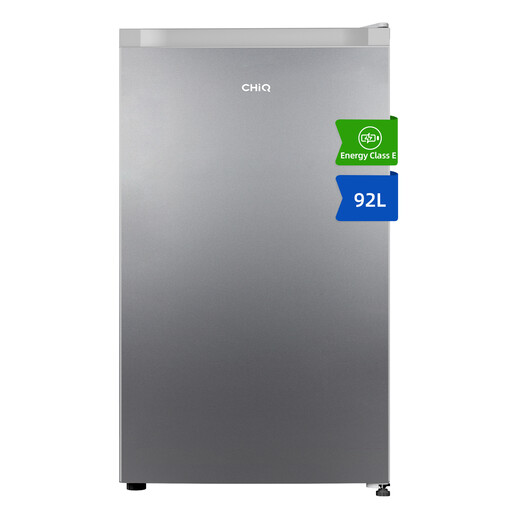
CHiQ JR92DSE fridge, 92 l

CHiQ JR92DSE, 92 l

The stated fridge capacity and adjustable glass shelves may be useful for a separately organised chilled area; check that its width fits the available space.

92 l capacity, seven temperature settings, adjustable glass shelves and a reversible door. The product information lists a width of 47 cm.

According to the product description, the separate chiller drawer is intended for short-term storage of meat, fish or similar items.

Joybuy

Frequently asked questions

Does a private shared kitchen need to use one standard fridge temperature for cheese?

Don’t apply one temperature across the board to every type of cheese. The German Federal Institute for Risk Assessment recommends 2 °C to no more than 7 °C for highly perishable foods; the consumer advice centre gives around 8 °C as a general guide for cheese and refers readers to the instructions on the packaging. Check the guidance for the specific cheese and the temperature where it’s actually stored.

How should I store opened portions of cheese in a shared fridge?

First, follow the instructions on the packaging and keep the portions separate and covered. The consumer advice centre recommends suitable cheese containers, advises against completely airtight packaging and recommends handling cheese with clean hands. Labelling your portions can make them easier to identify in a shared fridge.

What should I check before installing an additional fridge?

Measure the available space and door clearance, and follow the installation instructions for the specific model. Bomann expressly states that the VS 7255 isn’t designed to be built in; this guidance applies to that model in particular.

Which energy information and consumer rights should I check when buying?

Compare the energy label and annual energy consumption in kWh for the exact model; the European Union explains the labelling requirements for covered refrigeration appliances. When you buy, your statutory rights apply if the product is faulty. Many online purchases also come with a 14-day right to cancel, although this is separate from any voluntary guarantee. The consumer advice centre explains these consumer rights in Germany.

Can I put an old fridge in the household rubbish?

No. In Germany, waste electrical appliances are collected separately. The Federal Environment Agency lists local collection points and options for returning appliances to retailers, subject to the relevant conditions.