If you’re baking for a picnic group
If you’re planning to bake several trays, check whether the specific model is designed for baking on multiple shelves at the same time and whether you have enough suitable trays.


If you’re making several trays of cheese straws for a picnic group and have a suitable space for a built-in model, a built-in oven could be a good choice, provided its instructions specifically allow baking on multiple shelves. For smaller batches, or if you don’t have space for a built-in oven, a fan-assisted countertop oven may be suitable. What matters is the usable tray area, the installation requirements and the heating setting that suits your recipe – not just the oven’s capacity.
If you’re planning to bake several trays, check whether the specific model is designed for baking on multiple shelves at the same time and whether you have enough suitable trays.
For smaller batches and kitchens without space for a built-in oven, consider the usable tray area, the countertop oven’s external dimensions and its installation requirements.
If you use your oven regularly, compare stated energy consumption figures only when they’re based on the same testing method. The Verbraucherzentrale notes that energy consumption is particularly worth considering if you use your oven frequently.
First decide how many cheese straws you want to bake at once and how much space you have for the oven. You can then compare the heating method, accessories and energy consumption with your needs.
| What matters | What to check when buying | Who it matters most to |
|---|---|---|
| Several trays | Check whether the specific model is approved for use on multiple shelves, which shelf positions are recommended and how many suitable trays are included. Bosch and Electrolux advise following the instructions for the individual appliance. | If I’m making several trays for a group, I want to know whether my oven is designed for it. Around 36% of consumers focus mainly on baking several trays at once. |
| Space and tray area | Compare the tray and external dimensions with the length of the cheese straws and the space where you plan to put the oven. | If my kitchen is short on space, the appliance needs to fit, and the tray needs to suit the straws I’m planning to make. Around 29% of consumers prioritise space and fit. |
| Heating method and browning | Check that the oven has the fan or convection setting you need, and follow the recommended temperature and shelf position for the specific appliance. | If I’m following a particular recipe, I want to be able to control the heating method and browning. Around 21% of consumers focus mainly on the recipe and baking results. |
| Energy use and cleaning | Compare stated energy consumption figures only when they’re based on the same testing method, and check which accessories and cleaning options are available for the specific model. The European Commission explains that label figures are based on standardised baking cycles, not a single portion. | If I use my oven often, cleaning and accessories matter to me as well as electricity use. Around 14% of consumers prioritise running costs and ongoing effort. |
Long cheese straws need room and space between them. The capacity in litres doesn’t tell you the actual usable tray dimensions.
Compare the length and quantity of the straws you plan to make with the tray dimensions or the appliance’s internal dimensions. A smaller usable area may mean baking in more batches or buying another suitable tray.
The number of shelf positions doesn’t prove that several trays will bake evenly at the same time. Electrolux recommends using multiple shelves only as instructed for the specific oven.
Check the heating method and recommended shelf positions in the instruction manual, and keep an eye on how the trays are browning.
Label figures are based on standardised cycles, not on a single portion of cheese straws. What’s more, the regulations for domestic ovens don’t necessarily apply to small ovens.
Only compare energy consumption figures based on the same testing method. To work out the cost of a single bake, you’ll need the actual energy used and the electricity rate that applies to you.
A built-in option for baking several trays: Bosch Hausgeräte lists a 71 l capacity and 3D hot air on up to three levels for the HBA571BB4.
A built-in option with multi-level hot air: Siemens Hausgeräte lists a 71 l capacity and 3D hot air on up to three levels for the HB314G0S3.
A freestanding fan oven for medium-sized batches: Rommelsbacher lists a 30 l capacity for the BG 1550; according to Rommelsbacher Support, the tray measures 32,5 × 28,5 cm.
A compact countertop oven: Severin lists a 20 l capacity and a hot-air function for the TO 2068.
A small countertop oven for smaller batches: Steba lists a 19 l interior and switchable fan-assisted cooking for the KB M19.
The Joybuy products below range from built-in and freestanding ovens to compact countertop models. For cheese straws, the key considerations are the tray area, where you’ll put the oven and the heating method that suits your recipe.
 No image available
Worth considering if you’re planning several trays for a group and can have a built-in oven professionally installed.
71 l capacity, temperature range of 30–275 °C, one baking tray and 3D hot air for baking on up to three levels, according to the product description.
Check the installation dimensions and the instructions for the specific model before planning to bake several trays at once.
 No image available
A freestanding option if you’re not planning to buy a built-in oven and the tray area is large enough for your batch.
The product description lists a 28 l capacity, a temperature range of 100–230 °C, three shelf positions and the option to bake on several trays at once. Baking accessories are also listed.
Only use multiple levels if the instructions for the specific appliance and your recipe allow it.
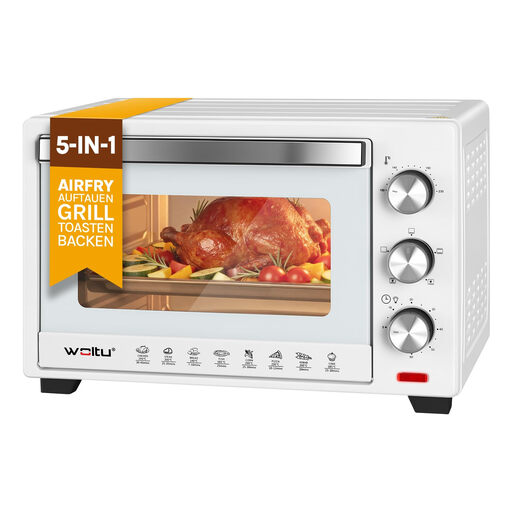
 No image available
May suit smaller batches if you’re looking for a compact countertop appliance with a viewing window.
The product title lists a 15 l capacity, 1400 W and 360° fan-assisted heating; the description also mentions a viewing window.
Check the usable area before planning how much to make for a picnic group.
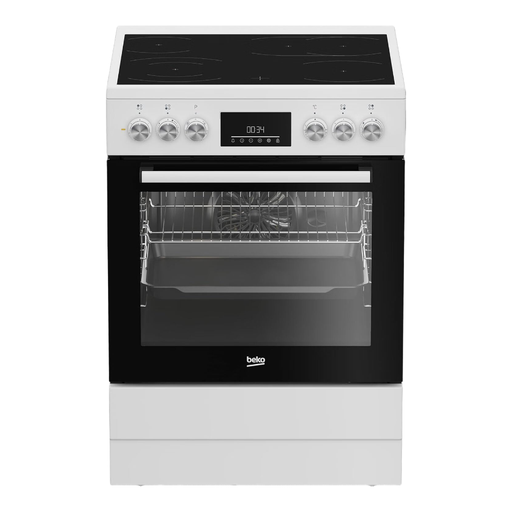 No image available
A freestanding option if you’re looking for a larger appliance and have a suitable space for it and access to professional installation.
The product description lists a 72 l capacity, eight heating functions, fan-assisted cooking with a ring heating element and enamelled baking trays.
According to the product description, the appliance must be connected by a qualified professional.
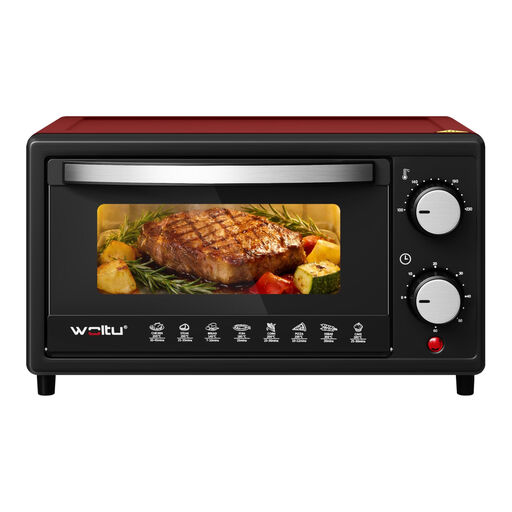 No image available
For smaller batches when a compact countertop appliance is all you need. The product description recommends it for one or two people, so it may be too small for a picnic group.
The product details list a 10 l capacity, a temperature range of 100–230 °C, a timer and a baking tray.
Only if the instructions for the specific oven allow the pastry to be baked on multiple shelves. Use the recommended shelf positions and check how the trays are browning. A manufacturer’s claim such as ‘up to three levels’ doesn’t guarantee the same result on every tray.
Follow your recipe and the heating method you’ve chosen. A Good Food recipe for puff pastry cheese straws recommends 220 °C with conventional heat or 200 °C with a fan oven, for about 12 minutes. Other types of pastry, quantities and appliances may need different settings.
For a built-in oven, compare the dimensions of the space with those of the specific appliance. For a countertop oven, check its external dimensions and the installation requirements in the instruction manual. Also check which trays and cleaning functions are actually included with that model.
It depends on the ingredients and filling. For plain, fully cooled puff pastry cheese straws, a Good Food recipe recommends storing them in an airtight container. If they contain ingredients that need chilling or are perishable, the Bundesinstitut für Risikobewertung recommends keeping them as cold as possible until you’re ready to eat them. Use a cool box for longer journeys in summer.
For ovens covered by the regulations, the label includes information such as the capacity and energy consumption in kWh per standardised baking cycle, for both conventional and fan-assisted heating. According to the European Commission, small ovens aren’t necessarily covered by the same regulations. The label figure doesn’t measure the energy used to bake your individual portion of cheese straws.