For small batches and kitchens without space for a built-in appliance, a freestanding fan-assisted mini oven is an obvious option. The key things to check are the usable baking tray area and how much room it needs. If you regularly prepare several lunchboxes at once, a built-in oven with clearly specified multi-level fan cooking may be a better fit, provided the cavity, accessories and instructions are suitable. Compare the stated energy consumption rather than relying on capacity or wattage alone; figures for standardised baking cycles don’t automatically tell you how much energy one batch of cheese straws will use.
Which type of oven is right for you?
If you’re preparing several lunchboxes
If you want to bake as many cheese straws as possible in one go, compare the usable baking tray area and check whether the instructions allow you to bake on several shelves at once. Siemens specifies 3D hot air on up to three levels for the HB572ABS3, but that doesn’t guarantee even browning on every level.
If you bake occasionally and have limited kitchen space
A freestanding appliance could suit you for smaller batches, provided the baking tray and the space it takes up work in your kitchen. The appliance dimensions alone won’t tell you how much room you need to open the door or what the individual model’s installation instructions require.
If you bake on weekdays and are short on prep time
If you want to plan the baking process carefully, look for a fan setting that suits your recipe, preheating and easy-to-use timer functions. The REWE recipe calls for a preheated fan oven at 180 °C, followed by a baking time of 10–15 minutes.
What should you look for when buying?
Built-in oven with multi-level hot air
A good fit if: You regularly prepare several trays and have a suitable built-in space. Siemens specifies 3D hot air on up to three levels for the HB572ABS3.
Things to consider: Check the cavity dimensions, compatible trays and the instructions. A multi-level cooking specification doesn’t automatically guarantee even results for cheese straws.
Freestanding fan-assisted mini oven
A good fit if: You tend to bake smaller batches or several batches one after another, and don’t want to use built-in space.
Things to consider: Capacity and the number of shelf positions alone don’t tell you how many shaped straws will fit on the tray or whether using two trays at once is suitable.
The REWE recipe calls for a preheated fan oven at 180 °C and a baking time of 10–15 minutes. So consider the usable space and the recommended oven settings together.
| Priority |
What to check when buying |
Who it matters most to |
| Batch size |
Check the tray dimensions and how many suitable trays there are; if you’re using several levels, follow the instructions. |
If I’m preparing several lunchboxes, I want to bake as many straws as possible in one go. Around 36% of consumers put potential batch size first. |
| Kitchen space |
Check a countertop appliance’s external dimensions and placement instructions, or the cavity dimensions for a built-in oven. |
If I have limited worktop space, the appliance needs to fit in the space available in my kitchen. Around 29% of consumers prioritise the space available for a countertop or built-in appliance. |
| Plannable baking time |
Check the fan setting, temperature range, timer and, where applicable, rapid preheating against your recipe and the instruction manual. |
If the snack needs to be ready on a weekday, I want to be able to plan the preheating and baking time. Around 21% of consumers particularly value a process they can plan around. |
| Energy use and cleaning |
For appliances with an energy label, compare consumption per standard cycle and check the cleaning instructions and any removable parts. |
If I bake regularly, I want to keep energy use and cleaning effort in mind. Around 14% of consumers put these ongoing considerations first. |
Common buying misconceptions
-
A high litre capacity means there’s plenty of room for cheese straws
The oven capacity and number of shelf positions alone won’t tell you how many shaped straws will fit on a tray. Larger batches may need to be baked in several rounds.
Compare the dimensions of the supplied tray and check whether additional compatible trays are available. Only count on baking several trays at once if the instructions allow it for your chosen heating function.
-
The casing dimensions are all you need to plan space for a countertop oven
As well as the space taken up by the appliance, you’ll need to allow for the door opening and follow the placement requirements in the instructions.
Measure the space you have in mind and compare it with the dimensions for the specific model and its instruction manual.
-
Wattage or an energy label tells you how much energy a batch of cheese straws will use
For ovens with an energy label, the stated consumption is based on a standard cycle, not this recipe. The rated power also isn’t a measure of energy use per batch.
Only compare declared consumption figures when they’re based on the same test conditions, and don’t treat them as the exact electricity cost for one batch.
A guide to relevant brands
Siemens
The HB572ABS3 built-in oven is an example to consider when checking multi-level hot air and rapid preheating.
- Siemens Hausgeräte DE specifies 3D hot air on up to three levels and a rapid preheating function.
- These specifications don’t guarantee evenly browned cheese straws on every level or that additional trays are included.
Bosch
The HBF133BR0 built-in oven is a useful reference when checking heating functions, cavity dimensions and the accessories included.
- Bosch Hausgeräte DE specifies hot air, a 66 l oven capacity, built-in dimensions and a supplied universal tray.
- These details don’t tell you how many trays are suitable for baking cheese straws at the same time.
Rommelsbacher
The freestanding BG 1805/E is an example that sits between a compact countertop oven and a built-in appliance.
- Rommelsbacher specifies a 42 l capacity, fan-assisted heating functions and a removable crumb tray. Its support team gives the original tray’s external dimensions as 38,5 × 31,5 cm.
- Four shelf positions alone don’t guarantee that several trays of cheese straws can be baked at once.
CASO Design
The freestanding TO 26 SilverStyle is an example to consider when checking internal dimensions and features for smaller batches.
- CASO Design specifies a 26 l capacity, fan function, internal dimensions of 350 × 200 × 300 mm, a supplied baking tray and a removable crumb tray.
- Three shelf positions alone don’t guarantee suitable baking results when using several trays.
Severin
The TO 2068 is a compact freestanding fan oven, for smaller batches.
- Severin specifies a 20 l capacity, a hot air function, a timer, and a width and depth of 44 × 39 cm.
- The appliance dimensions don’t automatically account for the full amount of space needed where it will be placed.
Suitable products at Joybuy
This selection includes built-in ovens and freestanding appliances, as well as a combination appliance with an air fryer and pizza oven. For each model, check whether the heating function, baking area and instructions suit your batches of cheese straws.
 No image available
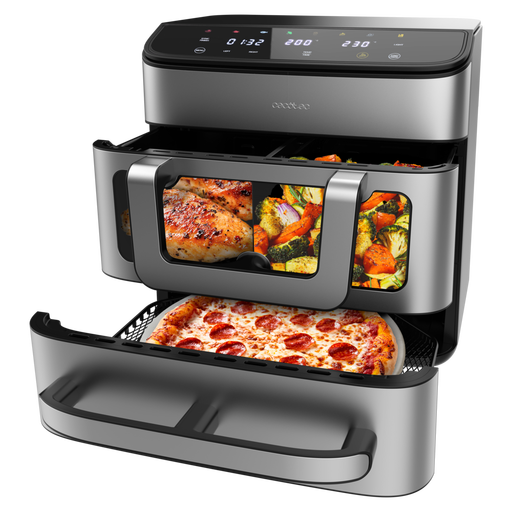
Cecotec Cecofry FoodCourt 18000 4Pizza Air Fryer, 18 l
This model combines an air fryer and pizza oven, so it’s not a conventional built-in oven. Check whether the baking area is suitable for your cheese straws.
Specifications listed in the product name: 2700 W, maximum 230 °C, a 9-l divider compartment with 200 °C, a 30 cm pizza oven, pizza stone and Sync function.
Joybuy
 No image available
Bosch HBA571BB4 Series 2 built-in oven, 71 l
This built-in model could be an option if you have a suitable cavity and are considering using several trays. Check the instructions for the recommended heating function and shelf positions.
Specifications listed in the product name: 71 l, 3D hot air, pyrolytic self-cleaning, AutoPilot with 10 programmes and LED touch controls.
According to the product information, installation by a qualified professional is required.
Joybuy
 No image available
Bosch HBG578ES3 Series 6 built-in oven, 60 cm
This built-in oven is worth considering if you’re looking at multi-level cooking and have a suitable cavity. Check the instructions against your recipe and the appliance requirements.
Specifications listed in the product name: 3D hot air, AirFry and a steel finish.
According to the product information, the oven must be installed professionally.
Joybuy
 No image available
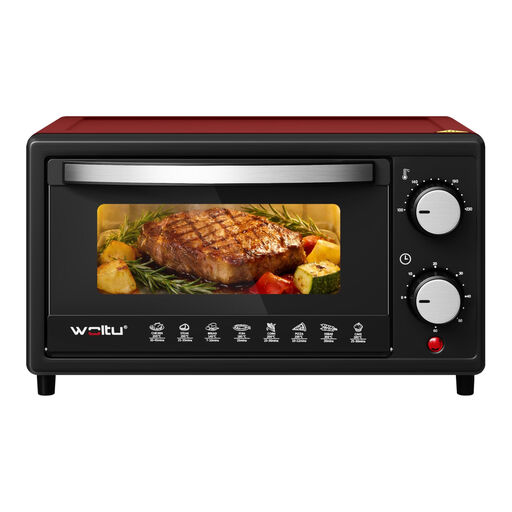
WOLTU mini oven with pizza function, 10 l, red
This compact countertop appliance could be worth considering for small batches. Check that the usable baking area will fit your shaped straws.
Specifications listed in the product name: 10 l and a temperature range of 100–230 °C.
Joybuy
 No image available
WOLTU mini fan oven, 28 l, black
This freestanding fan oven is an option to consider for smaller batches. For baking several trays at once, follow the instruction manual.
Specification listed in the product name: 28 l.
Joybuy
Frequently asked questions
Do I always need to preheat the oven for cheese straws?
Not necessarily. The REWE recipe calls for a preheated fan oven at 180 °C, followed by a baking time of 10–15 minutes. Follow the specific recipe and your oven’s instructions. The European Commission recommends preheating when the recipe or instruction manual calls for it.
Can I use two trays at once in a mini oven?
The number of shelf positions alone won’t tell you. Check the instructions for your specific model to see whether the chosen fan setting and using two trays at once are recommended for similar baked goods, and whether a second compatible tray is available.
Can I compare the energy label for a countertop oven directly with one for a built-in oven?
Not necessarily. The European Commission says small ovens are outside the scope of the relevant oven energy labelling rules, so check whether the specific appliance is covered. For labelled ovens, the cavity capacity and kWh figure relate to a standardised cycle, not directly to a small batch of cheese straws.
How can I keep cheese straws safe in a lunchbox?
Let the baked goods cool before packing them. Whether they need to be kept chilled depends on factors such as the ingredients, storage time and transport conditions. The German Federal Institute for Risk Assessment recommends keeping perishable foods as cold as possible until they’re eaten, including during transport.


