
Lieferung heute & morgen

Qualitätsgarantie

Willkommens-Angebote freischalten: KOSTENLOSE Lieferung | Bis zu 80 % RABATT | Kostenlose 30-Tage-JoyPlus-Testphase
App herunterladen
A good chef's knife is the central tool in any kitchen. Yet, when it comes to buying a kitchen knife, many face a confusing array of choices and marketing promises that often obscure more than they clarify. The wrong decision not only leads to frustration in the kitchen but also to unnecessary expenses. This guide will help you navigate the common pitfalls and make an informed choice.
As a Joybuy Product Recommendation Officer, I'm here to analyse the facts and show you which features truly matter.
Before we dive into the important quality characteristics, let's look at the most widespread misconceptions that often lead to a poor purchase.
To find a durable and high-performance sharp kitchen knife, you should focus on three core aspects.
The quality of the steel determines how sharp a knife can get, how long it holds that sharpness (edge retention), and how resistant it is to rust.
The two most common shapes for an all-purpose knife in the kitchen are the classic chef's knife and the Santoku knife.
The handle is the interface between you and the blade. Its shape and material are crucial for safe and comfortable handling.
Based on these criteria, we have selected a few products from our range that are suitable for different needs.
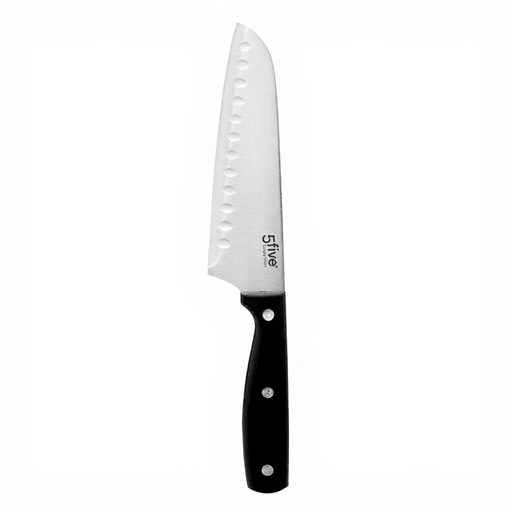
Why it's a match: Ideal for anyone looking for a versatile and reliable everyday knife without a large budget. The Santoku shape is suitable for a wide range of cutting tasks, from vegetables to meat.
This knife forgoes a misleading Damascus look and focuses on functional features: a stainless steel blade and a lightweight yet robust ABS handle that ensures good balance.
Lightweight and balanced design for fatigue-free work; low-maintenance and hygienic plastic handle.
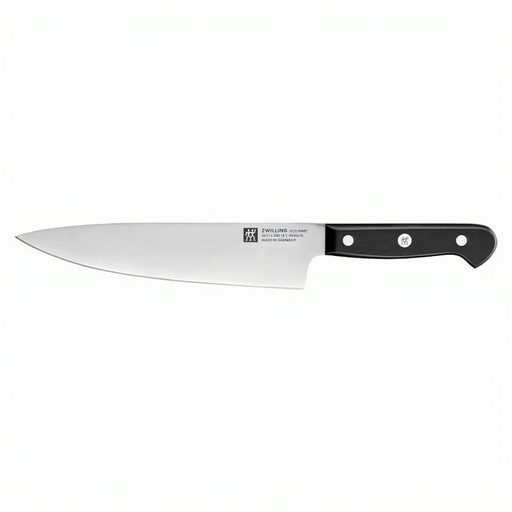
Why it's a match: A classic Zwilling chef's knife that serves as a workhorse for anyone who cooks regularly and values durability and performance. The 20 cm blade is the universal standard for almost any task.
Zwilling uses a clearly specified, ice-hardened FRIODUR special steel, thus avoiding the trap of vague material promises. The classic three-rivet design ensures excellent balance and stability.
Ice-hardened blade for long-lasting sharpness and corrosion resistance; ergonomic handle with a classic three-rivet design for a secure grip.
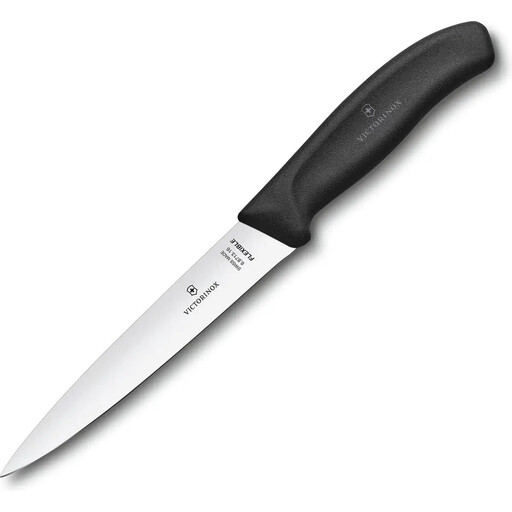
Why it's a match: For tasks like filleting fish or boning meat, a specialized tool is required. The narrow, flexible blade of this Victorinox knife allows for precise cuts along bones and skin.
This knife is a purpose-built tool and doesn't try to be a jack-of-all-trades. Its value lies in its specialized blade shape and flexibility—qualities often overlooked when choosing a single all-purpose knife.
Flexible blade for precise filleting and boning; non-slip, ergonomic handle for a secure grip even in wet conditions.
We have compiled a complete, up-to-date list of products that fully meet these strict selection criteria.
It's important to distinguish between honing and sharpening. Honing with a honing steel realigns the fine edge of the blade and should be done regularly, ideally before each intensive use. Sharpening on a whetstone removes material to form a new edge. This is only necessary when the knife is no longer sharp even after honing, which, depending on frequency of use, might be every few months to once a year.
That depends on your preferred cutting technique. If you like to use the rocking chop technique, where the tip of the knife stays on the board, a chef's knife with its curved blade is the better choice. If you prefer chopping and straight, pulling cuts, you will likely be more comfortable with a Santoku knife. For many, it's a matter of personal preference.
Even if some manufacturers declare their knives as dishwasher-safe, it is generally not recommended. The aggressive detergents, high temperatures, and contact with other dishes can dull the blade and damage the handle material (especially wood). The gentlest and recommended method is to quickly clean it by hand with warm water and a mild detergent immediately after use.