
Lieferung heute & morgen

Qualitätsgarantie

Willkommens-Angebote freischalten: KOSTENLOSE Lieferung | Bis zu 80 % RABATT | Kostenlose 30-Tage-JoyPlus-Testphase
App herunterladen
A high-quality chef's knife is the central tool in any serious home kitchen. But the market is overwhelming and filled with marketing promises that often obscure more than they clarify. Misleading material specifications or exaggerated features can easily lead to a purchase you'll regret. As your Joybuy Product Recommendation Officer, I'll help you identify the crucial quality indicators and avoid the common pitfalls of buying a knife.
Before we dive into the important parameters, let's debunk three common marketing traps that often lead to disappointment.
To find a durable and functional kitchen knife, you should focus on three core aspects instead of being swayed by marketing slogans.
The blade steel is the foundation for sharpness, edge retention, and corrosion resistance. Renowned German manufacturers like Zwilling or WMF often use specially developed steel alloys.
The shape of the blade determines its intended use, while its construction indicates its stability and longevity.
A good knife should feel like an extension of your hand. The handle must provide a secure and comfortable grip, even during extended use. The balance is crucial: the center of gravity should ideally be where your index finger grips the transition from handle to blade. This allows for fatigue-free and controlled handling.
Here are some recommendations tailored to specific needs and use cases that meet the quality criteria mentioned above.
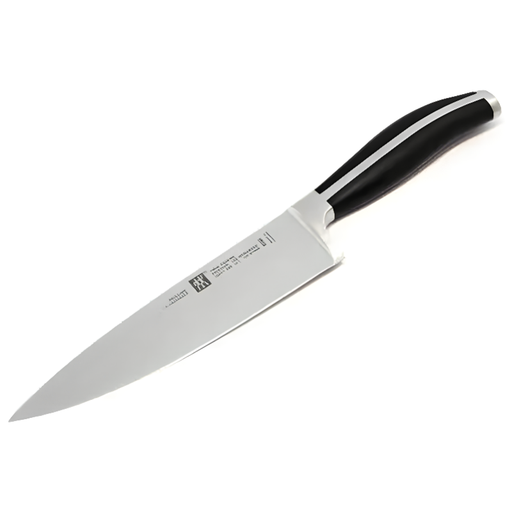
Why This Fits Their Persona: Ideal for users seeking a versatile, durable, and well-balanced chef's knife for daily tasks. The classic 20 cm blade masters cutting meat, fish, and vegetables with the typical rocking-chop technique.
This is a genuine forged knife from Solingen, whose quality is based on its construction (SIGMAFORGE) and material (FRIODUR ice-hardening), not an empty "professional" label.
The full tang provides exceptional balance and stability. The seamless construction between the handle and blade is hygienic and easy to maintain.
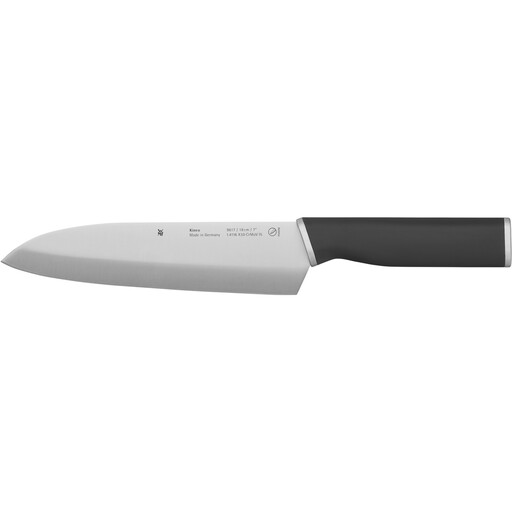
Why This Fits Their Persona: Perfect for chefs who frequently prepare vegetables for stir-fries or fish for sushi. The shape of the Santoku knife allows for precise, fine cuts and efficient processing.
This WMF knife relies on proven technology ("Performance Cut") rather than a purely aesthetic Damascus look. The hardness of 55-58 HRC is optimally balanced for home use.
The "Performance Cut" technology specified by WMF ensures long-lasting sharpness. The ergonomic handle and modern design offer high functionality and excellent handling.
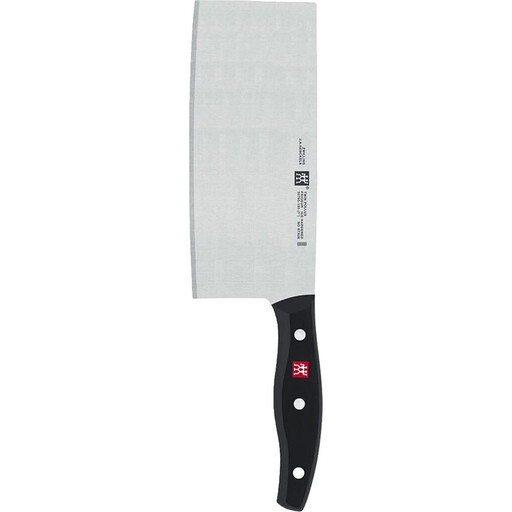
Why This Fits Their Persona: For chefs who need to process large quantities of vegetables quickly and efficiently. The Chinese chef's knife is a powerful tool that stands out from other knife types with its wide blade.
This knife is a specialized tool for a clear purpose, not a generic all-purpose knife. Its quality is guaranteed by the ice-hardened special steel from Zwilling.
The wide blade surface is ideal not only for cutting but also for scooping and transferring ingredients. The ergonomic, triple-riveted handle ensures secure handling.
We have compiled a complete, up-to-date list of products that fully meet these strict selection criteria and German safety regulations.
1. How often does a high-quality chef's knife need to be sharpened? The frequency depends heavily on usage. For regular household use, it's recommended to hone the blade weekly with a honing steel to maintain the fine edge. A fundamental resharpening on a whetstone is typically required every 6 to 12 months to restore its original sharpness.
2. Is a knife from Solingen automatically high-quality? The "Solingen" designation of origin is legally protected and stands for high manufacturing standards, as essential production steps must take place in the "City of Blades." Brands like Zwilling have significantly shaped the reputation of Solingen knives. It is a strong indicator of quality, but you should still always check the specific product features, such as the type of steel and construction method (e.g., whether it is a forged knife).
3. What is the difference between a carving knife and a chef's knife? A carving knife (or slicer) typically has a longer, narrower, and often more flexible blade than a chef's knife. This shape allows for precise, clean slices of roasts or poultry without tearing the meat. A chef's knife is broader and more rigid, making it a more versatile tool for a wider range of cutting tasks like chopping and dicing.