
Lieferung heute & morgen

Qualitätsgarantie

Willkommens-Angebote freischalten: KOSTENLOSE Lieferung | Bis zu 80 % RABATT | Kostenlose 30-Tage-JoyPlus-Testphase
App herunterladen
An unsuitable or dull knife can make food preparation tedious and imprecise. Choosing the right chef's knife is crucial for efficiency and enjoyment in the kitchen. This article serves as a guide, presenting objective criteria to help you find the perfect knife for your needs. We will examine material properties, blade shapes, and specific models to provide you with a solid basis for making an informed purchase.
The choice of a knife should be based on functional aspects. Three key criteria help to objectively evaluate a knife's characteristics.
The blade material significantly determines the knife's sharpness, edge retention, and maintenance requirements. The most common materials are stainless steel and carbon steel.
The shape of the blade is optimized for specific cutting techniques.
A well-balanced knife sits securely in the hand and allows for fatigue-free work. A full tang, where the steel of the blade runs through the entire handle, is a hallmark of stability and good weight distribution. The handle itself should be made of a durable material and have a shape that provides a firm and comfortable grip.
Based on the criteria mentioned, we have compiled a selection of knives that cater to different needs and cooking styles.
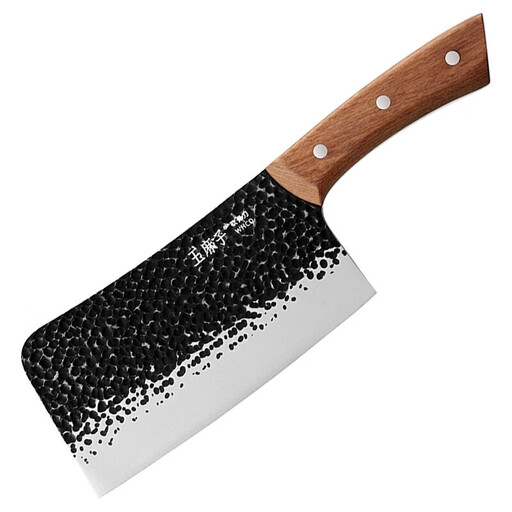
Why It Stands Out This Chinese chef's knife combines traditional design with functional materials. The carbon steel blade allows for exceptional sharpness, while the full tang construction ensures balance and longevity.
Key Features
Who It's For For cooks who appreciate traditional Chinese cuisine and are looking for a specialized tool for the precise preparation of vegetables and boneless meat.
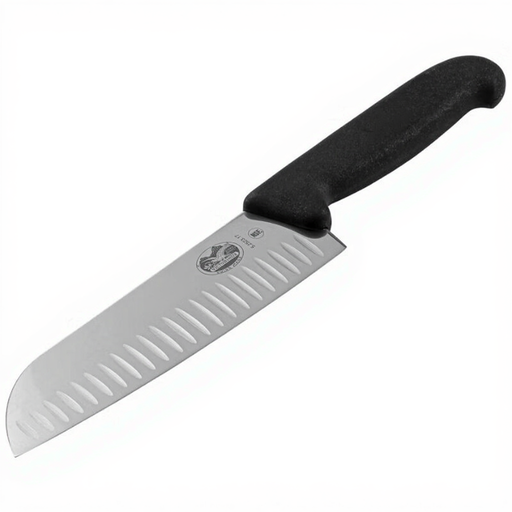
Why It Stands Out The Santoku knife from Victorinox is a functional and low-maintenance all-purpose knife. The hollow edge on the blade creates air pockets that reduce sticking when cutting thin slices.
Key Features
Who It's For For users looking for a versatile and low-maintenance knife for daily kitchen use, from home cooks to professionals.
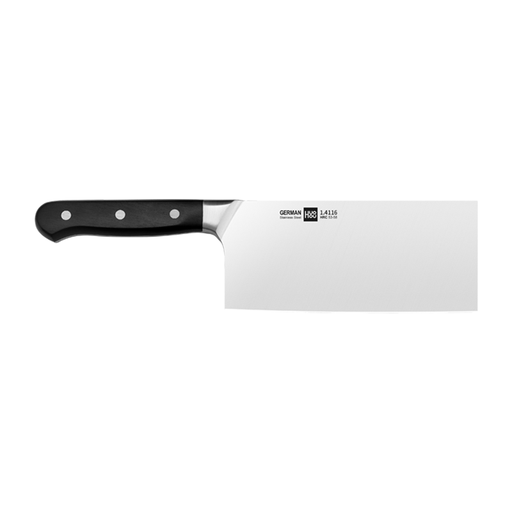
Why It Stands Out This knife is positioned as a professional chef's knife due to its use of German steel and precision craftsmanship. The seamless transition from blade to handle enhances hygiene.
Key Features
Who It's For For cooks who seek a durable and hygienic knife with professional-grade features and who value precise cutting results.
The selection presented here covers common applications. However, if you are looking for more specialized blades, such as a carving knife or other types of knives, you can find more models in our Utility Knives category. A wider selection is available there to meet diverse needs.
The main difference lies in the blade shape and the associated cutting technique. The classic chef's knife has a curved blade suitable for a rocking chop. The Santoku knife has a straighter edge and a rounded tip, making it ideal for chopping and pulling cuts.
To keep a kitchen knife sharp, it should be regularly honed with a honing steel or sharpened on a whetstone. Avoid cutting on hard surfaces like stone, glass, or ceramic, as these can damage the blade. Hand washing is recommended to protect the cutting edge.
A high-quality professional chef's knife is distinguished by several features: a blade made of quality steel (e.g., German steel or Japanese carbon steel), a full tang construction for good balance, an ergonomic and durable handle, and a precisely ground, long-lasting sharp edge.