
Lieferung heute & morgen

Qualitätsgarantie
App herunterladen
Kategorien
Selecting a chef's knife is a decision that should be based on technical parameters and its intended application. A sharp chef's knife is the central tool in any kitchen, and its performance is determined by the interplay of blade material, grind, balance, and ergonomics. Whether a single professional chef's knife or a complete kitchen knife set is the appropriate choice depends on individual requirements for functionality and maintenance.
Evaluating a chef's knife requires the consideration of objective criteria. These factors determine the tool's cutting performance, durability, and maintenance requirements.
The blade material is crucial for sharpness, edge retention, and corrosion resistance.
The grind determines how effortlessly a blade glides through food. A more acute grinding angle (e.g., 15-17 degrees per side) results in an extremely sharp edge, ideal for precise cuts. A larger angle makes the edge more robust and durable.
Some systems integrate the sharpening process directly into storage. A self-sharpening knife block incorporates ceramic sharpening stones in the knife slots, which hone the blade at the correct angle each time it is inserted and removed. This maintains the basic sharpness over a long period.
The handle influences control, safety, and comfort during use.
The knife's balance—the point where the weight of the blade and handle is evenly distributed—is crucial for fatigue-free handling.
Based on an analysis of specifications and functional design, we present two different concepts.
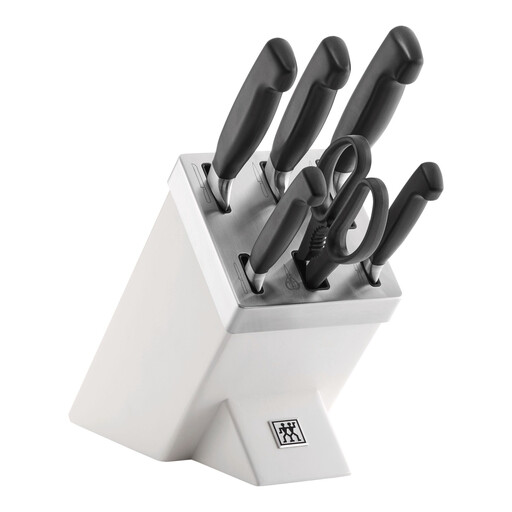
Why We Recommend It This set addresses a key challenge in the kitchen: consistently maintaining knife sharpness. The self-sharpening knife block with KIS technology automatically sharpens the straight-edged knives with every use. The forged blades of the Four Star series, made in Germany, offer proven quality and durability. With five different knife types and a pair of multi-purpose shears, the set covers the most common cutting tasks.
Advantages
Who It's For This set is designed for quality-conscious home cooks seeking a comprehensive, durable, and low-maintenance solution for their kitchen. It is ideal as a starter set or as an upgrade for those who value lasting sharpness without the manual effort.
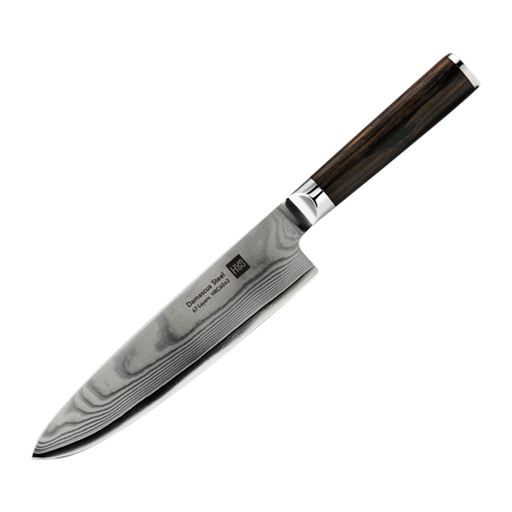
Why We Recommend It This chef's knife focuses on maximum cutting performance through specialised materials and traditional craftsmanship. The blade is crafted from 67-layer Damascus steel with a 90Cr14MoV steel core, ensuring high hardness and excellent edge retention. The hand-honed 16-degree edge angle allows for extremely fine and precise cuts. The ebony handle provides a comfortable feel and a balanced weight distribution.
Advantages
Who It's For This knife is aimed at ambitious home cooks and professionals looking for a specialised tool for demanding cutting tasks. It is the right choice for users who value traditional manufacturing, high-quality materials, and superior sharpness, and are prepared to perform the necessary maintenance (hand-washing, regular honing).
For users seeking a wider selection of Damascus steel blades or specific knife shapes for specialised tasks, our category offers an overview of various models. Here you will find an expanded collection of individual knives and sets.
Discover more Damascus Kitchen Knives.
1. What are the fundamental characteristics of a good chef's knife? A good chef's knife is defined by three main features: a blade made of high-quality steel that allows for high sharpness and edge retention, a good balance between the blade and handle for fatigue-free use, and an ergonomic handle shape that ensures a secure and comfortable grip.
2. How do you properly care for a Damascus knife? A Damascus knife should be cleaned by hand with a mild detergent and a soft cloth immediately after use, and then dried thoroughly. It must not be placed in the dishwasher, as harsh detergents and high temperatures can damage both the blade and any wooden handle. To maintain its sharpness, the blade should be regularly honed on a honing steel or a fine-grit whetstone.
3. Is a knife set or a single chef's knife the better choice? For beginners or for outfitting a new kitchen, a knife set is often the more practical and cost-effective solution. It provides a uniform aesthetic and covers the basic cutting tasks. A single, high-quality chef's knife is a worthwhile investment for experienced cooks who want to specifically add a specialised primary tool to their existing collection or replace a worn-out knife.