
Lieferung heute & morgen

Qualitätsgarantie

Willkommens-Angebote freischalten: KOSTENLOSE Lieferung | Bis zu 80 % RABATT | Kostenlose 30-Tage-JoyPlus-Testphase
App herunterladen
A good chef's knife is the cornerstone of any kitchen. But the market is overwhelming: marketing promises of indestructible sharpness and exotic materials make choosing difficult. Many home cooks invest in knives that prove to be impractical, high-maintenance, or simply unsuitable for everyday use. As your Joybuy Product Recommendation Officer, I'll help you identify the crucial features and avoid common purchasing traps.
Before we dive into the important parameters, let's look at the three most common mistakes that lead to disappointment and unnecessary expense.
To avoid a bad purchase, focus on three verifiable criteria that determine the performance and longevity of a chef's knife.
The quality of the steel is crucial for a permanently sharp kitchen knife. Renowned manufacturers like Zwilling, a heritage company from Solingen, use a special proprietary steel blend. A key process is ice-hardening, such as Zwilling's FRIODUR method. Here, the steel is rapidly cooled after heating, which refines its molecular structure. The result is a blade that is simultaneously hard, flexible, and extremely corrosion-resistant. Look for such specifications instead of being guided by generic terms.
A knife's sharpness is determined not only by the material but also by the grinding angle. A more acute angle (e.g., 15 degrees per side) provides high initial sharpness but can be more delicate. A slightly larger angle makes the cutting edge more robust. Technologies like the "V-Edge" grind guarantee a precise and uniform angle along the entire length of the blade, which optimises cutting performance and simplifies resharpening.
A good chef's knife is an extension of your hand. The balance between the blade and the handle is central to this. The transition from the blade to the handle (the bolster) should be seamless to allow for hygienic cleaning and to serve as a finger guard. The handle itself must provide a secure grip, even when wet. Ergonomically shaped handles made of high-quality plastic or wood reduce fatigue during prolonged cutting tasks.
Instead of making a one-size-fits-all recommendation, we have selected products that match specific user profiles and their needs.
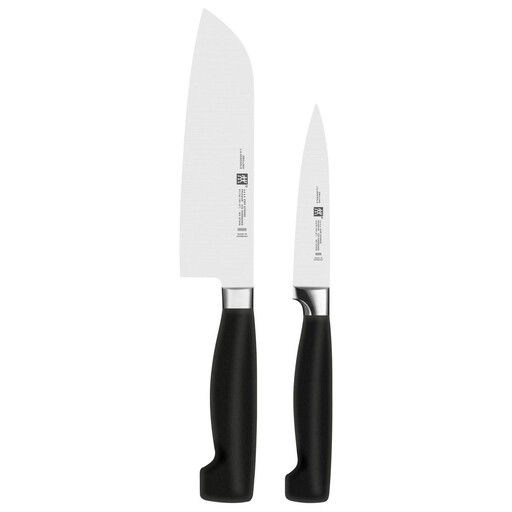
Why This Fits Their Persona: Ideal for home cooks looking for a solid foundation to handle 90% of all kitchen tasks. This knife set covers the most important areas with a chef's knife and a paring knife, without cluttering the knife block with unnecessary specialty blades.
Instead of relying on an impractical "miracle steel," this Zwilling chef's knife uses a proven, ice-hardened special formula alloy. It offers an excellent balance of sharpness, durability, and easy maintenance.
The seamless transition from bolster to handle ensures perfect ergonomics and hygiene. The knives are well-balanced, allowing for fatigue-free work.
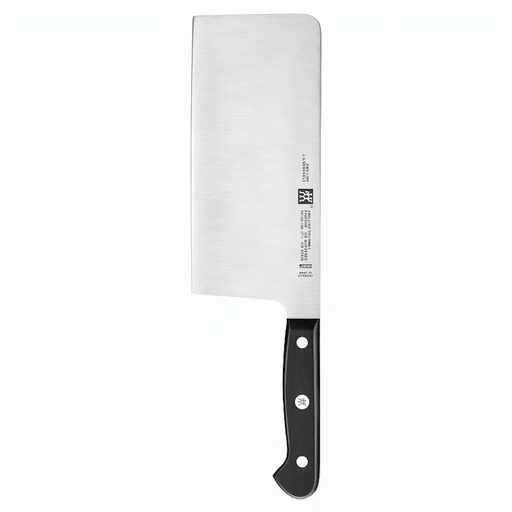
Why This Fits Their Persona: Perfect for anyone who loves chopping vegetables, herbs, and meat for wok dishes or curries. The wide blade of this Chinese chef's knife is excellent for chopping and for scooping up ingredients to transfer to the pan.
This knife avoids the trap of poor balance. Despite its wide blade, it is lightweight at 343 grams and perfectly balanced, enabling fast, precise chopping without wrist fatigue.
The ice-hardened FRIODUR blade offers high corrosion resistance and long-lasting sharpness. The ergonomic, triple-riveted handle ensures secure and comfortable handling.

Why This Fits Their Persona: A great choice for novice cooks or for a first apartment. This knife offers reliable performance for everyday cutting tasks without breaking the bank.
It bypasses the vague "stainless steel" promise by offering a titanium-reinforced non-stick coating. This provides additional protection for the blade and makes cleaning easier, which is especially practical for beginners.
The ergonomic handle with a soft-touch surface provides a very secure and comfortable grip. The included protective blade sheath ensures safe storage.
Whether you're looking for a versatile vegetable knife, a sturdy bread knife, or a complete set, focusing on material quality, craftsmanship, and ergonomics will protect you from disappointment.
We have compiled a complete, real-time list of products that fully satisfy these strict selection criteria and UK safety regulations.
The frequency heavily depends on use and care. With daily use, a high-quality steel knife should be honed with a honing steel every few weeks to realign the blade's edge. A full resharpening on a whetstone is only necessary once or twice a year, depending on the steel quality and how it's used.
The "Solingen" designation of origin is legally protected and stands for high manufacturing standards throughout the entire production chain. Knives from Solingen, like those from Zwilling, undergo strict quality controls. However, this doesn't mean every Solingen knife is ideal for every purpose. The quality of the steel, the craftsmanship, and the ergonomics of the specific model remain the decisive factors.
Both materials have their place.