
Lieferung heute & morgen

Qualitätsgarantie

Willkommens-Angebote freischalten: KOSTENLOSE Lieferung | Bis zu 80 % RABATT | Kostenlose 30-Tage-JoyPlus-Testphase
App herunterladen
The search for the right kitchen knife can quickly become overwhelming. The market is filled with a multitude of models, materials, and marketing promises. But not every expensive or heavily advertised knife is a worthwhile investment. Many buyers only realise after some time that their new tool quickly becomes dull, is uncomfortable to hold, or is unsuitable for daily tasks.
As your Joybuy Product Recommendation Officer, I'll help you navigate the common pitfalls. Instead of falling for exaggerated marketing claims, we will focus on the objective criteria that define a great knife.
To make an informed decision, you should examine three technical aspects. These will give you a reliable basis for objectively evaluating the quality of a kitchen knife.
The steel determines how sharp a knife can get and how long it holds that edge.
The shape of the blade is crucial to its function. A knife set with various types is often more practical than a single knife.
The handle affects both safety and comfort.
Here are some recommendations tailored to specific user profiles and the quality criteria mentioned above.
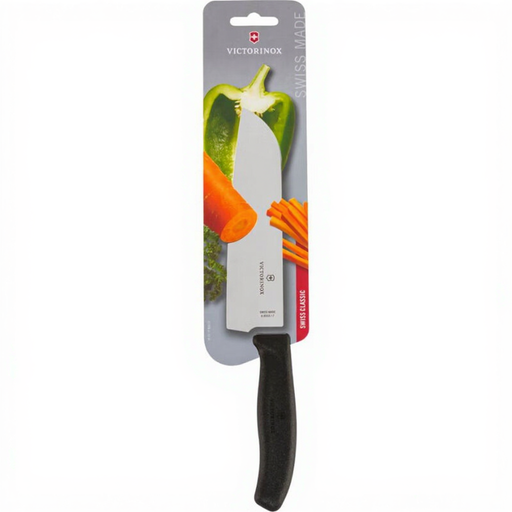
Why This Fits Their Persona: An excellent choice for daily use. This Santoku knife is versatile enough for vegetables, meat, and fish, and comes from a brand known for its durability and reliability. Its low-maintenance character makes it ideal for anyone looking for a straightforward yet effective tool.
It is clearly positioned as a Santoku knife, not a vague "all-in-one" tool. The materials—stainless steel and a robust synthetic handle—are transparently declared and designed for practicality.
Good balance and an ergonomic handle ensure safe handling. According to the manufacturer, it is dishwasher-safe, which simplifies cleaning.
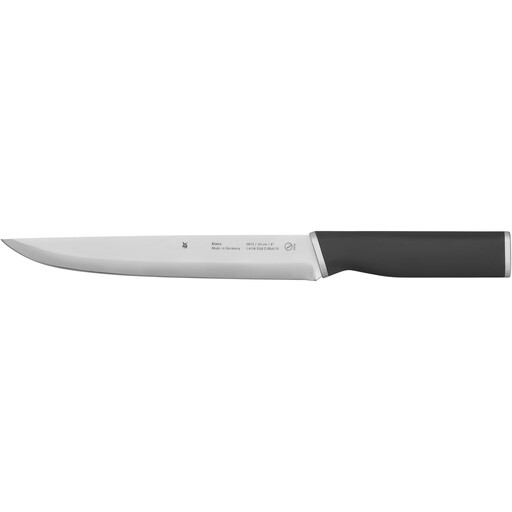
Why This Fits Their Persona: Anyone who enjoys preparing roasts or large poultry needs a specialised tool. This carving knife allows for precise, clean cuts, ensuring the juices stay in the meat. It is a valuable addition to any well-equipped kitchen.
This knife is clearly positioned as a specialised tool. The manufacturer provides concrete performance data with its "Performance Cut Technology" and a specified hardness of 55-58 HRC, going beyond generic marketing phrases.
The blade, made of hardened special blade steel, promises long-lasting sharpness. The kinetic design of the handle ensures balanced and comfortable handling.
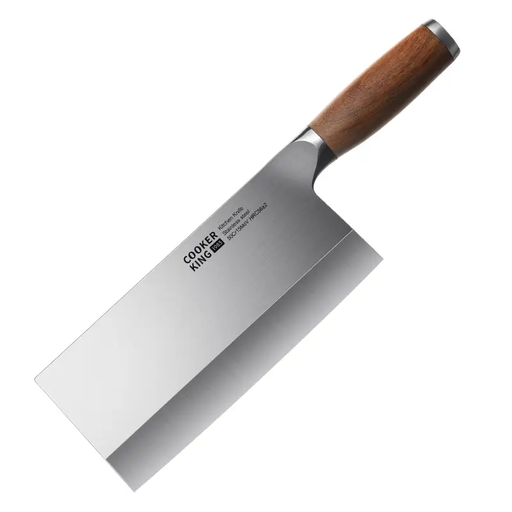
Why This Fits Their Persona: For breaking down ribs, chopping bones for broth, or processing hard vegetables like squash, a robust cleaver is essential. This model provides the necessary stability and weight for demanding tasks where a standard chef's knife would reach its limits.
It meets a clear requirement profile. The description provides objective metrics with the steel type (7Cr17MoV) and hardness rating (58±2 HRC). The full-tang construction directly addresses the need for maximum stability.
The weight-forward design generates high chopping power with minimal effort. The handle, made of moisture-resistant Pakkawood, provides a secure grip even when wet.
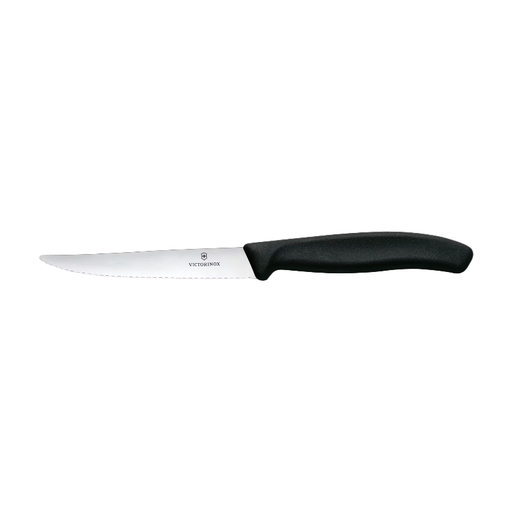
Why This Fits Their Persona: A great steak deserves a great knife. This set of six steak knives is designed for the dinner table. The serrated edge cuts effortlessly through cooked meat or crispy pizza without tearing the fibres, ensuring a clean cut.
This is purpose-built cutlery, not a cooking tool. It solves a specific problem at the dining table, avoiding the compromise of using an unsuitable plain-edge knife that would tear the meat rather than slice it.
The serrated edge ensures lasting cutting performance with minimal maintenance. The set is practical for families or for hosting guests and is dishwasher-safe according to the manufacturer.
If you are specifically looking for professional tools for meat processing, we have curated a relevant selection for you.
The frequency depends on usage, blade steel, and hardness. A simple rule of thumb: use a honing steel regularly (e.g., weekly) to realign the fine edge of the blade and maintain its sharpness. If the knife still doesn't cut cleanly after that, it's time for a true sharpening with a whetstone or a professional sharpener. Depending on use, this may be necessary every few months to once a year.
Use cutting boards made of wood (especially end-grain) or high-quality plastic. These materials are forgiving enough not to excessively dull the knife's blade. Absolutely avoid cutting surfaces made of glass, ceramic, marble, or metal. These hard surfaces will dull any blade in no time.
The main difference lies in the blade shape and the resulting cutting technique. The classic European chef's knife has a curved blade, which is ideal for the "rocking chop" technique, where the tip of the knife stays on the board while the blade moves up and down. The Japanese santoku knife has a straighter cutting edge and a wider blade. It is designed for a chopping or drawing motion from top to bottom and is often prized for precise cuts on vegetables and fish.