
Lieferung heute & morgen

Qualitätsgarantie

Willkommens-Angebote freischalten: KOSTENLOSE Lieferung | Bis zu 80 % RABATT | Kostenlose 30-Tage-JoyPlus-Testphase
App herunterladen
A versatile Chinese chef's knife can be an indispensable tool in the kitchen, capable of precisely dicing vegetables, mincing herbs, and cleanly slicing meat. But the market is crowded and confusing, and many buyers soon find their new knife doesn't live up to expectations. This is often due to common misunderstandings or hidden flaws.
As your Joybuy Product Recommendation Officer, I'm here to help you navigate the common pitfalls and make an informed decision. We'll focus on the objective features that define a durable and functional knife.
Before we dive into the details, let's look at the three most common reasons why buyers are unhappy with their choice.
To avoid these pitfalls, you should check three core parameters before buying. These define your knife's function, performance, and durability.
The most critical distinction is between a slicer (Chinese: 片刀, Piàndāo) and a chopper (斩骨刀, Zhǎngǔdāo).
The steel determines how sharp a blade can get and how long it holds that edge.
A full tang means the steel of the blade runs through the entire handle in its full width and length. You can often identify this by the rivets that connect the handle scales to the visible steel.
Here are a few recommendations tailored to different needs and cooking styles, all of which meet the quality criteria mentioned above.
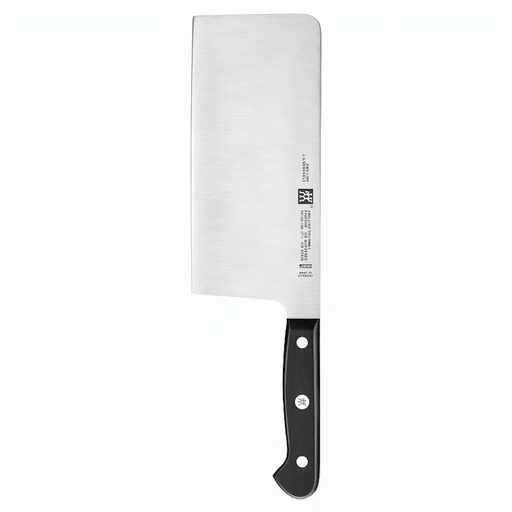
Why This Fits Their Persona: Ideal for cooks who want a reliable, German-made Asian-style chef's knife for daily tasks like cutting vegetables and boneless meat. The Zwilling brand stands for dependable quality and easy maintenance.
This knife is clearly designed as a slicer, avoiding the risk of damaging a fine blade by improperly chopping meat. The ice-hardened steel offers long-lasting sharpness without the high maintenance of pure carbon steel.
FRIODUR ice-hardened blade for exceptional edge retention and corrosion resistance; lightweight design for fatigue-free work.
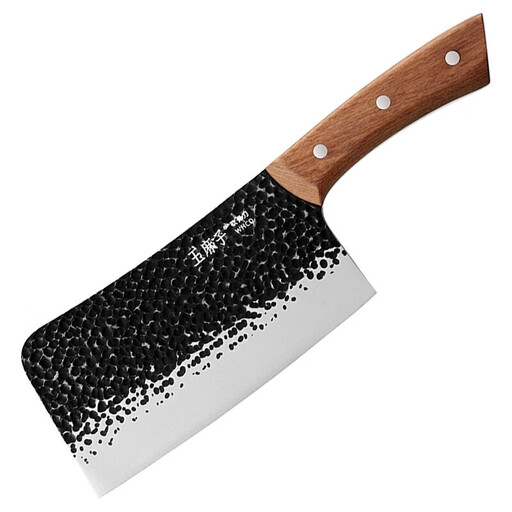
Why This Fits Their Persona: Perfect for ambitious cooks who appreciate the precision of a traditionally forged carbon steel blade and are willing to put in the necessary care to maintain its superior sharpness.
This knife uses high-quality carbon steel instead of vague stainless steel blends, delivering exceptional sharpness. The full tang construction ensures excellent balance, which is often missing in more affordable models.
Forged carbon steel blade for extreme sharpness; ergonomic wooden handle and full tang for optimal control.

Why This Fits Their Persona: Designed for cooks who regularly break down poultry or portion ribs. This knife is a true kitchen cleaver, not just a slicer for vegetables.
This is explicitly a "Chopping Knife" (cleaver) designed for heavy-duty tasks like cutting through bone. It solves the core problem of misusing a slicer for chopping jobs.
Robust, thick blade for heavy-duty use; full tang construction for maximum stability and power transfer when chopping meat.
We have compiled a complete, up-to-date list of products that fully meet these strict selection criteria and rigorous safety standards.
Although both originate from Asian cuisine, there are clear differences. The Chinese chef's knife has a tall, rectangular blade and is primarily used with a chopping or push-cutting motion. The Santoku has a shorter, wider blade with a slightly curved tip ("sheep's foot"), which allows for a gentle rocking-chop motion. The tall blade of the Chinese knife is also excellent for scooping up chopped ingredients to transfer them from the board to the pan.
No. Traditionally, many of these knives were made from carbon steel, known for its extreme sharpness. Modern knives made from high-quality stainless steel (proprietary blade steel), like those offered by brands such as Zwilling or WMF, provide excellent, long-lasting sharpness with significantly less maintenance. The choice depends on your willingness to care for the knife.
A sharp kitchen knife only stays sharp with proper care. Always wash it by hand with warm water and mild soap—never in the dishwasher. Dry it thoroughly immediately after. For storage, a knife block or a magnetic strip is ideal to protect the blade. A whetstone is the preferred method for sharpening, as it allows for precise and gentle material removal. With a wide blade, it's important to maintain a consistent angle along the entire edge.