For a single serving, a compact smoothie maker with a drinking cup is a natural place to start; if you need several servings or want to tackle other kitchen tasks, a traditional jug blender may be a better fit. What matters is whether the specific model is suitable for fresh or frozen ingredients, how easy the blade assembly is to clean, and how much noise it makes where you plan to blend. The Association for Consumer Information says that a high wattage alone is not a reliable indicator of how well a blender will perform. If blending in the office could be disruptive, you can prepare your smoothie elsewhere and bring it with you in a suitable cup.
Who might want a blender for the office?
Considerate in an open-plan office
If you want to make a cherry smoothie while you work, it’s especially important to avoid disturbing others with the noise. The DGUV notes that noise can affect concentration; IMTEST reports on noise measurements for smoothie makers.
A single serving with minimal washing up
If you’re blending just for yourself, you may prefer a handy cup you can drink from directly and clean easily afterwards. The Association for Consumer Information considers ease of cleaning when assessing products; WMF describes the Kult X Mix & Go as having a drinking cup with a lid.
For smoothies made with frozen cherries
If you often use frozen fruit, check that the specific model is suitable for frozen ingredients rather than relying on its wattage alone. The Association for Consumer Information points out that a high power rating alone doesn’t guarantee good results; Bosch lists blending functions for frozen fruit for the MMB2111S.
What to consider when choosing
Compact smoothie maker with a drinking cup
A good fit if: you usually blend one serving and want a cup you can take with you.
The trade-off: A drinking cup saves you from transferring your smoothie, but the blade and seal still need cleaning. For frozen cherries, check that the specific model is approved for use with them.
Traditional jug blender
A good fit if: you regularly make several servings or prepare other food and drinks as well as smoothies.
The trade-off: A larger usable jug takes up more space; you may need a separate drinking cup to take your smoothie with you.
Blend outside the office
A good fit if: you want to avoid using a blender at work, perhaps because it could disturb your colleagues.
The trade-off: You’ll need a suitable lid and should handle the drink hygienically.
For a single serving in a shared office, the main things to consider are noise, ingredients, cleaning and choosing the right cup size. The percentages below each relate to the most important buying priority for this specific scenario.
| Consideration |
What to look for when buying |
Who this matters most to |
| Noise and consideration for others |
Only compare noise measurements when the metrics and conditions match; alternatively, blend outside the office. |
If I don’t want to disturb others while they’re concentrating, where I blend matters. Around 31% of consumers would make noise and consideration for others their top buying priority. |
| Results with cherries |
For frozen cherries, check that the model is approved for frozen fruit; don’t rely on wattage alone as an indicator of blending performance. |
If you want to blend fresh or frozen cherries to your preferred consistency, check which ingredients the model is approved for; fresh cherries must be pitted first. Around 25% of consumers would prioritise suitability for their ingredients. |
| Cleaning in a shared kitchen |
Check the instructions to see which parts can be dismantled and are dishwasher-safe. |
If I want to clean the blender easily after each serving, the blades and seals need to be easy to access. Around 25% of consumers would make cleaning effort their top buying priority. |
| Serving size and portability |
Check the usable capacity, footprint and whether it has a drinking lid; with larger containers, consider whether you’ll need a separate drinking cup. |
For a single serving at the office, I don’t want to take up unnecessary space or struggle to transfer my drink. Around 19% of consumers would prioritise serving size and portability. |
Common mistakes when choosing
-
Assuming a high wattage means better blending
According to the Association for Consumer Information, a high power rating alone doesn’t guarantee good results. It’s particularly important to check that the model is suitable for frozen ingredients.
Check the specifications for the ingredients you actually plan to use, and look for tests involving comparable recipes.
-
Comparing decibel ratings for different blenders directly
The sound power of one model and a measurement taken while making a different smoothie don’t necessarily describe the same thing. Without comparable metrics and conditions, they can’t reliably tell you how noisy a blender will be at your office desk.
Only compare measurements taken using a documented, similar method, and also consider whether your chosen blending location is suitable.
-
Assuming ‘to go’ means ‘no cleaning required’
A cup you can take with you saves you from transferring your smoothie, but the blade and seal still need cleaning. Hard-to-reach areas can make cleaning after each serving more of a chore.
Check the instructions for the specific model to see how to clean the blade assembly and seal, and which parts are dishwasher-safe.
Brands to consider
Bosch
The VitaPower Serie 2 MMB2111S is a compact blender with a cup for taking drinks on the go; larger VitaPower models belong to a different appliance category.
- Bosch lists a 0.6-l cup and blending functions for frozen fruit.
- This model has one speed setting. Its stated sound power of 86 dB(A) re 1 pW is not directly comparable with a sound pressure measurement taken at a workstation.
WMF
The Kult X Mix & Go 3200000022 combines a compact blender with a sealable drinking cup.
- WMF lists 300 W, a 0.6-l cup, a drinking lid and a safety cut-off if the container is not fitted correctly.
- These specifications don’t prove that it’s quieter or suitable for every recipe using frozen ingredients.
Philips
The 3000 Series HR2191/01 is an example of a jug blender with a larger usable capacity.
- Philips lists a 1.25-l effective capacity, two speed settings and a pulse function.
- The larger blending jug isn’t a bottle you can take with you and drink from; manufacturer specifications aren’t an independent performance test.
Ninja
The BlendBoss is another option for drinks on the go. F.A.Z. Kaufkompass describes the model it reviewed as having programmes and a travel cup.
- The model described combines programmes with a cup for taking drinks with you.
- This doesn’t demonstrate any proven noise advantage in the office; also check that the specifications apply to the particular product variant.
Joybuy products for smoothies on the go
The following Joybuy products are mainly designed for single smoothies to take with you; one 3-in-1 model also comes with a larger blending jug. When choosing, check the stated cup size and whether the blender is suitable for the ingredients you plan to use.
 No image available
Ninja BlendBoss Portable Blender, 710 ml, Cyberspace
For a smoothie to take with you: the product title mentions a travel cup with a leak-proof lid and the ability to crush ice.
710-ml cup; three pre-set automatic programmes; pulse function; removable, dishwasher-safe parts.
Joybuy
 No image available
3-in-1 Multifunction Blender, 800 W, 600 ml travel bottle, 1,500 ml blending jug and 300 ml chopper
For a serving to take with you or other recipes: according to the product specifications, the set includes a travel bottle and a larger blending jug.
800 W; 600-ml travel bottle; 1,500-ml blending jug; 300-ml chopper; two speeds and a pulse function.
Joybuy
 No image available
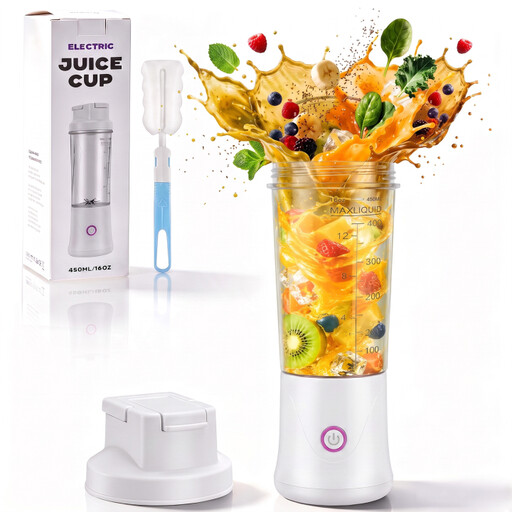
Portable blender, 652 ml, six blades, white
For a smoothie or fruit drink to take with you: this portable blender is described as coming with a cup and lid.
652-ml cup; six blades.
For best results, cut ingredients into smaller pieces and don’t overfill the container.
Joybuy
 No image available
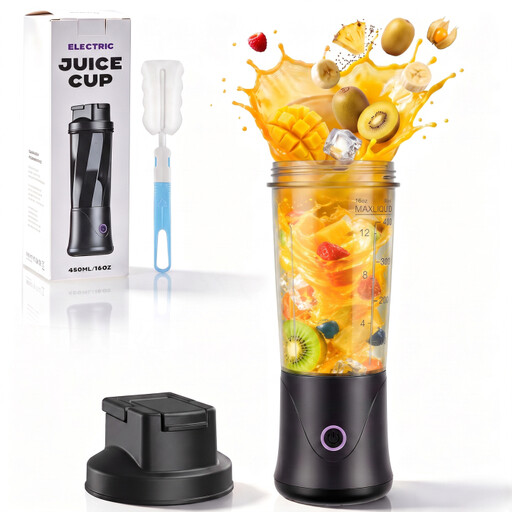
Portable blender, 400 ml, six blades, black
For a smaller serving at the office or on the go: according to the product specifications, the 400-ml cup also serves as a lid for transport.
400-ml cup; six stainless steel blades.
For best results, cut ingredients into smaller pieces and add enough liquid.
Joybuy
 No image available
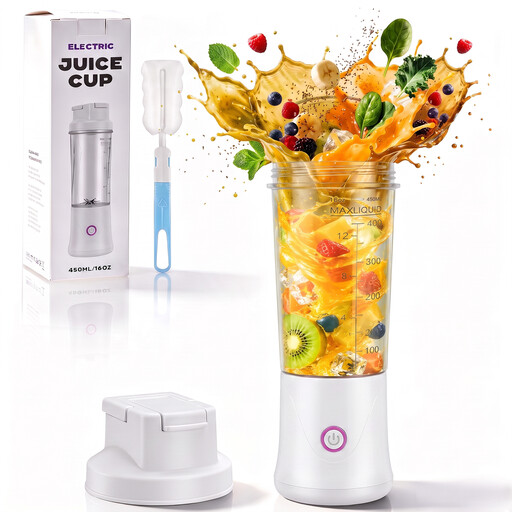
Portable blender for smoothies and shakes
For individual drinks: the product description says you can blend directly in the cup.
Described as a portable cup blender for smoothies and shakes.
Joybuy
Frequently asked questions
Can I plug in my personal blender at work?
Before using it, check whether personal electrical appliances are allowed at your workplace. The DGUV says that even permitted personal appliances must be inspected regularly at work; this isn’t a blanket ban on all blenders.
How should I prepare fresh cherries for a smoothie?
Wash and pit the cherries before adding them to the blender; cherry stones shouldn’t be crushed. The consumer advice centre warns of possible dangers from chewing or grinding stones. The Federal Institute for Risk Assessment recommends using fresh ingredients with no signs of spoilage.
Can I put the cup and blades in the office dishwasher?
Only if the instructions for your specific model say those parts are dishwasher-safe. A dishwasher-safe rating for some parts doesn’t automatically apply to the blade assembly or motor unit.
What should I do if a newly purchased blender is faulty?
If you buy as a consumer in the EU, you can exercise your statutory rights against the seller. Your Europe describes a legal guarantee lasting at least two years from receipt of the goods; this is separate from any additional manufacturer’s warranty.
Is a CE marking enough to use a blender at work?
No. Under Section 3 of the German Ordinance on Industrial Safety and Health, a CE marking doesn’t exempt an employer from carrying out a risk assessment if the appliance falls within the scope of the regulation as work equipment. The workplace must decide whether a personal blender may be used in that particular office.


