For players who revisit their own endgames
If you want to play through a position on a real board several times, automatic set-up can save time when you recreate it. Chessnut says Move can set up certain configurations and reset them.


If you want to play through the same endgame positions on a real board repeatedly and spend less time setting them up again, a self-moving board with documented position set-up and reset features may be worth considering; Chessnut lists these features for Move. If you prefer to set up the pieces yourself, Digital Game Technology (DGT) describes an alternative that recognises the position on an electronic board and sends it to chess software. Check the exact file and reset process, as well as recognition reliability, for the specific model before you buy.
If you want to play through a position on a real board several times, automatic set-up can save time when you recreate it. Chessnut says Move can set up certain configurations and reset them.
SenseRobot describes endgame exercises and playing from a position you have set up yourself. However, its training information does not confirm that you can automatically import any position of your choice.
If you want to place the pieces yourself and then use chess software, DGT describes recognition of manually set-up positions and position set-up with Fritz or ChessBase.
For repeated practice with your own endgame and analysis positions, the key considerations are how quickly you can set them up again, support for your own positions, piece recognition, and the requirements for apps and accessories.
A good fit if: You want to set up the same position on the board frequently. Chessnut says Move can set up certain configurations, import endgames and reset.
Bear in mind: Chessnut’s information does not independently verify how reliably the exact import and reset process works in practice.
A good fit if: You’re mainly interested in set endgame exercises and positions you set up yourself. SenseRobot describes both types of training.
Bear in mind: SenseRobot’s training information does not confirm automatic set-up for any imported position or a specific reset speed.
A good fit if: You want to place the pieces by hand and then capture or analyse the position digitally. DGT describes recognition of custom positions and set-up with Fritz or ChessBase.
Bear in mind: You’ll need to set up the board yourself; DGT Smart Boards may require cables that are sold separately.
| What you need | What to check before buying | Who is this especially important for? |
|---|---|---|
| Set-up and restart | Chessnut says Move can set up certain configurations and reset them. Check whether your specific training position can be set up on the board again. | If I play through the same position in several variations, I want to be able to start again without setting it up by hand. Around 33 % of consumers put automatic set-up and restart first. |
| Your own positions | Chessnut mentions endgame import, but does not specify the full file format or process. DGT describes manual position set-up with Fritz or ChessBase. | If I want to study my own games or endgames, I need a clear way to get from my file or manually created position to the board. Around 27 % of consumers prioritise importing or creating their own positions. |
| Piece recognition | Check how the board handles captures and restarting. DGT notes that electromagnetic fields can affect recognition on its e-Boards. | After a capture, I want to be sure the pieces and position have been recognised correctly before I continue analysing. Around 20 % of consumers prioritise recognition and how the board handles captures. |
| Apps and accessories | Check which features are available without a membership for the specific model and whether any necessary cables or charging accessories are included. DGT says cables for Smart Boards may need to be ordered separately. | If I want to avoid extra software costs or missing connection accessories, I need to check the required features and what’s included beforehand. Around 20 % of consumers prioritise software and potential ongoing costs. |
An electronic board can recognise a position you have set up by hand without moving the pieces itself. DGT describes position recognition; Chessnut also lists automatic piece movement for Move.
If you want to spend less time setting up by hand, look for a demonstration that physically sets up your specific training position again, rather than just recognising it digitally.
Particula distinguishes GoChess Lite from the XR range: Lite is not described as having built-in robotics, while XR models move the pieces.
Before buying, check the full model name and whether that specific version actually moves the pieces.
Particula distinguishes between the basic and Pro features of GoChess Lite Classic. DGT notes that Smart Boards may require cables that need to be bought separately, depending on your set-up.
Check that the features you need for training are available with your model version, and see which connection and charging accessories are included.
Chessnut Move is a self-moving option for setting up certain training configurations; Air+ is a separate electronic board.
A robot-arm option for players who want to practise endgame exercises or positions they have set up themselves.
Electronic boards for setting up a position by hand and then using it with chess software.
A model-dependent option, with self-moving XR versions and GoChess Lite, which has no built-in robotics.
The selection below includes robotic chessboards from SenseRobot and a chess computer from MILLENNIUM. For each specific model, check whether it can actually set up and reset your own training positions automatically.
 No image available
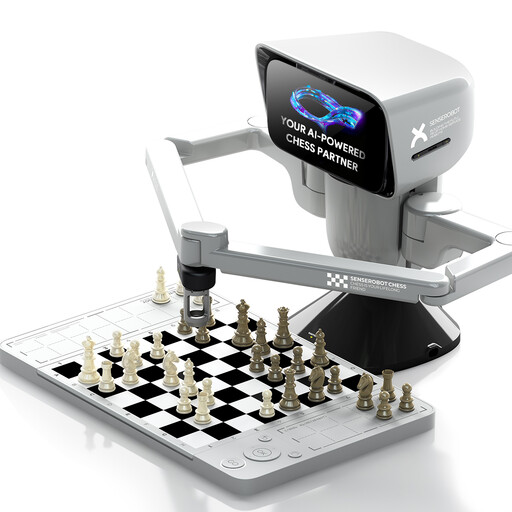
Described as a portable travel chess set with a robot arm and app connection. Before buying, check the exact process for setting up your own training positions and resetting them.
The product name mentions support for 3D-printed DIY pieces.
 No image available
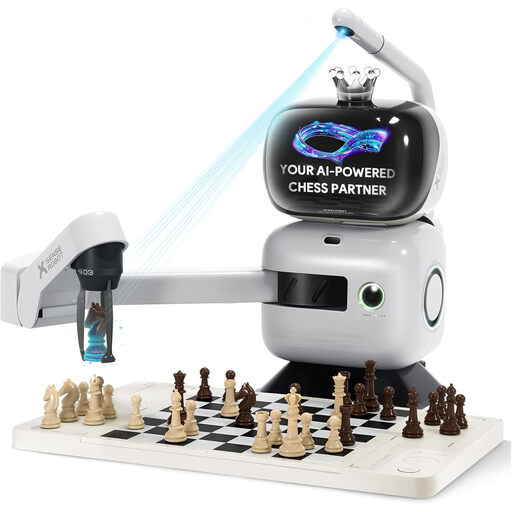
A choice for buyers looking for a robotic chessboard with dedicated endgame exercises and training puzzles. Check whether this model automatically sets up your own positions.
The product information lists 25 AI difficulty levels, more than 1,200 training puzzles, Lichess integration and app synchronisation.
 No image available
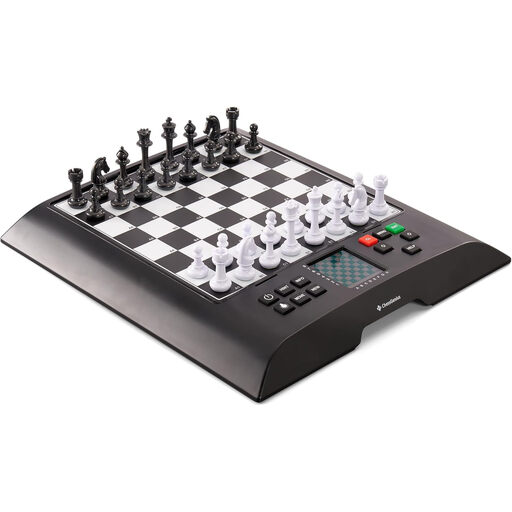
A chess computer as an alternative to the robotic chessboards featured here. If you want to practise your own positions repeatedly, check in advance whether this model supports the set-up and restart you need.
The product name mentions a pressure-sensor board, magnetic pieces and an illuminated display.
According to Chessnut, the board charges via USB-C and the pieces charge on a charging pad. Keep the movement area clear, and don’t force the pieces out of position while they are moving automatically.
For market surveillance within its remit, the German Federal Network Agency lists requirements including correct CE marking, product traceability and accurate manufacturer details. This does not prove that any specific model mentioned here complies.
No. When you buy as a consumer from a business seller in the EU, you are generally entitled to a minimum two-year legal guarantee from the date you receive the goods. An additional manufacturer’s warranty cannot reduce these rights; check the terms of your specific purchase and seller.