For regular AI games at home, a chess robot with a robotic arm could be a good choice if having a visible opponent matters most to you. A self-moving board such as Chessnut Move may suit you better if you want an integrated engine and pieces that move across the board. A German owner’s report on SenseRobot Chess describes offline games, while Chessnut says Move offers integrated AI play and automatic piece movement. Before buying, check whether the specific version can play a complete game without a smartphone or internet connection, and consider whether its speed, footprint and language options suit your day-to-day life.
Who is a chess robot for?
Solo players who don’t want to rely on an app
If you want to play regularly against AI on a physical board, check whether you can also run the engine, start a game and choose the difficulty without connecting a smartphone. Chessnut describes direct AI play on the board, while a German report on the CSS forum describes offline games with one version of SenseRobot.
Players who want a visible opponent
A visible robotic arm can help create the feeling of playing against an opponent, if you enjoy the mechanical movements as part of the game. A German owner’s report on the CSS forum describes this as a key attraction, and says the device picks up and places pieces.
Home players who often set up new positions
If you practise positions or endgames, piece recognition and automatic position setup are important features to check. Chessnut describes these functions for Move; SenseRobot lists camera-based piece recognition and training content for SenseRobot Chess.
What should you look for when buying?
Chess robot with a robotic arm
A good fit if: you want a visible opponent that picks up and moves real pieces.
The trade-off: A German owner’s report on SenseRobot Chess gives a time of around 8 seconds for a simple move and just under 12 seconds per move on average during a game. These are individual observations, not the result of a standardised comparison test.
Self-moving board with an integrated engine
A good fit if: you want to play against a local engine directly on the board and have the pieces move automatically. Chessnut describes these functions for Move.
The trade-off: Chessnut gives an average move time of under three seconds for Move. This manufacturer’s claim isn’t directly comparable with the individual SenseRobot report. The board and pieces also need to be charged. If you’re considering Square Off Grand Kingdom, ask specifically whether you can play against the AI without the app.
| What matters when buying |
What to look for |
Who is it important to? |
| AI play without relying on an app |
Ask for confirmation that you can start a game, choose the difficulty and play a complete game without a smartphone or internet connection. |
If I want to play regularly on my own board, standalone play matters to me. Around 29% of shoppers put independence from apps and the internet first. |
| Move speed and rhythm |
Watch a complete sequence of moves, including captures and castling; don’t confuse response time with the time taken to make a move. |
Frequent players don’t want to wait a long time after every move. Around 23% of shoppers focus above all on move speed and clear, predictable movement. |
| Space and noise |
Measure the full setup, including the arm, pieces and charging area; assess the noise during a demonstration. |
If the board is going to stay in your living space, its footprint and operating noise need to suit your home. Around 18% of shoppers put these home requirements first. |
| Language options |
Check the menus, spoken prompts and voice commands separately for the specific model, firmware and version being sold. |
If you need to operate the device in German, check the language support for the specific version. Around 12% of shoppers consider language their most important buying priority. |
| Training with your own positions |
Check whether you can enter positions freely, add extra queens and set up your chosen position automatically. |
If I often set up positions or endgames, recognition and less manual preparation are essential. Around 18% of shoppers prioritise this kind of training. |
Common assumptions to avoid when buying
-
Confusing an electronic move indicator with self-moving pieces
Piece recognition and automatic movement are different functions. A board that only recognises or displays moves won’t automatically move the pieces for the AI opponent.
Check that the opponent’s move is actually made on the physical board, rather than relying on labels such as ‘AI board’ or ‘piece recognition’.
-
Taking a quick sensor response to mean a complete move is quick
Sensor response, engine calculation and mechanical movement are different processes. An advertised latency figure alone doesn’t tell you how long a complete move takes.
Watch full sequences of moves, including captures and castling, and ask when the chess clock switches over.
-
Assuming a German product page means the controls are in German
Manufacturer and European product descriptions give different details about SenseRobot’s language options. A German sales page therefore doesn’t automatically confirm German menus, spoken prompts or voice commands.
Ask for confirmation of these three language features separately for the model and firmware version being sold.
-
Allowing space and charging room for the board alone
According to the manufacturer, Chessnut Move needs charging facilities for both the board and pieces. If you choose a model with an arm, remember to allow for its height too.
Measure the complete setup and make room for charging and storage.
Extra room for charging and storage can reduce the space available for playing.
Key brands at a glance
Chessnut
For this type of play, the Move range is relevant, with self-moving pieces and an integrated engine. This description doesn’t apply to every electronic Chessnut board.
- Chessnut describes Move as having an integrated Stockfish engine, piece recognition and automatic position setup.
- The board and pieces need to be charged. There’s no evidence that it’s quieter than other types of chess robot.
SenseRobot
SenseRobot Chess combines a visible robotic arm with camera-based piece recognition and training content. Chess Mini is a separate product range and shouldn’t be confused with SenseRobot Chess.
- A German owner’s report on the CSS forum describes local AI games with SenseRobot Chess. The manufacturer lists training content and support for several languages.
- Language options vary between manufacturer and retailer descriptions. Training content doesn’t prove a particular learning outcome, and may not be available on every version of the device.
Square Off
According to a German retailer’s description, Grand Kingdom has automatically moving pieces on a traditional wooden board.
- The German retailer describes a built-in AI and automatic piece reset.
- The available descriptions don’t make it clear whether you can play against the AI without the app. Emotix’s app description mentions additional AI features and in-app purchases.
Chess robots at Joybuy
This selection at Joybuy includes robotic-arm chess robots for AI games and training at home. The versions described may differ in their app connection, setup and ability to operate independently.
 No image available
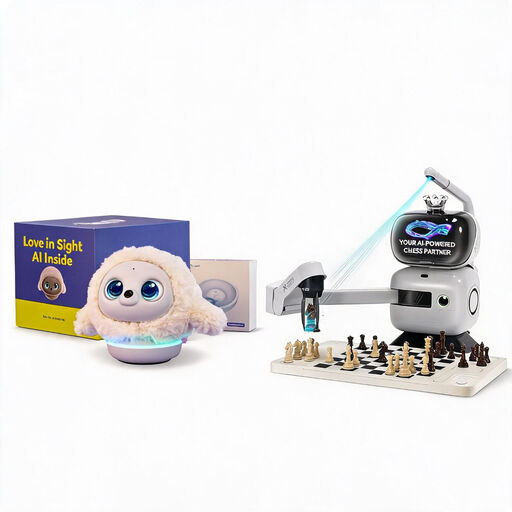
The Summer Edit Ropet AI Pet Robot (Professional Edition) + SenseRobot AI Chess Robot
The product description includes a SenseRobot chess robot with a robotic arm for AI games with moving pieces.
Features listed include 25 AI levels, over 1,200 exercises, endgame training and the option to replay classic games.
The retailer warns that the arm has moving parts and the product includes small parts. Keep fingers and loose clothing away from the arm, and keep the device away from children under three.
Joybuy
 No image available
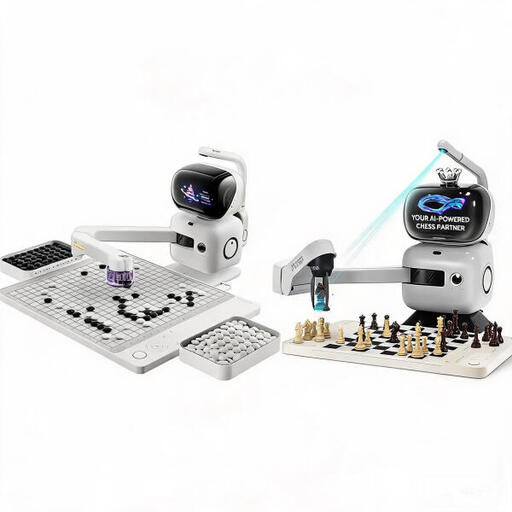
SenseRobot AI Chess and Go Set
The chess function is described as using a robotic arm to move the pieces; the set combines chess and Go features.
For chess, the description lists AI levels, over 1,200 exercises, endgame training and classic game replays.
The retailer warns of moving parts on the arm, small parts and liquids. Use the device on a stable, level surface and keep small parts away from children under three.
Joybuy
 No image available
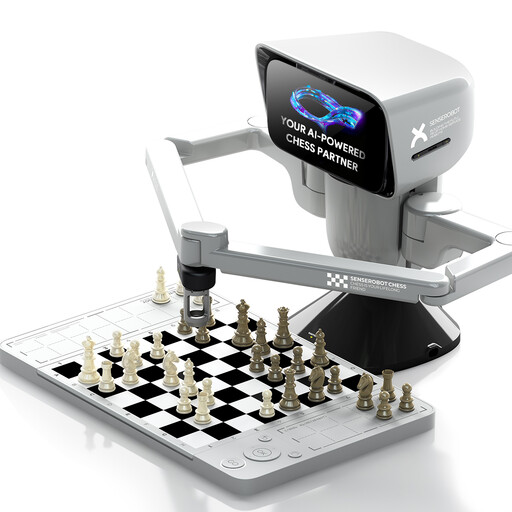
SenseRobot Mini AI Chess Robot
The description presents a portable chess robot with a robotic arm for playing on the go.
Features listed include several AI levels, automatic piece movement, app connectivity and support for 3D-printed pieces.
If you expect to play a complete game without the app, ask for confirmation that this feature is available on this specific version.
Joybuy
 No image available
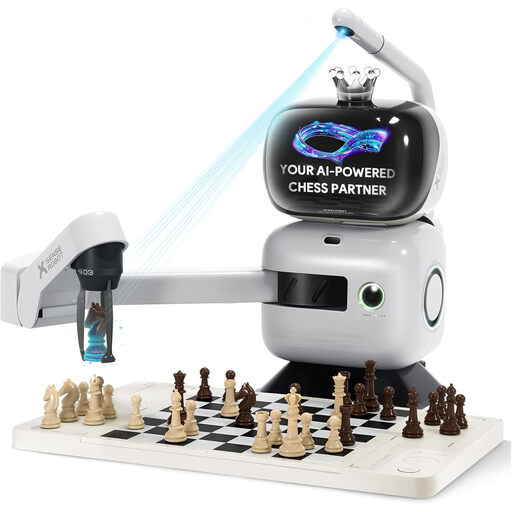
SenseRobot AI Board Robot with Robotic Arm
The product description lists AI games with physically moving pieces and voice prompts.
Features include 25 AI levels, over 1,200 training exercises, endgame practice and classic game replays. Play without a screen is described as possible after a one-off Wi-Fi setup.
The retailer warns of pinch points on the moving arm, small parts and liquids. Keep fingers and objects away from the arm, and place the device on a stable, level surface.
Joybuy
Frequently asked questions
How can I tell whether a chess robot can really play offline?
Check whether the engine runs on the board and whether you can start a complete game without connecting a phone. Chessnut describes direct AI play on the board for Move. Bluetooth or Wi-Fi connectivity alone doesn’t prove that you can play without the app.
Do the pieces need charging on Chessnut Move too?
Yes. Chessnut describes USB-C charging for the board and a charging area for the pieces. Remember to allow space for charging when setting it up.
What care and usage advice applies to automatic movement?
Chessnut recommends using Move on a level, dust-free surface with a clear area for movement. Don’t force the pieces to move while the board is moving them automatically. These are the manufacturer’s instructions for using Move.
What certification should I look for on an electronic chess robot?
Germany’s Federal Network Agency explains that products covered by relevant EU harmonisation legislation need CE marking. Ask for the conformity information for the specific version of the device; a retailer’s listing alone doesn’t confirm which documentation applies to that version.
Can I return a chess robot bought online if I don’t like the way it moves?
For a standard online purchase from a trader in the EU, you generally have a 14-day right to cancel, subject to statutory exceptions and the specific returns conditions. A retailer’s voluntary extended returns period is an additional benefit; it isn’t the same as your statutory rights if goods are faulty or not as described.


