What should you look for when buying?
First, work out how many portions you want to store at once and how you’ll organise them. Then check the freezing capacity for new batches, along with the specific model’s annual energy consumption and dimensions.
| What matters |
What to check before buying |
Who is this important to? |
| Finding individual portions |
Check the internal layout, the number and position of baskets, and the dimensions of the containers you plan to use. |
If I want to take out individual containers at different mealtimes, an organised layout matters more than unused capacity. Around 36% of consumers are likely to prioritise this. |
| Freezing large batches |
Compare the freezing capacity in kg per 24 hours and the usable volume with the size of the batch you actually cook. |
If I regularly add a large quantity of freshly cooked stew, the model needs to be able to handle it. Around 29% of consumers are likely to prioritise freezing larger batches. |
| Comparing annual energy consumption |
Consider the figure in kWh/year and the EU energy label alongside the capacity and features. |
If the chest freezer is on all the time, I want to take its stated annual energy consumption into account without giving up the storage space I need. Around 21% of consumers are likely to prioritise this. |
| Finding a suitable spot |
Measure the width, depth, route into your home and space needed to open the lid at the intended location; check the model’s permitted ambient temperature. |
If space is tight, both the chest freezer and its open lid need to fit in the available spot. Around 14% of consumers are likely to consider the available space the most important factor. |
The capacity in litres tells you how much the appliance can hold, not how much it can freeze in 24 hours. Both figures matter when comparing specific models. The EU energy label also helps you understand the stated energy consumption.
Chest freezers for storing individual portions
The following Joybuy products range from compact chest freezers with baskets for individual portions to larger models for extra supplies and batch cooking.
 No product image available
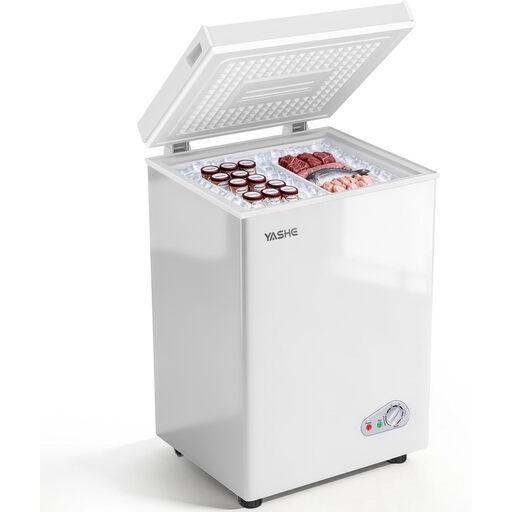
YASHE BC-100Q-EU chest freezer, 100 litres
The two removable baskets offer a way to keep individual containers grouped separately.
100-litre capacity; six temperature settings.
View at Joybuy
 No product image available
AUCMA Convertible Chest Freezer, 197 litres
The removable basket can help you group individual frozen items separately.
197-litre capacity; switches between fridge and freezer modes; energy efficiency class E; five-level digital temperature control.
View at Joybuy
 No product image available
Gorenje FH15E6W5 chest freezer, 141 litres
The baskets help you group frozen food, while the stated freezing capacity makes it easier to compare the model with the size of a new batch.
Freezing capacity: 8 kg per 24 hours; annual energy consumption: 182 kWh. The appliance needs defrosting if ice builds up.
View at Joybuy
 No product image available
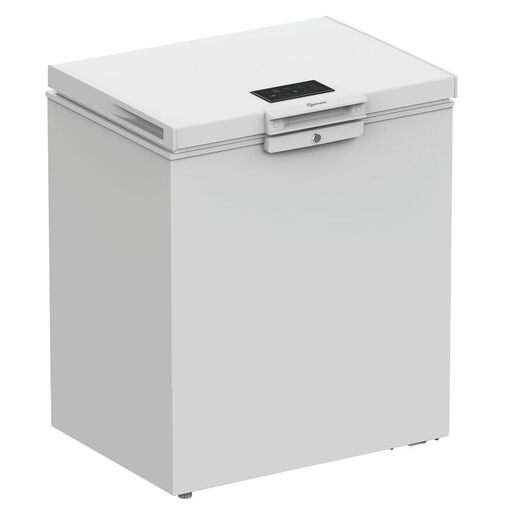
Bauknecht GTE 150MD chest freezer, 142 litres
The basket offers a way to keep frozen food organised separately.
Freezing capacity: 8 kg per 24 hours; annual energy consumption: 146 kWh; Multi-Zone function; WinterProof down to −15 °C according to the product description. The appliance needs defrosting if a significant amount of ice builds up.
View at Joybuy
 No product image available
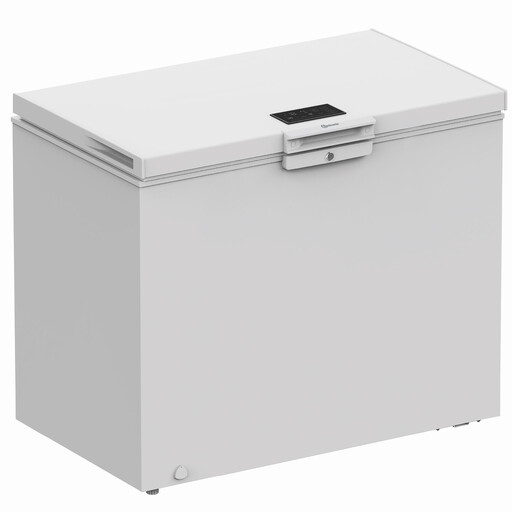
Bauknecht BGTE 250MC chest freezer, 198 litres
Two baskets help keep portions and other supplies grouped separately.
Freezing capacity: 13 kg per 24 hours; annual energy consumption: 126 kWh; stated width: 103 cm. The chest freezer needs defrosting if excessive ice builds up.
View at Joybuy
Frequently asked questions
Does lentil stew need to cool completely to room temperature before freezing?
No. Don’t leave it standing for longer than necessary: the German Federal Institute for Risk Assessment recommends quickly cooling hot food to below 7 °C before storing it for longer periods. Have suitable smaller containers and enough fridge space ready.
Does SmartFrost mean I’ll never need to defrost my chest freezer?
No. Liebherr describes SmartFrost on the CFe 1870 Pure as reducing frost build-up; it doesn’t rule out the need to defrost. Gorenje’s NoFrost feature applies to the separate FHNC28D6W5 model and can’t be assumed to apply to every chest freezer.
How can I compare chest freezers’ energy consumption?
Compare the stated kWh per year, taking each model’s capacity and features into account. Gorenje states 182 kWh/year for the FH15E6W5, while Bauknecht states 126 kWh/year for the BGTE 250MC. These manufacturer figures apply to the models named.
Can I put an old chest freezer in my household rubbish in Germany?
No. According to information from Germany’s Federal Ministry for the Environment, old electrical appliances must be taken separately to authorised collection points, such as local authority facilities or, subject to certain conditions, retailers. If you place an order, check separately whether collection of your old appliance is available.


