Small harvest, limited space
You’d like to store the occasional portion of berries, so first check whether your existing freezer compartment has enough room.


If your portions of berries fit in your existing freezer compartment, you don’t necessarily need an additional chest freezer. If you regularly have larger harvests, a suitably sized appliance may be a good option. Compare its usable capacity, freezing capacity in kg/24 h and annual energy consumption, and check that you have enough space and that the ambient temperature is suitable for the freezer.
You’d like to store the occasional portion of berries, so first check whether your existing freezer compartment has enough room.
Your freezer compartment repeatedly runs out of room for berries, and you’re looking for extra storage without taking up more space than necessary.
You freeze larger quantities of fresh berries on certain days, so you need to consider both the freezing capacity and the space available for the appliance.
The Verbraucherzentrale (German consumer advice centre) suggests around 50–80 l of usable capacity per person as a guide, not as a fixed requirement for a berry harvest. So start by counting the portions you actually want to store and checking what will fit in your existing freezer compartment.
| What matters | What to check when buying | Who should pay particular attention |
|---|---|---|
| Suitable usable capacity | Count your portions of berries and other food you want to store; compare the stated capacity in litres with your existing freezer compartment. | If I only want to store my harvest and a few other supplies, I don’t want to choose an unnecessarily large appliance. Around 33% of consumers say suitable usable capacity is their main concern. |
| Annual energy consumption | Compare the kWh/year figure on the energy label, taking the size of the appliance into account. | If I’m going to run an additional freezer all year round, I want to factor its stated annual energy consumption into my choice. Around 33% of consumers put the appliance’s energy consumption first. |
| Freezing capacity | Compare your largest daily harvest with the stated capacity in kg/24 h. | If lots of berries ripen on the same day, I want to know whether the appliance can freeze them all at once. Around 25% of consumers whose main concern is handling these harvest peaks say this is important. |
| Portioning and maintenance | Check for a basket, a defrost water drain and the defrosting method. | If I’m storing lots of small bags, I want to be able to find them easily and plan for the freezer’s maintenance. Around 9% of consumers prioritise organisation and maintenance. |
Usable capacity tells you how much storage space there is. How many fresh berries an appliance can freeze in 24 hours is stated separately in kg/24 h.
Compare your largest daily harvest with the freezing capacity of the specific model.
You may need to freeze a larger harvest in several batches.
For the Exquisit GT5150-E-041E, the manufacturer’s data sheet gives a depth of 55.0 cm for the appliance itself and 60.5 cm including the clearance from the wall.
Measure the space and the route you’ll use to move the appliance into place, and check that the lid can open fully. Also follow the installation instructions.
If the space isn’t suitable, you may need to rearrange things or choose a different appliance.
The energy rating alone is no substitute for comparing the stated annual energy consumption in kWh.
Compare suitably sized models using the figures on their energy labels, and take the intended location into account.
The German Federal Institute for Risk Assessment points out that deep-freezing does not kill noroviruses.
Treat storage and hygienic preparation as separate matters, and follow the Institute’s recommendation to heat frozen berries thoroughly all the way through.
The models listed range from compact chest freezers to a larger option with more storage space.
The GT 7355 is a specific example of a 100-l chest freezer.
The CF100EWN adds another compact chest freezer to the comparison.
The GT 8849 is a 200-l option for larger stocks, but that doesn’t automatically make it the right size for one person.
This selection includes compact and larger chest freezers for extra berry storage, as well as an upright freezer as an alternative to a chest-style model.
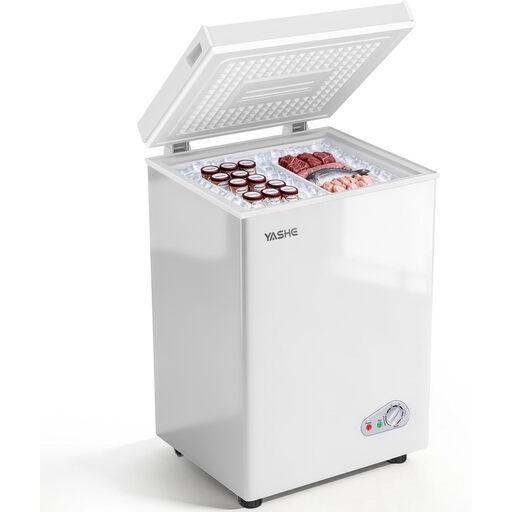 No image available
A compact option if you’re looking for extra freezer space and separate storage for portions.
100 l of usable capacity, two removable baskets and six temperature settings. Stated annual energy consumption is 185 kWh; energy rating E.
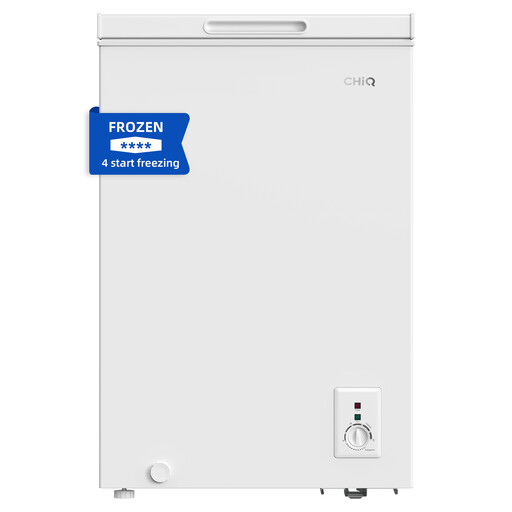 No image available
A compact freezer for extra storage, with its freezing capacity also worth considering if you’re storing fresh produce.
99 l of usable capacity, freezing capacity of 4.5 kg/24 h, wire shelf and energy rating E. The stated footprint is 0.26 m².
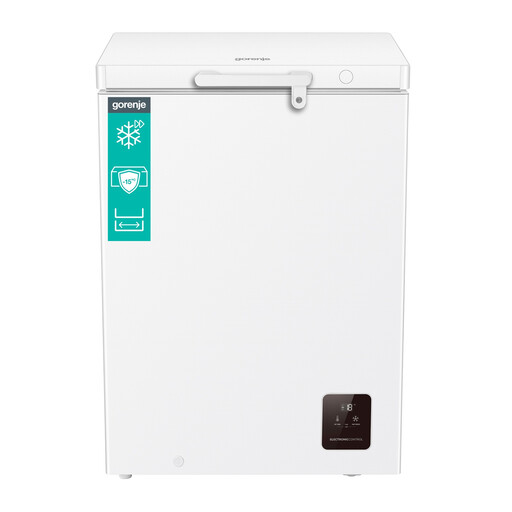 No image available
This larger model may suit you if you want to store other supplies alongside your berries and have enough room for it.
141 l of usable capacity, freezing capacity of 8 kg/24 h and FastFreeze function. It also has stated energy consumption of 182 kWh/year, a width of 606 mm and FreezeProtect down to −15 °C.
 No image available
This upright design is an alternative if you’d rather not have a chest freezer lid; it isn’t a chest freezer.
60 l of usable capacity, three storage compartments and a freezing capacity of up to 6 kg/24 h. The stated dimensions are 44.5 × 47.5 × 84.5 cm.
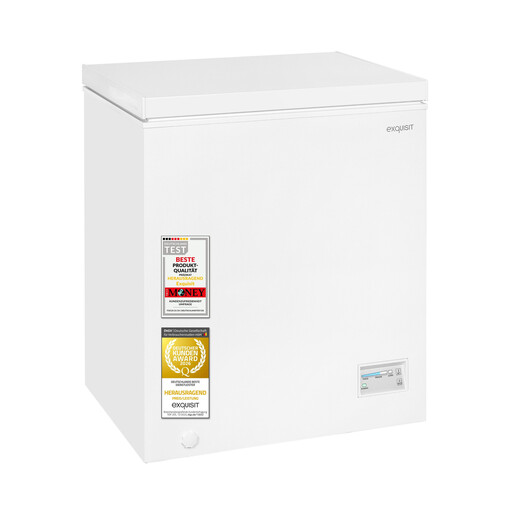 No image available
This larger freezer could be a good fit if your harvest and other supplies need more room; measure the space before you buy.
142 l of usable capacity, freezing capacity of 7 kg/24 h, 182 kWh/year and a removable basket. The model needs to be defrosted manually and is 70.5 cm wide.
First, spread the prepared berries out with a little space between them and freeze them until firm, ideally when they’re as dry as possible. Then transfer them into suitable freezer bags or containers in individual portions. The German Federal Centre for Nutrition describes this method for raspberries and strawberries, among other berries.
No. The German Federal Institute for Risk Assessment points out that deep-freezing does not kill noroviruses, and recommends heating frozen berries evenly and thoroughly before eating them.
First count the portions of berries and other supplies you actually want to store, then check your existing freezer compartment. The Verbraucherzentrale (German consumer advice centre) suggests around 50–80 l per person as a guide; it isn’t a fixed size requirement for a seasonal harvest.
Only if the ambient temperature is within the operating range for that specific model. For example, Bomann gives the GT 7355 a climate class of N/ST, for +16 to +38 °C; this range doesn’t automatically apply to other freezers.
Electrical and electronic waste must not go in household rubbish. The German Environment Agency lists taking it to a recycling centre and returning a similar large appliance when buying a new one as possible options. If your new appliance is being delivered, check the collection arrangements with the retailer in good time.